
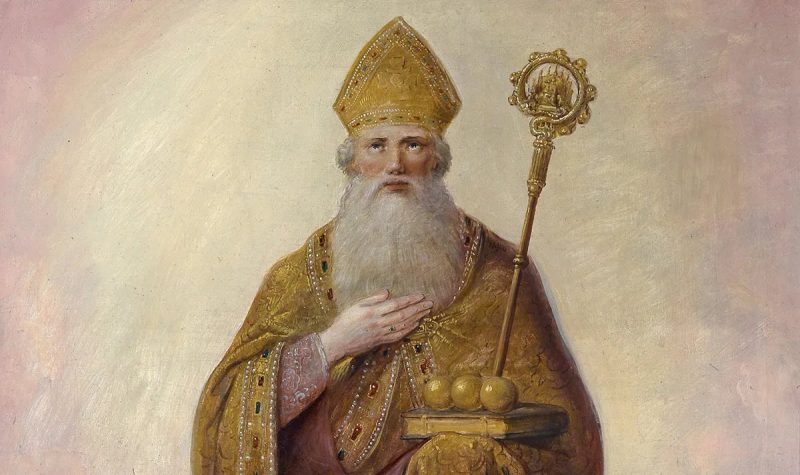
On December 6th, the Church commemorates St. Nicholas. When we think about St. Nick, we think about the gift-giver, the secret benefactor, the friend of people experiencing poverty, and a man in the red suit with the white beard. And that part of his story matters deeply.
As tradition tells us, Nicholas once learned of a father in his community who had lost everything. With no dowries for his three daughters, the man feared they would be forced into lives of desperation. Nicholas, then a young bishop with a tender heart, acted quietly. Under the cover of night, he slipped bags of gold through the family’s window, one for each daughter, hoping to restore their dignity without drawing attention to himself. When the father finally caught him in the act, Nicholas begged him to keep it secret. His generosity wasn’t about praise; it was about peace. He wanted to steady trembling lives, to give hope room to grow, to mend what fear had broken.
But there is another story about Nicholas, a story that reveals a different kind of peacemaking, one that’s less gentle, but no less holy.
In the year 325, bishops from across the Christian world gathered at the Council of Nicaea to clarify what the Church believed about Jesus. One debate grew heated, especially over the teachings of a man named Arius, who argued that Jesus was a created being rather than fully divine.
According to ancient tradition, Nicholas grew so distressed at the way Arius’s teaching diminished Jesus’ role and so upset at how the argument threatened to fracture the Church that he crossed the room and slapped Arius across the face. It wasn’t his finest pastoral moment. He was disciplined for it. But in that moment, you see a man who cared so deeply for the truth of Christ and so passionately about protecting the peace of the Church that he couldn’t remain silent.
Two stories. Two very different actions. One heart shaped by Christ.
In one story, Nicholas embodies quiet, humble peace, slipping hope into a window at night.
In the other, he embodies courageous, protective peace, standing up for the truth when unity was on the line.
And together, these stories remind us that peace is not one-dimensional.
Sometimes peace looks like gentle generosity. Sometimes it seems like holy courage. Sometimes it means giving what we have. Sometimes it means standing for what we believe. Sometimes it means staying quiet; sometimes, speaking up.
What matters, what Nicholas teaches us, is that everything we do as Christians must be rooted in love: love for our neighbor, love for the truth, love for Christ.
As we move through Advent, Nicholas invites us to ask: Where am I called to be quietly generous for the sake of peace? Where am I called to be courageously truthful for the sake of peace? And how might Christ be preparing me to bring hope into the world in ways both gentle and bold?