
“The wolf shall live with the lamb, the leopard shall lie down with the kid, the calf and the lion and the fatling together, and a little child shall lead them.”
Let us Pray:
Your word, Holy God, is written for our instruction. By your Holy Spirit open our ears and fill us with the mysteries of your ancient love; through Jesus Christ we pray. Amen.
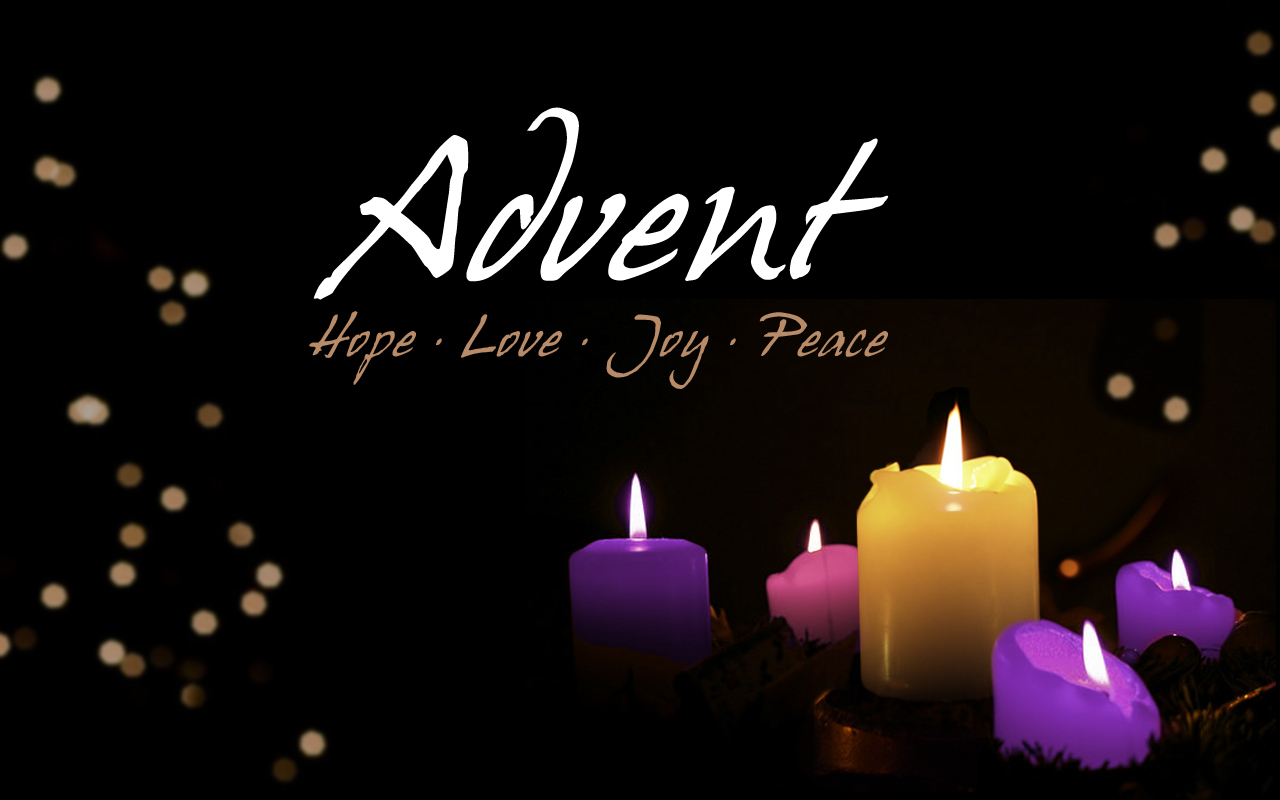
This morning, we light the second candle on the Advent wreath, the candle of peace. We stand in that holy tension between Isaiah’s sweeping vision of the world as God intends it to be and John the Baptist’s uncompromising cry from the wilderness.
Isaiah shows us a world where “the wolf shall live with the lamb,” where children play safely at the den of what once threatened them, and where a shoot grows from the stump of Jesse, small, fragile, unexpected, yet filled with the Spirit of God. This is not a naïve picture nor a sentimental one. Isaiah does not describe a world that accidentally drifts toward peace but one transformed from the roots up, one reordered by the Spirit of wisdom, understanding, counsel, might, knowledge, and awe of the Lord.
Then Matthew takes us out into the wilderness, where John the Baptist stands with sharp words and sharper clarity. His message to the crowds, “Repent, for the kingdom of heaven has come near,” is not soft, and it is certainly not comfortable. But John never pretends that peace comes without change, without reorientation, without truth-telling. Peace is not the absence of conflict; it is the presence of justice and mercy, the peace that comes when our lives are aligned with God’s vision.
And so, Advent places these two voices side by side:
Isaiah, offering hope that God will make creation whole again, and John, urging us to become participants in that promise.
When we talk about peace, we often talk about what we want for ourselves: quiet days, calm hearts, a world without violence or fear. But Scripture pushes us further. The peace Isaiah imagines is not just emotional tranquility; it is a peace in which predators and prey learn new patterns, in which natural enemies see each other as kin, and in which knowledge of the Lord fills the earth, where all of creation is transformed and returned to the point of creation.
John the Baptist reminds us that God’s peace does not come when we ignore what is broken, but when we face it. His axe-and-fire imagery can be jarring, but it is meant to wake us, to shake us from the illusion that peace can come without transformation.
John refers to the Pharisees and Sadducees coming for baptism as a “brood of vipers!” Not exactly what you’d call people coming for baptism, but John was calling out the religious leaders, just as Jesus would. John and Jesus knew that these religious leaders were telling people one thing while living very different lives, requiring sacrifice from others while getting the choicest cuts.
I am a theologian trained in Reformation theology. I was taught to believe that the Church and her theological understanding need constant reform, constant updates. Not a reformation because the wind has changed direction or because it is politically motivated, but a reformation that transforms lives.
I also believe that not everything from the past should be discarded; there is much that history can teach us, and although I don’t think the past should anchor us, we should honor the tradition of what came before.
Sometimes I think the 16th-century reformation went too far and threw out too much tradition, and part of that is the commemoration of the lives of the holy men and women who came before us. There is much we can learn from the lives of our ancestors in faith, and one of those is St. Nicholas.
For me, and for many, St. Nicholas, whose feast day we celebrate this week, remains such a captivating figure during Advent and from whom we get the tradition of Santa Claus.
And perhaps this is why St. Nicholas—whose feast day we celebrate this week—remains such a compelling figure during Advent.
We often picture him in soft reds and warm smiles, sliding coins into the shoes of the poor. But the stories of Nicholas show us a saint with both gentleness and courage, a man who understood peace not as passivity, but as a way of living that restores dignity and defends truth.
One of the most cherished stories tells of a father in Nicholas’ town who had fallen into desperate poverty. The man had three daughters, and without a dowry, the girls faced a future of insecurity and even danger. Their situation was so dire that the father feared he would have to sell them into servitude just for them to survive.
Nicholas could have offered “thoughts and prayers,” wished them well, and walked on. But instead, under the cover of night, he went to their home and tossed a bag of gold coins through the window, enough for the eldest daughter’s dowry.
Then he did it again for the second daughter.
And when he returned for the third time, the father, who had been waiting to learn who this secret benefactor was, caught him in the act. Falling to his knees in gratitude, he thanked Nicholas for saving his family. But Nicholas hurried away, insisting the glory belonged only to God.
This is peace in action; not merely wishing someone well, but intervening quietly, humbly, restoring the dignity and future of a struggling family.
But Nicholas’ compassion didn’t end there. He became known throughout the region as a protector of families. When famine hit, he persuaded ship captains, reluctant to give up their grain, to part with enough to feed the hungry. He promised they would not be punished for arriving with less cargo. And, as the story goes, when they reached their destination, their holds were still full. Meanwhile, the grain they left behind sustained families through the winter.
This is the peace Nicholas practiced, peace that shows up at the doorsteps of the struggling, peace that puts food in empty kitchens, peace that rebuilds hope where despair has taken root.
But Nicholas was not only gentle. He was also bold.
At the Council of Nicaea in 325, bishops gathered to settle urgent disputes about the nature of Christ. Among them was Nicholas. The 1700th anniversary of this Council was just celebrated this past week when the leaders of the five original churches, Rome, Constantinople, Alexandria, Antioch, and Jerusalem, gathered at the site of this Council and pledged greater cooperation among themselves. This was the first time in history that these leaders had gathered; their representatives were present in 325, not themselves, and it was all but passed over by the media. I am sure they were off covering another salacious scandal, but that does not diminish the importance of this Council, for it gave us much of what we profess to believe today.
According to tradition, the debates began to turn heated as they usually do at these things. One bishop, a man called Arius, argued that Jesus was not divine in the full sense, not divine from birth as we believe now. Nicholas became so distressed at the distortion of the faith that he stood up, crossed the room, and struck Arius across the face.
Now, as Christians, we should not resort to violence and only use violence as a last resort, and Nicholas himself was censured for it. But the story persisted because it showed something significant:
Nicholas valued peace enough to defend the truth that made peace possible.
He believed that if Christ were not truly God-with-us, then Isaiah’s vision of a reconciled world would collapse. Without a Savior who is fully divine and fully human, the world cannot be healed from the inside out.
Even though Nicholas lost his temper, the heart beneath the act was this:
Peace is not passivity. Peace takes courage, moral courage, theological courage, and relational courage. This is the kind of peace that requires us to stand up while everyone else is sitting down. This is the kind of peace that requires us to advocate for those on the margins. This is the kind of peace that brought so many martyrs to their death, including Jesus!
The same saint who quietly slipped coins into the shoes of the poor also stood fiercely for the truth of God’s reconciling love.
Advent is the time when John the Baptist calls us to make straight the paths, to remove what blocks peace, to repent of the ways we’ve cozied up to comfort instead of transformation, the times we have remained silent rather than spoken out, to turn our lives toward the vision Isaiah sets before us.
And St. Nicholas invites us to live that repentance with both tenderness and boldness. Tenderness that sees the needs of our neighbors and responds in hidden, holy generosity, and boldness that refuses to accept false peace built on silence, injustice, or avoidance.
The peace Christ brings is not fragile. It is robust. It is transformative.
It is the kind of peace where wolves and lambs dine together, where the poor are remembered, where the mighty repent, where the oppressed are lifted up, and where all creation bends toward God’s healing, not out of violence, legislation, or coercion, but out of love.
And it arrives, miraculously, through a child born to the poorest of the poor in an all but forgotten corner of the empire in borrowed accommodations.
A shoot from a stump. A Savior born into the world not with spectacle, but with vulnerability.
So, in this second week of Advent, as the candle of peace burns, may it burn in us as well. May it unsettle us where we have grown too comfortable. May it strengthen us where we are discouraged. May it teach us to practice peace with the gentle generosity of St. Nicholas, and the fierce honesty of John the Baptist.
And may we prepare our hearts to welcome the One who comes to make all things new.
Amen.