Is It a Sin to Break the Fast?

The quote below is taken from a much larger essay on fasting.  I would recommend the entire article to you for your information and edification.

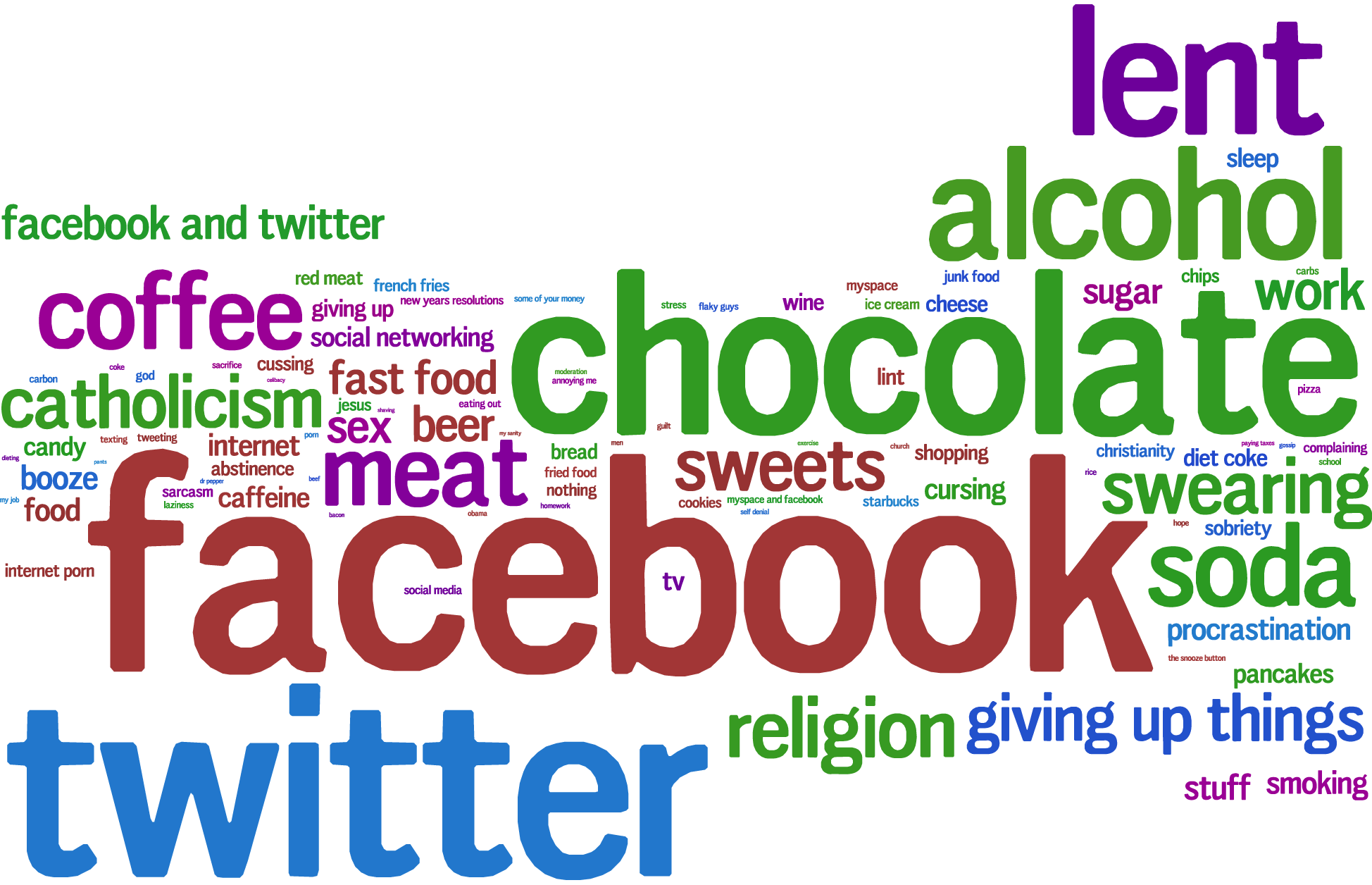
So, is it a sin to break the fast? The answer to this question depends on what is meant by breaking the fast. As we have discussed, it turns out that most people—monastic and lay alike—deviate from the rule in some way. If this deviation is meaningful and its purpose is to accommodate a real physiological need, then, it seems to me it is well within the spirit of fasting, even if it is not exactly according to monastic rules. If, however, the deviation is due to our gluttony, laziness, lack of discipline, or some other weakness, then we have something that should be corrected. Perhaps, the best way to think about sin in relation to fasting is not in legal terms—law, crime, and punishment, but in terms of preparation or exercise. Fasting is an ascetic discipline. The word “ascetic” comes from the Greekἄσκησις which means “exercise” or “training.” In other words, imagine that you are a soldier preparing for a difficult and dangerous mission. It is not so much a crime to be lazy in your training or to cut corners as much as it means that you may not be well-prepared for your task and thus will not be able to complete it or even perish in the process. So, if you choose not to exercise the discipline of fasting, you are cheating yourself out of the training necessary to fight against the enemy—sins and passions—and will be unprepared to face the snares of the devil.

The Celebration has Just Begun

760px-Adoration_assisiToday is the 2nd day of Christmas.  All during the season that preceded this one, I was reminding people that it was not yet the Christmas Season that it was in fact the Season of Advent.  The Advent Season is the time of preparation for the Great Feast of The Nativity According to the Flesh of our Lord, God and Savior Jesus Christ.  Because of our material obsession in America we throw Advent out the window and start the Nativity right after Halloween.  But we miss so much when we shorten, or completely forget about; the seasons as the Church indicted they should be celebrated.

Starting with the day of the Nativity itself, each of the following days has significance to it and should be commemorated as separate days.  These twelve days link together the great feast of the Nativity with the great feast of Theophany as one celebration naturally leads to another.

The Nativity of Christ is actually a three day celebration that starts on the eve of the 25th with, not only the celebration of the Birth of Christ, but also commemorates the Adoration of the Shepherds of Bethlehem and the arrival of the Magi (the three Wise Men).  The 2nd day celebrates the Synaxis of the Theotokos and commemorates the role of the Virgin Mary in the Incarnation. The 3rd Day commemorates the Protomartyr Stephen.  Each of these days has its own significance, and like the celebration of Pascha, is celebrated with a Divine Liturgy in some Churches.

There are other significant days during the twelve days such as December 29th the Feast of the Holy Innocents, the day we commemorate the children murdered by Herod in search of the Christ Child.  A fitting day to remember all of the innocents murdered by the sin of abortion every year.

The Sunday after the Nativity is the day set aside to commemorate Joseph the Betrothed, who is also commemorated the day following the Nativity, David the King, and James the Brother of the Lord.  These three are commemorated as the protectors, St. Joseph the protector of the Child Jesus, David the Protector of Israel, and James the protector of the Church of Jerusalem.

On January 1st we commemorated the Circumcision of our Lord and also St. Basil the Great.  This day is celebrated with the Divine Liturgy of St. Basil the Great.

January 2nd begins the preparation for the Great Feast of Theophany which culminates on January 5th with Great Vespers followed the next day with the Celebration of the Divine Liturgy and the Great Blessing of Waters.  According to the Liturgy Books, the Great Blessing is to take place at the conclusion of Great Vespers but because many of the faithful chose not to attend Great Vespers many Churches transfer the blessing to after the Divine Liturgy.

So the celebration of Christmas has just begun.  It is customary for the decorations to remain up until after the Feast of Theophany so keep those decorations up and keep these days of feast.

Nativity Encyclical of Patriarch Bartholomew

(Patriarchate.org) – Prot. No. 1109

His All Holiness Bartholomew Archbishop of Constantinople-New Rome  and Ecumenical Patriarch
His All Holiness Bartholomew Archbishop of Constantinople-New Rome
and Ecumenical Patriarch

+ BARTHOLOMEW
By God’s Mercy Archbishop of Constantinople-New Rome
and Ecumenical Patriarch

To the Plenitude of the Church:
Grace, mercy, and peace from the Savior Christ, born in Bethlehem

Beloved brothers and sisters, children in the Lord,

“For to us a child is born, to us a son is given.” – (Isaiah 9.5)

Many centuries ago, the Prophet foresaw and announced with enthusiasm and joy the birth of the child Jesus from the ever-Virgin Mary. Naturally, even then, there was no period of census by Augustus Caesar, no place to stay for the safety of the Holy Virgin who was carrying a child by the Holy Spirit. So the holy Joseph as her betrothed and protector was obliged to lead her to a cave, a manger with animals, “in order to give birth to a child.”

Heaven and earth received them, offering thanks to their Creator: “The angels offered the hymn; the heavens a star; the wise men gifts; the shepherds a miracle; the earth a cave; the desert a manger; and we the Mother Virgin.” The shepherds were keeping watch over their flock, protecting them throughout the night, while the angels were witnessing the Mystery in ecstasy, singing hymns to God. (From Vespers of the Nativity)

The sweetness of the Holy Night of Christmas once again embraces the world. And in the midst of human trial and pain, of unending crises, of passion and enmity, of concern and despair, it presents the mystery of the Incarnation of the Divine Word as a genuine and timely solution. For He descended as dew in a field of cotton inside the womb of the ever-Virgin Mary in order to give rise to righteousness and much peace. (See Ps. 71.7)

In the silence and peace of that sacred night of Christmas, Jesus Christ – being without beginning, invisible, incomprehensible, immaterial, ever existing and the same – enters the drama of history bearing flesh, being insignificant, simple, poor and unknown. At the same time, he comes as a “wonderful, counselor, almighty, prince of peace, everlasting father.” (Is. 9.6) Indeed, he comes as a human being, born of a Virgin Mother, to solve the complexity of sin and grant resolution to the impasse of life’s anxiety through His grace and mercy, while providing destiny, value, content, as well as an exemplary ethos and model for the human adventure.

The Lord assumed and sanctified all of human nature. The pre-eternal God condescended to become for us an embryo and be borne inside the womb of the Theotokos. In so doing, He both honored human life from its earliest stage and taught us respect toward humankind from its earliest conception. The Creator of all accepted to be born as an infant and be nurtured by a Virgin. In so doing, He honored both virginity and motherhood, spiritual and natural. This is why St. Gregory the Theologian exhorts: “O women, be as virgins, so that you may become mothers of Christ.” (Homily XXXVIII on Epiphany, PG36.313A)

So the Lord appointed the marriage of male and female in the blessed family. The institution of Christian family constitutes the cell of life and an incubator for the spiritual and physical health and development of children. Therefore, the manifold support of the institution of the family comprises the obligation of the Church and responsibility of leadership in every country.

In order for a child to be raised in a healthy and natural way, there needs to be a family where man and woman live in harmony as one body, one flesh, and one soul, submitting to one another.

We are certain that all spiritual and ecclesiastical, much like the vigilant shepherds of old, but also the leaders of our world, know and accept this divine truth and reality, which we once again proclaim from the Ecumenical Patriarchate during this Christmas period. We must all encourage the creation and function of natural families, which can produce citizens that are spiritually healthy and joyful, filled with sentiments of security, based on the feeling of safety provided by a strong and protective father as well as a nurturing and loving mother. We need families where God might find rest. We invite and urge the entire plenitude of our holy Orthodox Church to live in a manner that is worthy of their calling and do everything that is possible to support the institution of marriage.

Brothers and sisters, “the night is far gone; the day is at hand.” (Rom. 6.12) The shepherds are already headed toward Bethlehem in order to proclaim the miracle. They are inviting us to follow them “like other star-gazing wise men filled with joy” (From the Christmas Troparion of the 4th Ode), bringing “worthy gifts” “such as fine gold to the King of ages, incense to the God of all, and myrrh to the immortal that lay dead for three days.” (Anatolios, Vesperal Hymn at Christmas) That is to say, the gifts of love and our faith, which test us as Christians, especially as Orthodox Christians, in the ethos and tradition of the family, the Fathers, and the Church, which has always practiced the Orthodox way through the centuries and to this day holds together our blessed society, whose cell for sacred life and growth is the family.

Beloved brothers and sisters, children in Christ,

2013 years have passed since the birth of Christ in the flesh
2013 years have passed and, like then, Christ continues to be persecuted in the person of the weak by Herod and all kinds of contemporary Herods
2013 years have passed and Jesus is persecuted in the person of Christians in Syria and elsewhere
2013 years have passed and Christ still flees like a refugee not only in Egypt, but also in Lebanon, Europe, America and elsewhere, seeking security in an insecure world
2013 years have passed and the child Jesus remains imprisoned with the two hierarchs in Syria, Paul (Yazigi) and Youhanna (Ibrahim), as well as the Orthodox nuns and many other known and unknown Christians
2013 years have passed and Christ is crucified with those who are tortured and killed in order not to betray their faith in Him
2013 years have passed and Jesus is daily put to death in the person of thousands of embryos, whose parents prevent from being born
2013 years have passed and Christ is mocked and ridiculed in the person of unfortunate children, who experience the crisis of the family, destitution and poverty.

It is this human pain, sorrow and affliction that our Lord came and once more comes to assume during this Christmas season. After all, He said: “As you have done to one of these, the least of my brothers and sisters,” you have done to me.” (Matt. 25.40-41) It is for these that He was born of a Virgin, for these that He became human, for these that He suffered, was crucified and arose from the dead. That is to say: for all of us. Thus, let each of us lift up our personal cross in order to find grace and mercy when we seek His assistance. Then, the born Emmanuel, our Savior and Lord, will “be with us.” Amen.

Christmas 2013

+ Bartholomew of Constantinople

Your fervent supplicant before God

Christ is Born! Glorify Him!

Adoration of the Magi

Traveling around the countries of Eastern Europe this time of year, you will not hear the very familiar greeting of Merry Christmas. Rather, people will say Christ is Born, to which the response is Glorify Him.  This greeting calls to mind why we take this day out of the year as the celebration of the birth of our Lord and Savior Jesus Christ. We say these words because this is what we are celebrating, the birth of the One who came to save us and to restore the image that we have tarnished.

There is a story of an old church – I cannot remember exactly where this church is – but the church was undergoing a restoration.  The entire interior and exterior of the church was to be redone to make it new again.  It had long since fallen into disrepair and was in desperate need of a touch up.  During the restoration images started to be made clear on the walls of the sanctuary.  As they carefully removed decades upon decades of grime from these walls the images of Jesus, the Virgin Mary and the saints became visible and very much alive.  The grime was cleaned away and the image was restored to its former beauty.

Humanity had the same problem. It was in desperate need of restoration to the image it was intended to have.  This is the blessing of this season of the Nativity.  No longer do we have to face uncertainty; no longer do we have to face a life coated with grime, for Christ was born to save us from all of that.  The image that was tarnished in paradise has been restored through the birth of a baby.

The 4th century writer Gregory Nazianzen, also known as Gregory the Theologian, had this to say in his Oration of the Nativity of Christ;

Christ is born, glorify Him. Christ from heaven, go to meet Him.  Christ on earth, be lifted up, sing to the Lord, all the earth.  Let the heavens rejoice, and let the earth be glad, because of Him who is of heaven and is now on earth.

This is the blessing of all of us this Nativity Season – that we will have the opportunity to know Jesus Christ and to celebrate all that He has done for us.  It is not simply about us giving gifts to others but to recall the greatest gift of all, that which was born of man.  God became man so that man might become God!

It is difficult for 21st century Americans to even consider the notion that we have all sinned.  We are rugged individualists and really do not like it when someone tells us what to do.  Recently I was engaged in a conversation on Facebook about shopping on Sunday.  I remarked that in my opinion shopping on Sunday is not something that a Christian should be doing.  The response back was a very curt “don’t tell me what I can and cannot do!”.  The funny thing is that response came from someone who was not even in the conversation.  But it is emblematic of what is happening in America today.

The story of humanity begins in the Book of Genesis with its very creation.  Not long after that creation we see humanity, through its own pride, disobey the one who created it and is cast out of paradise.  Now we can spend time going into the reasons for the fall, but that is not important to this particular essay.  The point is we have been estranged from our creator and we need to find a way back.

Just like the church that needed to have its images restored from years of neglect so we, humanity, needs to have our image restored to its former beauty.  Many prophets were sent to show us the way and they were rejected.  So a tiny baby that would light the way for us and bring us back to that former glory was born in a stable.

The celebration of the Birth of Christ is more than celebrating the birthday of a baby; it is the celebration of the freedom of humanity from its utter destruction.  The celebration of the Birth of Christ needs to be about more than the gifts we share with one another. It needs to be about the gift that was shared with all of us.  The celebration of Christmas needs to be about more than lights. It needs to be about the light that has shown us the way.  No longer is death the end but only the beginning.  No longer is humanity held captive by sin but it has been freed.  That is the true meaning of Christmas.

As we continue to celebrate this Nativity Season I wish you every blessing and I also pray for your good health and happiness in the coming New Year.

Nativity Encyclical of Archbishop Nicolae

His Eminence, Archbishop Nicolae

PASTORAL LETTER FOR THE LORD’S NATIVITY 2013

† NICOLAE

by the mercies of God

Archbishop of the Romanian Orthodox Archdiocese in the Americas

To our Beloved Clergy and Orthodox Christians,
peace and joy from Christ the Lord,
and from us hierarchical blessings.
 

“All this was done that it might be fulfilled which was spoken by the Lord through the prophet, saying:
Behold, the virgin shall be with child, and bear a Son,
and they shall call His name Emmanuel,’ which is translated, ‘God with us.’”

(Matthew 1:22-23)

Very Reverend Fathers,

Beloved Faithful,

At this glorious feast I too bring you the wondrous tidings of the Incarnation of the Son of God, and I declare with the angel that God is with us. The Lord’s Nativity is a wellspring of immovable hope that God has not abandoned us, that God has not forgotten His creation, that He does not ignore its suffering, that God sends us a Savior.

This proclamation is taken from the moment when the angel of the Lord clarified for the Righteous Joseph that all the things that had happened with the Virgin Mary were the fruit of God’s work for the salvation of humankind. St. Matthew the Evangelist reveals to us the event of the Lord’s birth: “Now the birth of Jesus Christ was as follows: After His mother Mary was betrothed to Joseph, before they came together, she was found with child of the Holy Spirit. Then Joseph her husband, being a just man, and not wanting to make her a public example, was minded to put her away secretly. But while he thought about these things, behold, an angel of the Lord appeared to him in a dream, saying, ‘Joseph, son of David, do not be afraid to take to you Mary your wife, for that which is conceived in her is of the Holy Spirit. And she will bring forth a Son, and you shall call His name Jesus, for He will save His people from their sins.’ So all this was done that it might be fulfilled which was spoken by the Lord through the prophet, saying: ‘Behold, the virgin shall be with child, and bear a Son, and they shall call His name Immanuel,’ which is translated, ‘God with us’” (Matthew 1:18-23).

At the Annunciation, the Virgin Mary herself had received this news and had accepted it in the name of all humankind:  “Behold the maidservant of the Lord! Let it be to me according to your word” (Luke 1:38). But the news had remained hidden until this moment of Joseph’s being tested. The purpose of Joseph and Mary’s betrothal was the protection of the Virgin Mary. We can understand the amazement and profound agitation of the Righteous Joseph when he discovered that his betrothed was pregnant. The time had come for the revelation of the work of God. The one who again revealed these things was the angel of the Lord. St. John Chrysostom explains the angel’s intervention: “When the angel saw the ocean and the depths of God’s love for humankind, when he saw that what could not even be hoped for had come to pass, when he saw the suspending of the laws of nature and God’s reconciliation with mankind, when he saw the One who is above all things descending to that which is below all things, when he saw the breaking down of the wall of separation… in a single word the wonder was put forth, saying: all this was done that it might be fulfilled which was spoken by the Lord. Do not think, the angel said to Joseph, that these things were just now decided! They were predicted long ago” (The Fifth Homily on Matthew). The angel of the Lord is not, in the words of St. John Chrysostom, a mere messenger who brings news from God, but is himself a participant in the things he reveals, seeing and marveling at the salvific work of God. And he makes Joseph a participant in this understanding as well. “Then Joseph, being aroused from sleep, did as the angel of the Lord commanded him and took to him his wife” (Matthew 1:24).

What is this revelation which the angel shared with Joseph, and which Joseph received with understanding? “Joseph, do not fear…,” says the angel, “for God is with us.” It is the joy-filled announcement of the presence and work of God in the world. It is the revelation of “the mystery which has been hidden from ages and from generations, but now has been revealed to His saints” (Col. 1:26). It is the proof of God’s care for man through the revelation of the way of salvation that is beyond all human understanding. It is the invitation to hope in God Himself brought to man who is estranged from God and living in the darkness of the lack of the knowledge of God. It is the opportunity for man to be restored to his position as a child of God.

Father Dumitru Stăniloae asks What have Bethlehem and Golgotha brought us? And he finds the answer in the revelation of the mystery of the Incarnation: “Man becomes, through Jesus Christ, a child of God and a neighbor of Jesus Christ-God. It is to the highest dignity and condition that he is raised up. What else can this mean except being raised up to the most intimate “I-Thou” communion with God? And whoever is in communion with God is eternal, for the one whom God loves so much that He receives him in communion with Himself, He cannot allow to perish….” (Jesus Christ or the Restoration of Man). Bethlehem has thus brought us eternity.

Most Reverend Fathers, Beloved Faithful,

The angel’s news brought to the Righteous Joseph is also for us an occasion to be strengthened in the hope that God is with us. The proclamation has come down over the centuries and has reinforced God’s words spoken through the Prophet Isaiah. The prophet’s words are now clarified by the angel, and they strengthen the questioning Joseph. Over the centuries these words come down to us as well, and they bring us the same great and wondrous news of God’s presence in the world, even though the spirit of the denial of and estrangement from God is ever more dominant in our world. What we consider fundamental moral values of family and society, such as marriage between a man and a woman, the Christian education of children, the defense of the truth, of righteousness, and of peace, are more and more contradicted and negated by the realities of the secularized society in which we live. In many lands Christians are suffering for their faith and that suffering is ignored by many. There is talk of rights and freedoms, but they are forgotten when it comes to Christians.

On this bright feast my desire is that you all partake of the angel’s assurance that God is with us and that you display this life with God through Christian deeds in the midst of this world’s temptations. We Christians can witness to the words of St. John Chrysostom, who explains that the Baby was named Jesus and not Emmanuel: “He will be called Emmanuel means nothing other than that they will see that God is with humankind. God has always been with mankind, but never so clearly as now (in the Incarnation)” (The Fifth Homily on Matthew). We Christians can show the world that God is with us. I greet you with a brotherly embrace in Christ the Lord, and in the desire that you may experience the holy days of Christmas, the New Year, and Theophany in health, peace, and spiritual joys!

Many Years!

Your brother in prayer to God and in the desire for every heavenly good,

† NICOLAE

Chicago, The Feast of the Lord’s Nativity, 2013

The Candy Cane

The Candy Cane
The Candy Cane

At our Community Meal the other night one of our guests handed me a Candy Cane and this little poem that I thought was kind of nice.

The Candy Cane
a Gift of Love

It had to be special to be a gift
for the King of Kings, thought
the humble candy maker.

No just any piece of candy
would do it. It had to be hard
candy because the church is
built on solid rock and God’s
promises are a firm foundation.

It would be formed in the shape
of the Good Shepherd’s staff. A
“J” that would also stand for the
precious name of Jesus.

But it had to say more. White
stripes would symbolize the
virgin birth and the sinless
nature of Christ.

Three small red stripes would
represent the scourging Jesus
suffered on His way
to the cross.

One large red stripe would
remind those of the blood of Jesus
shed as payment
for our sins.

It would be a gift of love that
would tell his story – the
greatest story ever told!

Hats

Princess Beatrice
Princess Beatrice

I am desperately trying to catch up on the 40 Days of Pastoral Blogging exercise that I promised I would do, but I am falling way behind.

The word is Hats.  Now if anyone knows me they know I have a variety of hats from Liturgical to everyday wear.  Hats used to be a big thing, most men would wear hats all the time, in fact I was in one Orthodox Church where there was a little clip in the pew for the men to clip their hats on.  I think we need to restore this custom of wearing hats.

Orthodoxy has a wide variety of hats both for liturgical use and non-liturgical use.

The Skufia
The Skufia

There is the Skufia A skouphos (also skufiya, skufia, or skoufos) is an item of clerical clothing worn by Orthodox Christian monastics (in which case it is black) or clergy, sometimes specifically awarded as a mark of honor (in which case it is usually red or purple). It is a soft-sided brimless cap whose top may be pointed (Russian style), flat and pleated (Greek style), or flat with raised edges (Romanian style). Typically, monastics receive their skufia either when they first become novices or when they are tonsured. A monk or nun who has been tonsured to the Great Schema will wear a skoufia that has been embroidered with prayers, crosses, and figures of seraphim.

Kamilavka
Kamilavka

klobukThe Klobuk

The Klobuk

There is the Kamilavka and the Klobuk.  The Kamilavka is a round hard sided hat worn by many clergy and the Klobuk is the same hat but with the monastic veil attached worn by monastics in the rank of stavrofor and by all Bishops.

The Mitre
The Mitre

The Mitre is worn by Bishops and if the cross is removed from the top it is worn by Mitred Archpriests although that rank is become awarded less and less.

So there it is, a little primer on Orthodox Hats.

40DAYSBLOG

Strange Christmas Traditions

5

As we draw near to the celebration of the Nativity of Our Lord and Savior Jesus Christ it is time to reflect on some Strange Christmas Traditions from other places.  I am not talking about what we do in our own homes, although I could share stories of being locked in my room waiting to open gifts, but rather interesting things that happen in other places.

Scotland is an interesting mix of religious and secular traditions.  Prior to the Reformation making its way to Scotland the celebration of Yuletide and Christmas were done together in a long celebration that lasted until after the New Year.  The name comes from the Scandinavians, for whom ‘Yultid’ celebrated during twelfth month, being the twelfth name of Odin, who was supposed to come to earth in December, disguised in a hooded cloak. He would sit awhile at the firesides listening to the people, and where there was want he left a gift of bread or coins.

Nollaig Beag, or Little Christmas was the celebration of the Birth of Christ and was celebrated not with parties but in a very solemn way.  The festivities would being a few days later and spill over in to the New Year or the Twelfth Night.  The French often called Christmas ‘Homme est né’, Man is Born, and some believe this is the root of the word ‘Hogmanay’ the celebration of the New Year.

With the Reformation almost all Christmas celebrations were banned and people were even fined for celebrating the feast.  Bakers who would make the traditional Yuelbreads were fined and in 1638 the General Assembly in Edinburgh tried to abolish Yuletide.  The restoration of the Monarchy brought back the celebration of Christmas although it was still frowned upon by the Kirk.  The celebration remained alive in the High Church and among the Roman Catholic population.

So here are some interesting tradition from Scotland:

Black Bun. Originally Twelfth Night Cake. It is a very rich fruit cake, almost solid with fruit, almonds, spices and the ingredients are bound together with plenty of Whisky. The stiff mixture is put into a cake tin lined with a rich short pastry and baked.

This takes the place of the even more ancient Sun Cakes. A legacy from Scotland’s close associations with Scandinavia. Sun cakes were baked with a hole in the centre and symmetrical lines around, representing the rays of the Sun. This pattern is now found on the modern Scottish Shortbread, and has been misidentified as convenient slices marked onto the shortbread!

Bees leave hives Xmas Morn. There is an old belief that early on Christmas Morning all bees will leave their hives, swarm, and then return. Many old Scots tell tales of having witnessed this happening, though no-one can explain why. One explanation is that bees get curious about their surroundings, and if there is unexpected activity they will want to check it out to see if there is any danger. As people were often up and about on Christmas night observing various traditions, or just returning from the night services, the bees would sense the disturbance and come out to see what was going on.

Divination customs – Ashes, Bull, Cailleach

There are a number of ancient divination customs associated with Scottish Christmas tradition. One involves checking the cold ashes the morning after the Christmas fire. A foot shape facing the door was said to be foretelling a death in the family, while a foot facing into the room meant a new arrival.

Another was the ceremonial burning of Old Winter, the Cailleach. A piece of wood was carved roughly to represent the face of an old woman, then named as the Spirit of Winter, the Cailleach. This was placed onto a good fire to burn away, and all the family gathered had to watch to the end. The burning symbolised the ending of all the bad luck and enmities etc of the old year, with a fresh start.

The Candlemas Bull was in reality a cloud. It was believed that a bull would cross the sky in the form of a cloud, early on the morning on Candlemas, February 2nd. From its appearance people would divine. An East travelling cloud foretold a good year, south meant a poor grain year, but if it faced to the west the year would be poor. This custom was a remnant of the ancient Mithraiac religion, when the Bull-god would come at the start of Spring to warn of the year the farmers could expect.

CANDLELIGHT

All of the Celtic countries have a similar custom of lighting a candle at Christmastime to light the way of a stranger. (See LIGHT IN THE WINDOW IRISH CUSTOMS)

In Scotland was the Oidche Choinnle, or Night of Candles. Candles were placed in every window to light the way for the Holy Family on Christmas Eve and First Footers on New Years Eve. Shopkeepers gave their customers Yule Candles as a symbol of goodwill wishing them a ‘Fire to warm you by, and a light to guide you’.

FIRST FOOTERS

It was and still is the custom for a stranger to enter the house after midnight on New Years Eve/Day. There were taboos about the luck such a stranger would bring, especially in the days of hospitality to travelling strangers. A fair haired visitor was considered bad luck in most areas, partly due to the in-fighting between the dark scots and the fair Norse invaders. However, in Christian times, a fair haired man was considered very lucky providing his name was Andrew! Because St Andrew is the Patron Saint of Scotland. A woman is considered taboo still in many areas!

The Firstfooter must make an offering, a HANDSEL. This can be food, drink or fuel for the fire. The ritual which have grown up around this custom are many. An offering of food or drink must be accepted by sharing it with everyone present, including the visitor. Fuel, must be placed onto the fire by the visitor with the words ‘A Good New Year to one and all and many may you see’. In todays often fireless society the fuel is usually presented as a polished piece of coal, or wood which can be preserved for the year as an ornament.

Sayings eg : Is blianach Nollaid gun sneachd – Christmas without snow is poor fare.

40DAYSBLOG

Source

I was called a Bigot

Recently I was engaged in a conversation regarding the Duck Dynasty thing and I was called a bigot because I do not agree with homosexuality.  Well I guess I am.

I believe that Jesus Christ is the Way, the Truth and the Light.

I believe in Sacramental Confession and the ministry of the Spiritual Father.

I believe that Christian ministry (deacon, priest, bishop) should be exercised only by men, but that women play a large part in the priesthood of all believers.

I believe in preaching the truth as my Church teaches and has taught for more than 2,000 years.

I believe that marriage is between one man and one woman.

I believe that sex with anyone who is not your lawfully wedded spouse is adultery and a sin.

I believe that sex outside of marriage is fornication and a sin

I believe that homosexuality is a choice just like any sinful behavior.

I believe abortion is murder

I believe we are born the gender we are intended to be and if we wish to change that gender that is mutilation and a sin.

I believe that pornography objectifies women and if your married is adultery and if you are single it is fornication.

I believe war, although sometimes necessary, is sinful.

I believe that sentencing someone to death is murder and a sin.

I believe the taking of a life, although sometimes necessary, is a murder, as did St. Basil the Great and is a sin.

I believe divorce is one of the things that is killing society as we know it.  People get married for the wrong reasons and give up too easy.

I am not against rich people and I don’t believe welfare recipients are lazy.

I do not believe all faiths are equal. I believe that all faiths have some part of the truth but only the Orthodox Church has the fullness of the truth. But with that said I believe we Orthodox must be in dialogue with everyone, all faiths, Christian and non-Christian, we do not have to compromise on anything we believe but we have to talk to others.

I don’t believe that Pope Francis is a Communist, a Socialist, or the Anti-Christ.  I think he is speaking from his particular stage in life and hold true to Catholic Social teaching.

I believe rather than talking about taking guns away from people we need to have a discussion about mental health in America, although I do not know why anyone needs to own an Uzi or an automatic weapon.

I believe we have an obligation to help those who are less fortunate then we are but I do not believe in a redistribution of wealth.  I believe the Church needs to do more for the relief of the poor but that the government needs to be there as well.

I don’t believe that government is the solution to all of our problems and I believe that decisions need to be made at the lowest political level.

I believe that secularism is the cause of most of the ills of society

I think we spend far too much time talking about who is having sex with whom and worry about what other people are doing rather than being concerned about what we are doing.

I believe the fact that we live in the wealthiest country in the world but we have veterans living on the street, children going to bed hungry, and people that do not have health care is a travesty.

When pornography has become the highest grossing industry and we see more Christians, including seminarians and ministers addicted to porn, but yet condemn others behavior I find that a travesty.

However with all of that said I love all human beings because all of us have been created in the image and likeness of God.  We are all sinners, all of us, and we all need God’s forgiveness and each other to work out our salvation.

I accept you as a person broken and wounded just like I am but I will not accept or condone your behavior if it is against what my Church teaches, Jesus loved the woman at the well but pointed out that her multiple marriages were against the will of God.

I will not condemn you for your behavior and if you ask I will show you the way, the way along the narrow path, the way to salvation and a life in Christ.  Will we fall, yes we will we are all sinners, but I will be there to help you up.

My Church is open and affirming of all people and will affirm your dignity as a human being, but we are not, nor can we be, open and affirming toward behaviors we believe to be sinful.

If any of this or all of this makes me a bigot, so be it.  I think it makes me an Orthodox Christian and I make no apologies for it.

error: Content is protected !!