Faith in the Church

Holy Icon of All Saints

A week ago, the Orthodox world was trying to get used to the idea that a Metropolitan of a major Jurisdiction in the United States had resigned in a cloud of controversy.  (I am not implying that he was involved in anything illegal here.) I do not know why it happened and I am not part of that jurisdiction but it highlights a topic that has been going around the internet all week.  Some have said that this incident has caused them to lose faith in the Church.  I find this statement difficult to comprehend.

As you know, if you have been reading these pages for any length of time, I was raised in the Roman Catholic Church.  During my first year of seminary began, what some call, the dark ages for the Church of Rome.  The clergy sex abuse scandal broke one Sunday morning as we emerged from our yearly retreat.  The events that would follow would shape the priesthood of generations of priests to come.  I heard people say this caused them to lose faith in the Church, and some, sought refuge in other faith groups.  Again, I find this difficult to comprehend.

I think we need to be careful when we speak of “the church” because it has two radically different meanings.

First, the Church is the collection of people, called by Christ, and baptized in the name of the Holy Trinity.  The Church is the people of faith, gathered together as community large and small, for the purpose of working out their salvation.  In an Orthodox context this would be those who call themselves Orthodox and are by virtue of their baptism.  This is the Church that was founded, if you will, by Christ Himself on the day of Pentecost and this is the ONLY church that one should have faith in.

Second, the Church is the building and the institution.  The political, and by that I mean the administrative unit, that was designed by man to keep things running.  This is the Church that has the Tax exempt status and institutes the rules and regulations that govern the earthly organization, the one that caused the many foibles that we have witnessed in these days.  This is the very flawed man made institution that is necessary in the modern world.  As Orthodox we believe that the actions of the bishops of our Church are guided by the Holy Spirit, but sometimes we flawed men try and run things our own way and that usually leads to disaster.  Any study of history will show that, from time to time, this institution be Byzantium or Rome has been corrupted by greed, lust, and any of the other sins that afflict man in his fallen nature.  Reform happens from time to time, and this is not always a bad thing.

So where then should of faith be?  Our faith should be in our Lord God and Savior Jesus Christ as He, and he alone, is the one who gave His life on the Cross for you.  Our faith needs to be focused on Christ and on Christ alone.  We need to have some faith in the structure of our Church, but we also need to recognize that any man run institution will have its flaws.  Bishops are men, and as men they come will all of the baggage that we all have.

We are fallen human beings in search of salvation and bishops are no different.  I would also suggest that bishops come under far great spiritual warfare than any of us could imagine.  Bishops are not perfect; they are sinners just like the rest of us.  I am not suggesting that this excuses the bishops when they go off the rails.  Like the rest of us, when we sin there are consequences for that sin.

Those of us who serve in pastoral ministry at any level, know that we will be held accountable for the actions, and in actions that we make as pastors.  We have been entrusted, by God, with a flock and it is our responsibility to guide and guard that flock here on earth.  The bishop carries a staff as a visible sign of that ministry.  The staff is a reminder to him, and to us, that he is to guide us and lead us a father would lead his children.  But if there comes a time that the leading is going in the wrong direction then we have an obligation to point that out.  In the case I mentioned in the first paragraph of this essay, if the canons of the church were violated, if the internal rules of that particular jurisdiction were not used properly, then by Church law those involved need to be held accountable and punished accordingly.  As leaders we have an obligation to lead by example and to follow the rules of the Church.  If we break the rules, we should face punishment.

Put no trust in Princes, Scripture tells us, because they are men and are sinners just like the rest of us.  Place your trust, your hope, and your faith on Jesus Christ who is the same yesterday, today, and tomorrow.  He will never let you down.

The sign of the Cross

Elder Cleopa Ilie

Do not do anything without signing yourself with the sign of the Cross! When you depart on a journey, when you begin your work, when you go to study, when you are alone, and when you are with other people, seal yourself with the Holy Cross on your forehead, your body, your chest, your heart, your lips, your eyes, your ears. All of you should be sealed with the sign of Christ’s victory over hell. Then you will no longer be afraid of charms, evil spirits, or sorcery, because these are dissolved by the power of the Cross like wax before fire and like dust before the wind.

– Elder Cleopa Ilie

h/t Simply Orthodox

Civil War Chaplains

Chaplains of the Irish Brigade

During the last years of my service in the United States Army, I had the honor of serving as a chaplain’s assistant in the 42nd Division Artillery.  Since ordination I have had the privilege of serving as chaplain major of the National Lancers.  Chaplains in the military serve a very necessary service.

I am an amateur Civil War buff and have started a small research project on the role of religion during this time period in history and more specifically the role of the chaplain during the war itself.

According to the book “Faith in the Fight” there were some 3,694 ministers, priests, and rabbis duly sworn and commissioned into service in the Armies of the North and the South.  Officially noncombatants they were prohibited to act like soldiers and to be friends to all.

Rev. George S. Bradley of the 22nd Wisconsin Regiment wrote about the life of an Army chaplain in his book, The Star Corps: Notes of an Army Chaplain during Sherman’s Famous March to the Sea, published in 1865.  He wrote that “The regulations require that a chaplain must be an ordained minister of the Gospel.  That means he must have spent several quiet years as a student and probably several more with a peaceful congregation.”

The Reverend John E. Robie of the 74th New York State Militia wrote an article for the Buffalo Christian Advocate, which he owned, about the qualifications and duties of the Army Chaplain:

“In order to become a chaplain it is necessary to get a certificate of not less than five ministers of one’s own denomination that one is a regularly-ordained clergyman… He must be elected to the position by the regiment which he will serve… He will be paid $100 a month and $18 for rations with forage for one horse… As the commanding officer will permit, the chaplain should have prayer daily at dress parade… The prayer should not be more than three minutes long… On Sunday, but one service can be held, and that not always… The service, including scripture-reading, singing, sermon or address, and prayers should occupy 20 or 25 minutes – never over 30.”

Very interesting accounts of what the life of a chaplain really was during the time of war.  The role of the chaplain has not changed all that much since those days and is still a vital part of the military service.

One chaplain that I will mention is Father William Corby who served with the 88th New York Infantry Brigade of the famous Irish Brigade.  Fr. Corby is the chaplain on the lower right in the picture at the top of the page. Chaplain Corby came to fame due to his role at the Battle of Gettysburg.

On the afternoon of July 2, 1863 the Irish Brigade was located on Cemetery Ridge and was preparing to go into battle at the Wheatfield.  Fr. Corby asked for permission to speak to the men and stepping upon a boulder he called upon God to grant the men courage and then pronounced a conditional general absolution on the men gathered before him.  He warned the soldiers that the forgiveness of their sins was only good to men who did their military duty.

A statue has been erected to honor Fr. Corby and at the time of its construction it was the first statue depicting a non-general on the battlefield.

Fr. Corby went on after the war to become the president of Notre Dame University.

There are many more stories like these in the pages of history and I hope to bring some of them to these pages as time goes on.  We should be thankful that even today, men and women are answering the call the serve the military as chaplains.

On Clerical Involvement in Politics

Metropolitan Hierotheos of Nafpaktos and Agios Vasilios

July 11, 2012
BriefingNews

“It’s a sin when some Clergy divide people according to their parties criteria and identify with one party faction. This is the reason why the canon laws of the Church forbid to Clergy involvement in politics”, said Metropolitan Hierotheos of Nafpaktos and Agios Vasilios to BriefingNews.
When asked about clergy who involve themselves with political issues, and generally politics, and whether there are limits to this, the Hierarch stressed that the Church is the Body of Christ, the spiritual mother of all Christians, and should remain open to all people, regardless of color, race, class, or political order.
He further said:
“This is the greatness of the Church, that it is not enclosed in small intimate groups that are distinguished by particular political parties and ideologies. And like every mother, She shows Her love for all children, who may belong to different parties, and so much more should this be done by the Church.
It is within this framework that the Clergy should move, as Spiritual Fathers and spiritual mothers of people who are looking for affection, love, freedom, meaning of life.
So it’s a sin when some Clergy divide people according to their parties criteria and identify with one party faction. This is the reason why the canon laws of the Church forbid to Clergy involvement in politics.
Of course, we must make a distinction. Politics is one thing when it is an adjective and involves the life of the city, and it is another thing when politics is a noun and is involved in party practices.
With the first a Clergyman is doing politics, after damage has been done to a society and he participates in events, dealing with social and charitable works. Not so with the second meaning, when he becomes a party member and openly supports one political party formation.
When there are elections the Cleric is free to vote for the party he thinks will better address the social and economic problems, but cannot propagate to the Parishioners the party he has chosen.
Some parties try to get backed up by the Clergy and people of the Church, but Clerics should not succumb to this temptation.
On this occasion I want to emphasize my view that the Church should be disentangled from the tight embrace of the state in order to gain Its freedom, to manage Its house, according to canon law.
I cannot understand why we need a Charter which is the law of the State, to determine the many details about the inner life of the Church. One law would suffice to define the personality of the Church to be authorized according to the sacred canons.
Also, I cannot understand why there is a law of the State on Ecclesiastical Courts, which regulates many details, even as to what a Clegyman-judge should wear.
It would suffice for one law and a few articles that would set out some basic principles and leave the Church to judge their Clergy in accordance with the sacred canons, without interfering in secular law.
Unfortunately, the current situation in some areas is the prevalence of a conducive political-state spirit. We must put forward an order in these matters, so that the inner life of the Church will not to be considered and understood as a prisoner of state-civil law.
However, if we Clergy see things through the ecclesiastical perspective, we will not be possessed by insecurities and will not divide the parties into hostile or friendly, and will not engage in electoral dilemmas.
One is the work of the Church and another is the work of the State and party.
When a State seeks and is able to address poverty and unemployment, then it must be welcomed, because it cares for the interests of the people.”
Translated by John Sanidopoulos

First Things ~ How Do Churches Grow?

By Leroy Huizenga

The Episcopal Church is in the news again for the usual reasons. First, a few days ago it was reported that the Episcopal Church suffered a 23 percent decline in attendance from 2000 to 2010. Second, on Tuesday the Episcopal Church approved rites for blessing same-sex unions. Many commentators made what seems to be an obvious connection supposedly supported by sociology: liberalism in religion leads to the decline and death of denominations. “Conservative churches are growing,” we heard yet again.

I bring up these recent developments not to pick on Episcopalians or Anglicans, especially as I used to worship in a wonderful Anglican congregation, but rather to raise questions about assumptions concerning theological ideology and denominational decline. It may be true, roughly speaking, that more conservative churches do better holding on to members and attenders than more liberal churches, but what does “liberal” and “conservative” mean? Does it have to do only with doctrine (or even simple politics) or also with other matters? We need to go deeper.

Read the Rest Here

July 12 ~ St. Veronica

St. Veronica

Saint Veronica (also Berenice) is known as the woman who wiped Christ’s face as He carried His cross towards Golgotha and as the woman who Christ cured of the issue of blood, who is also traditionally identified as Herod the Great’s niece. The Church celebrates her feast day on July 12.

Few concrete details are known of the life of Saint Veronica, though much folklore has arisen, especially in Western Christendom, concerning her miraculous cloth, or veil, which touched the face of Christ.

Traditionally, Veronica came to believe in Christ when He healed her of an ailment that had afflicted her for twelve years:

And, behold, a woman, which was diseased with an issue of blood twelve years, came behind him, and
touched the hem of his garment:
For she said within herself, If I may but touch his garment, I shall be whole.
But Jesus turned him about, and when he saw her, he said, Daughter, be of good comfort; thy faith hath made thee whole.
And the woman was made whole from that hour. (Matthew 9)

The next episode that we hear of in her life is the famous cloth incident during Christ’s crucifixion. When Christ paused in exhaustion, Veronica was able to give the Lord her handkerchief. When she looked at the cloth again, she realized that an image of Christ’s face had appeared on it; this is often called the first icon. Veronica’s name itself is said to be derived from the Latin words meaning true (verus) image/icon .

No one is certain of what happened to Veronica in her later years, though one story has it that she cured the Roman Emperor Tiberius of some kind of sickness using her iconic cloth. Some sources say that she and her husband, named Zacchaeus, travelled all the way to Southern France confessing the Gospel.

Troparion (Tone 8)

The image of God was truly preserved in you, O Mother,
For you took up the Cross and followed Christ.
By so doing, you taught us to disregard the flesh, for it passes away,
But to care instead for the soul, since it is immortal.
Therefore your spirit, O Holy Mother Veronica, rejoices with the Angels! 

Source

Retention of Church Membership

Pew Forum on Religion and Public Life

Thanks to Facebook, I saw the graphic that is located at the top of this page.

The research comes from the Center for Applied Research in the Apostolate and it looks at how well religious groups in the United States are performing with retention of members who were born into that faith.  The footnote on the graphic says that this information come from the Pew Forum on Religion and Public Life and is from data collected in 2008.

I find this very interesting.  Greek Orthodox ranks fourth in over all religious groups in retention of Members with 73% but is the first of all of the Christian denominations.  I am not sure if this is just the Greek Orthodox or if it is in fact all orthodox in the US of A. Roman Catholics are listed after Mormons with 68%.

The Protestants ranks in the middle with Episcopalians and their now Transgendered priests and same sex marriage with 45% retention rate.  I guess what people are saying is true, folks are leaving Churches that do not hold to the historic faith in large numbers.  Another liberal group the Congregationalists rank third from the bottom with 37%.

What would seem to be the fastest growing religious body in the US of A, Atheists ranks at the bottom of the pile with a 30% retention rate.  I guess once people hear the Good News they leave!

As the data shows, churches that hold to traditional beliefs and morals; Hindu, Jewish, Muslim, Orthodox, Mormon, Roman Catholic, Baptist, Lutheran and Pentecostal are retaining 50% or better of their born into the faith members whilst the churches that change their theology based on the latest fad; Presbyterian and Congregational rank near or at the bottom of the list.

We must be doing something right!

Send Your Holy Spirit on Us

Image courtesy of Sts. Peter & Paul Romanian Orthodox Church, Dearborn Heights

I have mentioned in a previous essay that the Romanian Archdiocese here in America, of which I belong, is working on a new Romanian/English translation of the Divine Liturgy of St. John Chrysostom.  I have been part of this as one of the editors of the text and it has been a fascinating exercise in Liturgical theology.

The words we use are extremely important as they convey the Holiest of meanings.  The Liturgy is a mix of Scripture and the tradition of the Church and lays out the entire theology of our holy church.  So the selection of words is important.  I recall one meeting when we were discussing using the word house rather than church in reference to the building or the community.  Some thought that house was not dignified enough.  This is what I mean by choosing the correct words.

I wish to draw attention to one particular part of the Divine Liturgy.  This part takes place after the Great Entrance with the gifts of bread and wine.  The priest calls on the Holy Spirit on the gifts that are offered with these words:

Again we offer you this spiritual and bloodless sacrifice, and we call on you, we pray you and humbly supplicate you: Send your Holy Spirit on us and on these gifts here offered…

The priest calls upon the Holy Spirit not only upon the gifts to transform them but upon all those who have assembles thus making us a Eucharistic people.  We are, in fact transformed by the Holy Spirit to ready us for the intimate reception of these Holy Mysteries.

After the blessing is pronounced upon the bread and wine the priest prays this prayer that illustrates the fact that we have been transformed:

So that for those who partake of them they may be for awakening of the soul, for forgiveness of sins, for communion with your Holy Spirit, for fulfillment of the kingdom of heaven, for confidence towards you but neither to judgment no to condemnation.

We are asking that by partaking in this Holy Mystery our souls are stirred as the waters were stirred at the creation of the world.  That we are awakened with a yearning for knowledge of not only these mysteries, but of the one who created them.  We ask that our sins be forgiven, so that we are made a little bit more worthy of these gifts.  By reception of this Mystery we come into a greater union with the Holy Trinity and thus the fulfillment of the task that Christ came to perform on earth, and finally for confidence toward God and what He teaches us, but not for our judgment or condemnation.

We must receive the gifts being offered in the proper way and ready ourselves through confession, prayer, and fasting.

What an awesome gift that Christ Himself has given us!

Leadership and Listening

I have been writing about skills needed for leadership over the last few months but one of the most over looked skills is the Art of Listening.

One of the ministry models that are used in the Gospels is Jesus sitting and listening to people, really listening to people.  When Jesus would come to town, he never just walked around greeting people and not listening.  He sat with the woman at the well and listened to her story, Jesus spent time with those he was ministering to just listening.

When I came to St. Michael eight years ago, I spent time listening to the story of this church.  How the people who founded the church would work all day in the mill and then walk up the hill and physically build the church.  Each stone that was placed here was placed by hands that truly loved their faith and their church.  I listened to the parishioners tell me their story about how they feel about their faith, their fears, desires and what they hope for the future.  Spend time just listening to their story because their story is important.  We are in the people business and the people are the most important part!  How can you lead people if you do not know where they have come from?

One of the first visits my bishop made to St. Michael was the year after I was ordained.  He came and spent three days here.  He met with people, regular folks not just the leaders of the Church and he listened as they told him their stories.  He will ask me how this one is and how that one is and how their children are.  He remembers those stories and is truly interested in their lives and what is going on with them.  How can you lead people if you do not know them?

Church leaders have limited time and many, many responsibilities but none of them are more important than the people that God has given us to care for.  Recently I was in a discussion about the qualities of a bishop and what I think should be the first thing a new bishop does upon assuming his role in his new diocese.  I responded by saying that he needs to take the time and visit each church in his diocese.  He needs to have conversations with the people, not just come and preach and sit at the head table at the banquet, the time for the imperial bishopric is over, and bishops are servants first.  Sitting at the head table can make the bishop seem aloof and unapproachable.  Step down off that platform and walk with the people, sit with them, and listen to them.  The bishop should visit each parish, large and small, rich and poor say little and listen a lot.

The modern church has lost the true vocation of the bishop.  He has been turned him into a CEO when he should be a shepherd.  He is the pastor of all of the parishes in his diocese.

But what about the Art of Listening?

Listening is an Art that needs to be taught and practiced just like the other pastoral skills that are so needed in the church today.  I had the honor this past year of supervising four seminarians at our nursing home for their field education placement.  One of the lessons that I tried to teach them is to listen, really listen to the person you are visiting.  Sometimes we feel we have to always drive the conversation and say something profound, well sometimes there is nothing profound to say.  Simply sit there and listen to the person tell their story.  If they stop talking, just wait.  Sit there until they speak again, let them drive the conversation.  Ask questions, but make sure you are not interrupting what they are saying and that the question is relevant to the situation.

The first words of the Rule of St. Benedict for Monasteries is “Listen”  Listening is an important ministry tool that will, hopefully, keep us from making mistakes in ministry.  Take the time to learn the skill of listening and take the time to listen, really listen to what people have to say.  We do not have all the answers but if we listen we just might learn something.

Are you listening?

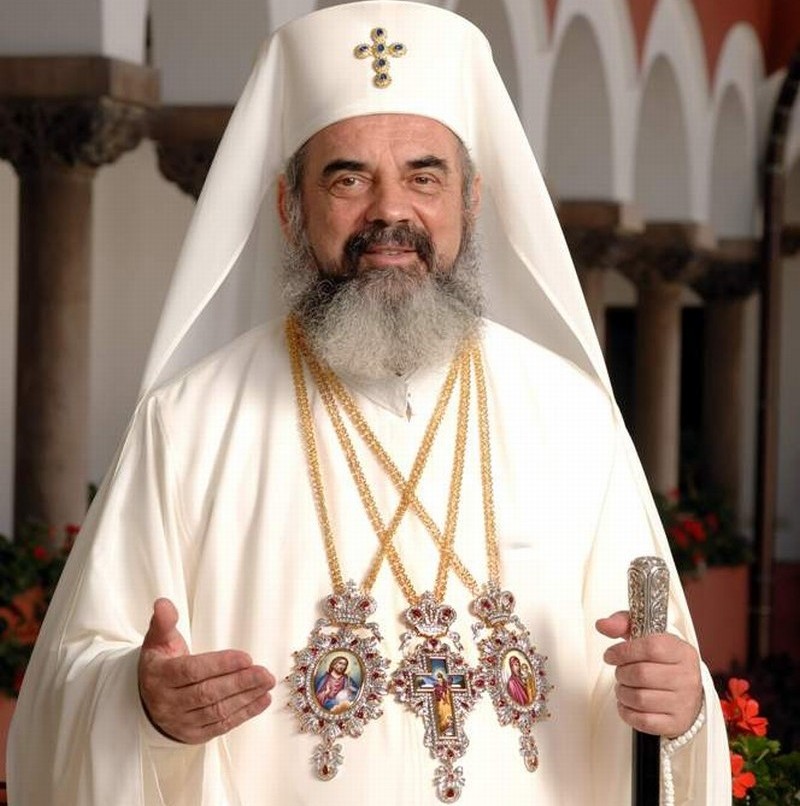
Patriarch Daniel ~ Man Has an Infinite Value for God

His Beatitude Daniel
Archbishop of Bucharest, Metropolitan of Muntenia and Dobrudgea, Locum tenens of the throne of Caesarea of Cappadocia, Patriarch of all Romania

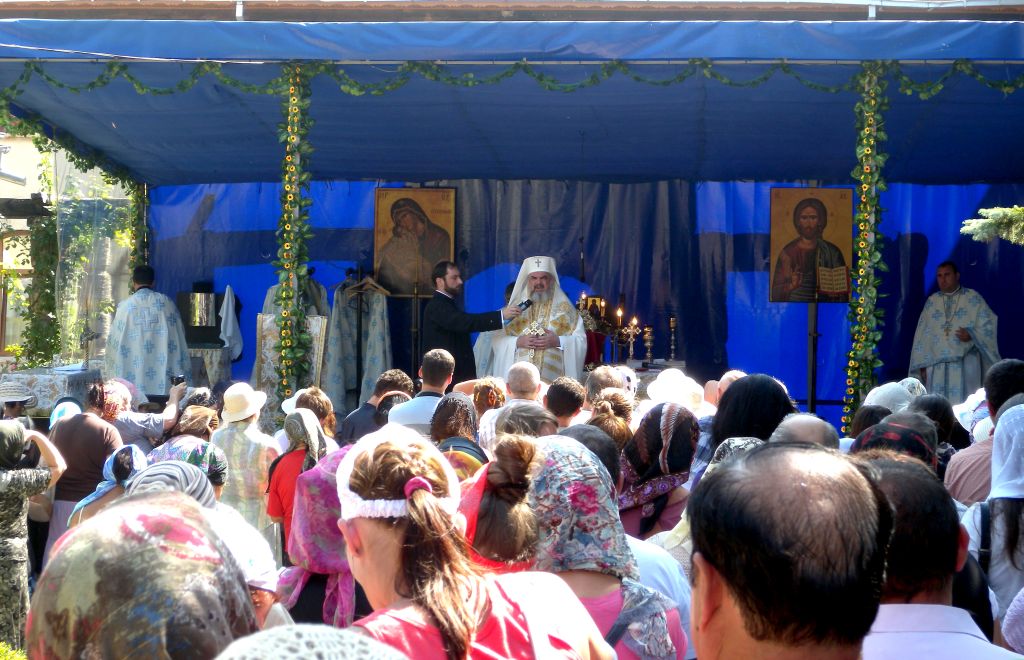
On 8 July 2012, His Beatitude Daniel, Patriarch of the Romanian Orthodox Church delivered a sermon at the summer chapel of the Patriarchal Residence, in which he explained the significance of the evangelical pericope of the 5th Sunday after the Pentecost, Matthew 8:28-34 and 9:1, which refers to the healing of the demonised people in the land of Gadarene.

Estrangement from God dehumanises the human nature just like in the case of the two demonised men in the land of Gadarene, showed His Beatitude, as Trinitas Radio station informs us.

“The demons take hold of the man, use his mental and senses, will and all his physical force, so that the demonised ones are no longer themselves, but estranged, used by demons. Jesus Christ, our Lord, wants to bring man back, through His healing, merciful presence, to his state of free being who uses his own mental, senses, and will in order to achieve the communion with God and his fellow beings. This humble merciful love of Christ tortures, in a way, the wickedness, violence and pride of the demons, because demons are, in general, evil and proud”, also showed the Primate of the Romanian Orthodox Church.

The Patriarch of Romania also emphasised that man has an infinite value for God.

“Why has Jesus allowed these demons to move from the two tortured men into the herd of swine? First of all in order to show that the human being is more precious than all the animal, vegetal and mineral wealth of this world, that a human has an infinite value for God and the greatest damage is not the loss of a herd of swine, but the loss of a human soul because the human soul is created in the image of the always living God. Secondly, we see that Jesus Christ, our Lord, wants to show that this evil violent power of the demons is limited, namely it cannot do anything unless God allows it to, and the very fact that these demons ask Jesus to allow them to get into the herd of swine shows us that they recognize Jesus Christ as the Master of the Universe, the Creator God, the source of life, and the One Who is the Judge of the world”.

Through the wonder made by Jesus Christ, our Lord, the signs of the Kingdom of God coming into the world are already seen, also said His Beatitude Patriarch Daniel.

“The Gospel emphasises the care of Jesus Christ, our Lord, for the humans, namely He knows the sufferance of every man. He knows the limit of sufferance, the power of the demons and He wants to show that the demons do not have more power than God and that they will be judged and punished for all the evil things they do when they grieve and divide people. Thus, the Gospel is both a Gospel of God’s mercy for the humans and a Gospel of the judgement of the evil demons, a judgement before the Last Judgement. Through the wonder made by Jesus Christ, our Lord, healing the demonised in Gadarene the signs of the Kingdom of God coming into the world are already seen as signs of healing the diseases and releasing the humans from under the domination of the devil”.

The Patriarch of the Romanian Orthodox Church has also shown that what matters most in our life is our relationship with God.

“The Holy Fathers urge us to have always in mind the name of Jesus, to pray permanently, and as Saint John Chrysostom said, not to be afraid of demons if we always unite, through prayer, good deeds, the Holy Sacraments, with Christ, the Judge of the living and dead, the vanquisher of the hell, of all evil spirits. The people in Gadarene have been demonised because the spiritual life in the city had been diminished a lot. The people have become completely physical, material, haunted by material gain, so that the lack of their spiritual life made some of them demonized. We see how our relationship with God is the most urgent and important.”

Source:

error: Content is protected !!