Prayers in Time of Drought

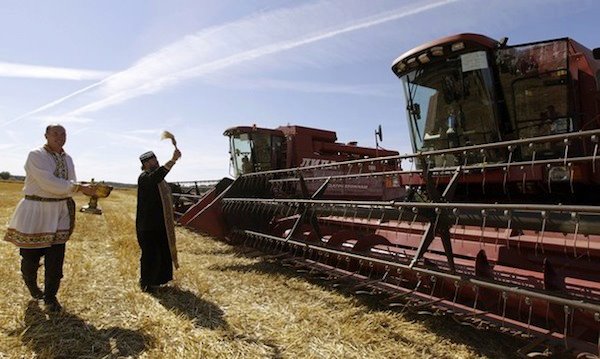
Today and article appeared on the pages of the Huffington Post regarding the drought situation here in the Unites States.  If we do not receives some rain the in the Midwest very soon the entire crop could be lost and that would have an impact on food prices for the future.  The economy is bad enough that we do not need to see a rise in food prices as well.

So what are we to do?  Well, we Orthodox Christians turn to prayer at times like these.  In the Great Book of Needs, Volumn 4 appears a Molieben (supplicaiton) to be sung in the time of drought.  I have copied one of the prayers below that can be said by all of us.  We should all add this prayer to our daily prayers and ask for the intercession of the Saints here.

There is reference to Prophet Elijah the Tishabite whose feast day is celebrated today, July 20th.  It is fitting that we start this prayer on this day.  I am asking all of my readers, Orthodox or not, to please say this prayer that the Lord has mercy on His creation and brings the rain that we so desperately need.

Prayer in the Time of Drought
The work of Kallistos, Patriarch of Constantinople
From the Great Book of Needs, Vol. 4 pg. 50

O Master, Lord our God, Who didst hear Elijah the Tishbite because of his zeal for Thee, and for a time didst command that rain be held back from being sent unto the earth, and again at his prayer didst grant it fruit-bearing rain: Do Thou Thyself, O Master of all, Who art being entreated, out of Thy deep compassion grant abundant rain unto Thine inheritance; and, overlooking our sins, do Thou send down Thy rains upon every place entreating and praying for it. Make glad the face of the earth, for the sake of Thy poor people and infants, and animals and all others, for they trust in Thee, that Thou wilt give drink unto them in due season. For Thou art our God, a God Who showeth mercy and saveth, and unto Thee do we send up glory: to the Father, and to the Son, and to the Holy Spirit, now and ever, and unto the ages of ages, Amen.

July 20 ~ The holy and glorious venerable-martyr Maria Skobtsova

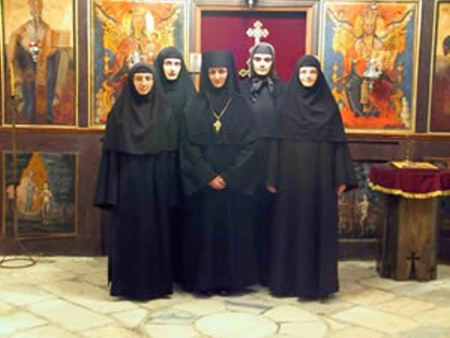
Mother Maria of Paris

The holy and glorious venerable-martyr Maria Skobtsova (also Saint Mary of Paris or Mother Maria) was a nun and martyr in Paris in the early twentieth century. She encouraged hospitality and love of one’s neighbor, often in the most uncompromising of terms. She considered this to be the foundation of the Christian gospel, and she embodied it in her life. She is often compared to Dorothy Day, an American Roman Catholic who founded the Catholic Worker movement. Saint Mary died a martyr in Ravensbrück prison. She was glorified by the Church of Constantinople on January 16, 2004, along with her companions, Priest Dmitri Klepinin, her son George (Yuri) Skobtsov, and Elie Fondaminsky. They are commemorated on July 20.

Born to a well to do, upper-class family in 1891 in Latvia, she was given the name Elizaveta Pilenko. Her father died when she was a teenager, and she embraced atheism. In 1906 her mother took the family to St. Petersburg, where she became involved in radical intellectual circles. In 1910 she married a Bolshevik by the name of Dimitri Kuzmin-Karaviev. During this period of her life she was actively involved in literary circles and wrote much poetry. Her first book, Scythian Shards, was a collection of poetry from this period. By 1913 her marriage to Dimitri had ended.

Through a look at the humanity of Jesus—”He also died. He sweated blood. They struck his face”—she began to be drawn back into Christianity. She moved—now with her daughter, Gaiana—to the south of Russia where her religious devotion increased.

In 1918, after the Bolshevik Revolution, she was elected deputy mayor of the town of Anapa in Southern Russia. When the White Army took control of Anapa, the mayor fled and she became mayor of the town. The White Army put her on trial for being a Bolshevik. However, the judge was a former teacher of hers, Daniel Skobtsov, and she was acquitted. Soon the two fell in love and were married.

Soon, the political tide was turning again. In order to avoid danger, Elizaveta, Daniel, Gaiana, and Elizaveta’s mother Sophia fled the country. Elizaveta was pregnant with her second child. They traveled first to Georgia (where her son Yuri was born) and then to Yugoslavia (where her daughter Anastasia was born). Finally they arrived in Paris in 1923. Soon Elizaveta was dedicating herself to theological studies and social work.

In 1926, Anastasia died of influenza—a heartbreaking event for the family. Gaiana was sent away to Belgium to boarding school. Soon, Daniel and Elizaveta’s marriage was falling apart. Yuri ended up living with Daniel, and Elizaveta moved into central Paris to work more directly with those who were most in need.

Her bishop encouraged her to take vows as a nun, something she did only with the assurance that she would not have to live in a monastery, secluded from the world. In 1932, with Daniel Skobtov’s permission, an ecclesiastical divorce was granted and she took monastic vows. In religion she took the name Maria. Her confessor was Father Sergius Bulgakov. Later, Fr. Dmitri Klepinin would be sent to be the chaplain of the house.

Mother Maria made a rented house in Paris her “convent.” It was a place with an open door for refugees, the needy and the lonely. It also soon became a center for intellectual and theological discussion. In Mother Maria these two elements—service to the poor and theology—went hand-in-hand.

When the Nazis took Paris in World War II, Jews soon approached the house asking for baptismal certificates, which Father Dimitri would provide them. Many Jews came to stay with them. They provided shelter and helped many escape. Eventually the house was closed down. Mother Maria, Fr. Dimitri, Yuri, and Sophia were all taken by the Gestapo. Fr. Dimitri and Yuri both died at the prison camp in Dora.

Mother Maria was sent to the camp in Ravensbrück, Germany. On Holy Saturday, 1945, Mother Maria was taken to the gas chamber and entered eternal life. It is suggested that she took the place of another who had been selected for that death.

Mother Maria was glorified by act of the Holy Synod of the Ecumenical Patriarchate on January 16, 2004. The glorification of Mother Maria, together with Fr. Dimitri, Yuri, and Ilya Fondaminsky took place at the Cathedral of Saint Alexander Nevsky in Paris on May 1 and 2, 2004. Their feast day is July 20. Mother Maria has also her “dies natalis” as feast day on March 31.

Source

On Episcopal Duties

St. John Maximovitch 1896-1966

Apart from caring for your own flock, you must also spread Christ’s faith among those who do not yet know Truth. The preaching of Christ’s teaching and faith in Christ and the Life-creating Trinity is the fulfillment of a duty laid down by Christ on the apostles and the required duty of archpastor and pastors. You must bring the Light of Christ to all who do not believe in Christ, shining with the light of your own example and proclaiming the words of eternal life.

Following Saints Basil the Great and John Chrysostom, offering prayers at the Divine Liturgy for the entire Church, for the entire universe, a bishop must know not only his own territory, but must take to heart all that is transpiring in the entire universal Church. Without interfering in affairs of others and without any pretenses on the authority of other bishops, strive to offer help wherever you can, giving brotherly counsel where necessary, but above all by the example of your own stand for the Truth and defense of it. (Archbishop John,  A Word of Instruction Given When Presenting the Staff to a New Bishop. Manuscript: Western American Diocese Archives)

Being a Christian is not Easy

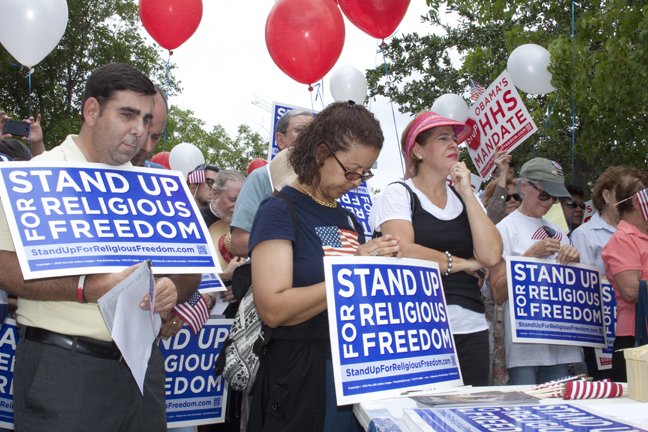
Being a Christian is not easy.  It was not easy 2,000 years ago and it is not easy today.  Jesus told us in the Gospel of John to remember that the world hated Him before it hated us (John 15:18).  When we claim ourselves as Christian the world will turn against us and we have to be ready for that.  Christianity is not for the faint of heart.

If being a Christian is not easy being an Orthodox Christian is even harder.  It’s harder because we have a belief system that has not changed in 2,000 years.  We believe that men and women are created in the image and likeness of God and that we are living Icons and that humanity needs to be respected as a gift along the entire spectrum of life.  This is why the Psalmist says in Psalm 139:13, “For you created my inmost being; you knit me together in my mother’s womb.”  And there is no law created by man that can change the law of the Lord.  This is why Orthodox Christians cannot support abortion, euthanasia, the death penalty, and war.  All of these disrespect the person that was created by God.

We believe that man is fallen and as such has a propensity toward sin, but that is not the end for “God so loved the world that He have his only begotten Son” (John 3:16).  We believe that Jesus is “the way” the only way to salvation.  We believe that sin exists in the world and we need to turn away from sin.  We believe that sin darkens the soul and estranges us from God, it does not estrange God from us, but sinning is a rejection of God.  Jesus constantly pointed out people’s sins to them and showed them how to get their life back on track.  God loves each of us and calls us to repent and change our lives.  We are called to conform to Christ not to the world.  We believe that the actions of people are sinful not the person, again they have been created in the image and likeness of God.  We are called to love our neighbor, but we are not called to accept their behavior.  Some have said “love the sinner hate the sin” a little simplistic but it works.

We believe that all are welcome to the Church as a place of healing and reconciliation but if your behavior is not in concert with the beliefs of traditional Christianity as revealed to us through God and the tradition of the Church, you must repent of that behavior and seek reconciliation through the Sacramental life of the Church.  We believe in fasting and abstinence during certain times of the year as prescribed in Scripture as well as the tradition of the Church, not for punishment but as a tool to aid us in controlling the passions, and pointing us toward virtuous living.

We believe in traditional values such as chastity and virginity.  There are only two ways to live our life; if we are not married then we are called to virginity.  We are called to abstain from sexual relations until we are married.  Sexual intimacy is a gift from God, but that gift, like all gifts God gives, requires responsibility.  Fornication is therefore sinful and not in concert with the life of a Christian.  We also hold that if married that relationship is sacramental and should remain monogamous.  Sexual relations with anyone other than then the person you are married to is adultery and therefore sinful behavior.  Fornication and adultery harm not only your soul but the soul of the person with whom you are having relations and cheapen the gift of human sexuality.  Chastity in marriage and the single life is how true Christians are called to live.

We believe that pornography (on any level) is wrong and that making an object out of women, or men is an abomination as it disrespects the creation.  When a man or a woman participates in pornography their minds turn to lustful thoughts and have the potential of leading us into sin.  We objectify the person in pornography by seeing them only as an object and not seeing them as created human beings in the image and likeness of God.  The person is someone’s daughter or someone’s son.  Would you want your daughter or your son to be used for gratification only?  In the Orthodox view of sexual intimacy it is not only about the needs of one partner but for the needs of both, the two become one flesh, as I quoted above.  Your body ceases to be your own, it now belongs to the other person and theirs belongs to you.  This is what true marriage is.

We still believe in traditional values that marriage is between one man and one woman as was blessed by God in the Garden at Creation and we believe that this is what Jesus was making reference too in Matthew’s Gospel, “For this reason a man shall leave his father and mother and be joined to his wife, and the two shall become one flesh” (Matthew 19:5).  We believe in the traditional definition of the family and that marriage is forever.  Divorce is allowed because we are weak, but it is an abomination as is taught in Holy Scripture.  We do not say in the marriage ceremony “till death do us part” as marriage is eternal.  Remarriage after the death of one’s partner is rare and should not be entered into lightly.  This is the reason the second and third marriage ceremonies in the Orthodox Church are different from the first one.

We believe that children are a gift from God and therefore should be cherished.  Parents have an obligation, as the first teachers of their children, to instill in them a true sense of the moral life.  As Orthodox Christians this means that same sex couple should not be raising children, unless of course there is no sexual relationship between them.  Children need both the mother and the father in their relationship.  For this reason the family is considered sacramental and a smaller version of the church, as community.  Men you need to be dad’s to your children.  Being a father is the easy biological part, being a dad takes work.  We need fathers to be engaged in the family and to own up to their responsibility.  The family needs to be of one faith and they need to worship together whenever possible.  The family is under attack in our society and we need to instill in our children the values of the traditional family.  However, we do understand there are reasons why fathers and mothers of their children do not live together but that does not remove the responsibility of either party.  Parents need to raise their children, not television and certainly not the government.

We believe that the doctrines of our Church were established during the first seven Ecumenical Councils as revealed through the Holy Spirit and although we have a different way of expressing them today, we teach what has been handed down to us.  We teach what the Church teaches not what we think, as a priest my opinion does not matter; it is what the Church teaches and has taught that matters.  As such we do not change out doctrines because a majority of people believe this or that.  We do not change our beliefs to make it easy for people, it is not about making you feel good, the Church should be challenging you to reach and unlock the potential that we all have to live the life and to be the people that God has called us to be!

We believe in daily prayer and Scripture reading.  Talking with God, your Father is an important aspect of the life of an Orthodox Christian.  I have written before about how impressed I was with the spirituality of the Romanians I met on my first trip to Romania in 1992.  Their faith in God and their spirituality is what got them through years of brutal dictatorship and the hard life they were endured to live.  It is what helped those who were imprisoned for the faith to endure their imprisonment and led them to pray for their captives.  We need, and strive to have, a deep spirituality that will enable us to live to the potential that we have all been called to.

Being an Orthodox Christian is not easy, it requires us to reject most of what the world holds dear.  It requires us to modify our life to that of Christ and His Church, but this process takes a lifetime.  We believe that each person needs a spiritual father to help them along this path and we believe in complete and frequent confession.  In confessing our thoughts and desires and sin we are asking God for help.  Saint John of Kronstadt, said “A priest is a spiritual physician. Show him your wounds, without being ashamed, sincerely, openly, with son-like trust and confidence; for the confessor is your spiritual father, who should love you more than your own father and mother; for Christ’s love is higher than any carnal, natural love. He must give an answer to God for you.”  The priest does not forgive you of your sins, only God can do that, but as a fellow sinner and traveler on the journey, the priest is there for help and assistance in the journey.  Sometimes he needs to help you carry your burden, and other times he is just there to show you the way.  But if the confession is not true and open, then help cannot be given.  We need to teach more about confession and the reasons for it.

Jesus tells us in Luke’s Gospel, “If anyone desires to come after Me, let him deny himself and take up his cross daily and follow me” (Luke 9:23).  This is our cross that we have to pick up each day.  This is the cross that we are called to bear each and every day and it is a commitment that we have to make each and every day.  The Church exists here on earth to help us to do that.  The Church needs to challenge our behavior when it goes astray not validate it.

Being an Orthodox Christian is not easy.  Holding to traditional beliefs is not easy and if that makes me narrow minded, as I have been accused of in the past, then I guess I am narrow minded for Jesus told us His way was the narrow way.  That is the life I chose to follow, the way of Christ, the way that has been the way for lo these 2,000 years.  If you choose to follow it will not be easy, it will be hard work and you will be scorned.  But if you live it to its fullest potential it is indeed a beautiful way to live.

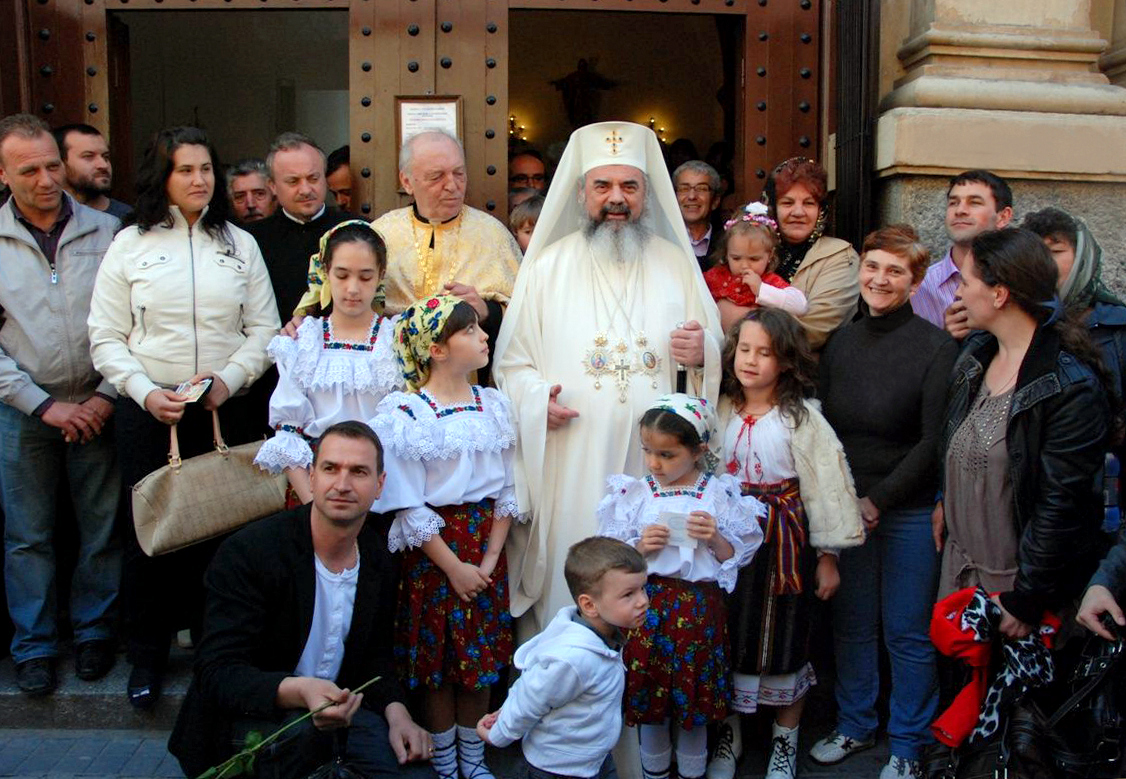
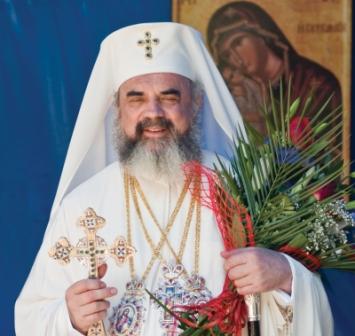
His Beatitude Patriarch Daniel celebrates 61 years of life

His Beatitude Patriarch Daniel

On 22 July 2012, His Beatitude Patriarch Daniel celebrates the anniversary of 61 years of life.

From 20 – 25 July 2012, the Patriarch of Romania will be in Prahova area, Archdiocese of Bucharest, to celebrate missionary services and pay working visits. Therefore, the congratulation messages on the occasion of the anniversary of His Beatitude Patriarch Daniel’s birthday can be handed over directly to Patriarchal Counsellor Paisie Teodorescu at the Patriarchal Residence of Bucharest or sent by e-mail cabinet.patriarhal@patriarhia.ro, or by fax number 021.406.71.62.

thanksgiving prayer at the anniversary of the Patriarch of Romania’s birthday will be said during the Divine Liturgy celebrated at the Patriarchal Cathedral of Bucharest.

The official celebration of His Beatitude Patriarch Daniel is 30 September, the date of His Beatitude’s enthronement as Patriarch of the Romanian Orthodox Church (30 September 2007).

The Gates of Hades Will Never Prevail

St. Joseph of Petrograd 1872-1937

Now many are complaining about the hard times for the Church… Remembering the words of the Saviour with complete accuracy, we must expect still worse times for the Church… Without any exaggeration, she must truly live through a condition close to complete destruction and her being overcome by the gates of hell. Perhaps with us, exactly as in the land of freedom, America, they will drive the Name of Christ out of the schools. They will adapt prayer assemblies into ordinary meetings permitted by the police, as in that other land of freedom, France, and will convert the heritage of the Church, together with the very right of faith, into the property of the state. Perhaps the faith of Christ will again hide in the woods, the deserts, the catacombs, and the confession of the faith will be only in secret, while immoral and blasphemous presentations will come out into the open. All this may happen! The struggle against Christ will be waged with desperation, with the exertion of the last drop of human and hellish energy, and only then, perhaps, will it be given to hell and to mankind to assure us with complete obviousness of the unfailing power and might of the priceless promise of Christ: ‘I will build My Church, and the gates of hell will not prevail against her’ (Matthew 16:18). (Archimandrite Joseph, Kormchij, 23 May, 1909; quoted in Sergius and Tamara Fomin, Rossia pered vtorym prishestviem [Russia before the Second Coming], Moscow: Rodnik, 1994, vol. I, p. 413.)

h/t Classical Christianity

The Way

I took a little break yesterday afternoon and I watched the Movie “The Way” starring Martin Sheen.  I had heard a lot about this movie but I had yet to see it.

Martin Sheen plays Tom an American doctor who faces a tragedy that brings him to  St. Jean Pied de Port, France the start of the Camino de Santiago, also known as The Way of St. James.  The Way is a pilgrimage of some 497 miles ends at the Cathedral of Santiago de Compostela.

Tom undertakes this journey in order to understand his son.  Along the way he meets several people who become like family for him and his life takes twists and turns and changes along the way.  This is the idea of the pilgrimage.  People start it for many reasons but they never finish it the same way they started.  Their life tends to change during the miles that they walk.

For me there were many similarities to the Orthodox spirituality of Theosis.  During the journey toward Theosis our life is supposed to change.  We are on a pilgrimage of sorts as we move along our path much like the journey along the way.  Unless we change as we make this pilgrimage we really are not walking anywhere except in a circle.  We have to change on the pilgrimage.

The take away line from the movie was at the very start.  Tom’s son Daniel is the car heading the airport with his dad.  His dad says that he has chosen this life and Daniel responds, “you don’t chose life dad you live one!”  I have to agree.

I have not been so emotionally touched by a movie in a long time and it has inspired me to one day make the journey that Tom took in the movie.  If you have a chance take the time and see this movie.  I have posted the trailer below.


St. John of Kronstadt on Evil

Photo of St. John of Kronstadt

“Never confuse the person, formed in the image of God, with the evil that is in him, because evil is but a chance misfortune, illness, a devilish reverie.
But the very essence of the person is the image of God, and this remains in him despite every disfigurement.”
St. John of Kronstadt

Priestly Formation ~ Part 4

This is the fourth essay on the subject of priestly formation.

Priestly Formation ~ Part 1
Priestly Formation ~ Part 2
Priestly Formation ~ Part 3

In the past three essays I have concentrated on the job of the seminary in the formation of our clergy, in this essay I would like to focus on the role of the family and of the local parish community in the formation of future clergy.

Any formation begins in the home.  The parents are the first teachers of their children and as such they need to be informed of the faith so they can pass it along to their children.  Does the family pray before meals at the table?  Back up, does the family even sit at table anymore to even have time of prayer?  Doo parents and children read the Scriptures and pray together, do the parents attend church with their children or do they simply drop them off?  Do parents participate in the Sacramental life of the parish?  By this do they partake of Eucharist and Confession more than once or twice a year?  If parents are the first teachers of their children what are we teaching them?

All of this presupposes that the parents understand their faith.  Based on the comments I have read on the various social networks and on these very pages, I draw the conclusion that we have done a very poor job of teaching the faithful what the church teaches.  We hold to an ancient faith that does not compromise on her positions based on opinion polls.  It is difficult to be an Orthodox Christian in this world that teaches us we have to be accepting of everything.  There exists confusion in the some of the pews.  I have seen things written by my fellow clergy that make me wonder about their own spirituality let alone what they are teaching their faithful.

The future priest should be called out of the community.  The man should feel a call from God and that call should be verified by the local community but if that community is not spiritually mature this becomes a problem.  As much as we need priests in the church today, not every man that feels he is called should be ordained.  Graduation from seminary should not be the only qualification.

The potential candidate for the priesthood should be a man who is currently meeting with a spiritual father that is known to his bishop.  He should avail himself of the Sacrament of confession on a regular basis, I would suggest monthly at a minimum, and he should be someone who receives the Eucharist also on a regular basis.  And he should have a love for the church and all she believes in.  He needs to be a man of deep prayer.

There is a lot of pressure on the local community but healthy communities will help produce healthy priests that will in turn produce healthy communities.

Sunday Sermon ~ Go Forth

On the 6th Sunday after Pentecost the Orthodox Church remembered the Fathers of the first six Ecumenical Councils.  Also commemorated on this day was the Holy Prince and Equal to the Apostles Vladimir of Kiev.  The Gospel comes from St. Matthew Chapter 5.

The Reading is from Matthew 5:14-19

The Lord said to his disciples, “You are the light of the world. A city set on a hill cannot be hid. Nor do men light a lamp and put it under a bushel, but on a stand, and it gives light to all in the house. Let your light so shine before men, that they may see your good works and give glory to your Father who is in heaven. Think not that I have come to abolish the law and the prophets; I have come not to abolish them but to fulfill them. For truly, I say to you, till heaven and earth pass away, not an iota, not a dot, will pass from the law until all is accomplished. Whoever then relaxes one of the least of these commandments and teaches men so, shall be called least in the kingdom of heaven; but he who does them and teaches them shall be called great in the kingdom of heaven.”

Sermon Audio

error: Content is protected !!