14 September ~ Elevation of the Holy Cross

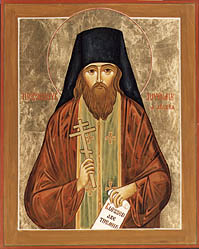
Saint Helen, the mother of Saint Constantine the Great, when she was already advanced in years, undertook, in her great piety, the hardships of a journey to Jerusalem in search of the cross, about the year 325. A temple to Aphrodite had been raised up by the Emperor Hadrian upon Golgotha, to defile and cover with oblivion the place where the saving Passion had been suffered. The venerable Helen had the statue of Aphrodite destroyed, and the earth removed, revealing the Tomb of our Lord, and three crosses. Of these, it was believed that one must be that of our Lord, the other two of the thieves crucified with Him; but Saint Helen was at a loss which one might be the Wood of our salvation. At the inspiration of Saint Macarius, Archbishop of Jerusalem, a lady of Jerusalem, who was already at the point of death from a certain disease, was brought to touch the crosses, and as soon as she came near to the Cross of our Lord, she was made perfectly whole. Consequently, the precious Cross was lifted on high by Archbishop Macarius of Jerusalem; as he stood on the ambo, and when the people beheld it, they cried out, “Lord have mercy.” It should be noted that after its discovery, a portion of the venerable Cross was taken to Constantinople as a blessing. The rest was left in Jerusalem in the magnificent church built by Saint Helen, until the year 614. At that time, the Persians plundered Palestine and took the Cross to their own country (see Jan. 22, Saint Anastasius the Persian). Late, in the year 628, Emperor Heraclius set out on a military campaign, retrieved the Cross, and after bringing it to Constantinople, himself escorted it back to Jerusalem, where he restored it to its place.

From http://www.goarch.com/

Jobs Act Usurps Liberty, Christian Charity

From the Acton Institute Blog
President Obama wants his American Jobs Act passed immediately. You know this already—he made sure he delivered that message in his speech: “Pass this jobs plan right away” was his refrain. President Obama has definitely not read the Federalist Papers in a while. If he had, he would not be encouraging Congress to pass half-a-trillion dollars of new spending at a moment’s notice.

Congress is not a quick-strike team, and the Senate especially is not designed to be a rapidly responsive body. James Madison explained in Federalist #62 that it is to be slow and deliberative, because “mutable government” is ineffective and dangerous.

What indeed are all the repealing, explaining, and amending laws, which fill and disgrace our voluminous codes [under the Articles of Confederation], but so many monuments of deficient wisdom; so many impeachments exhibited by each succeeding against each preceding session; so many admonitions to the people, of the value of those aids which may be expected from a well-constituted senate?…
To trace the mischievous effects of a mutable government would fill a volume…. It poisons the blessing of liberty.
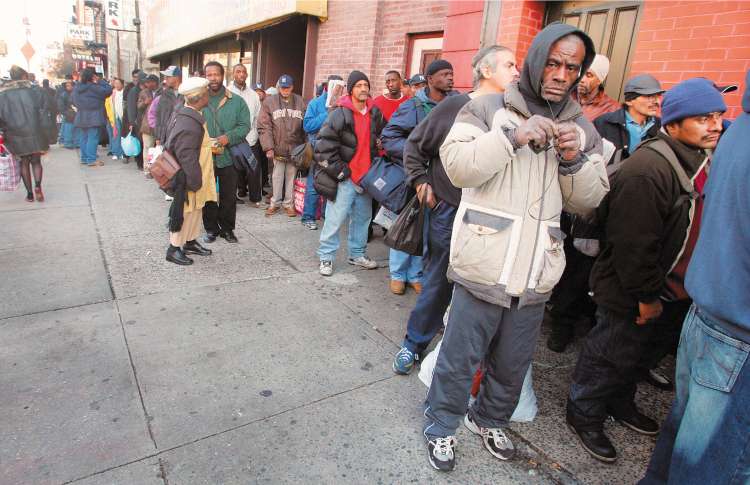
The president’s urgency is understandable—he wants desperately to help the economy, and it could use help. It was announced today that the poverty rate is higher than it has been in 28 years, that the median household income has fallen, and that the number of people with health insurance has fallen. In his jobs speech, the president asked Congress to put political games aside, saying,
The next election is 14 months away. And the people who sent us here—the people who hired us to work for them—they don’t have the luxury of waiting 14 months. Some of them are living week to week, paycheck to paycheck, even day to day. They need help, and they need it now.
The irony may be painful, but President Obama was begging assistance from a body designed to fail him. And if Congress does pass something, the rich will be much more able to take advantage of the unintended consequences of the bill—as Madison put it:
Another effect of public instability is the unreasonable advantage it gives to the sagacious, the enterprising, and the moneyed few over the industrious and uniformed mass of the people.
Nobody actually expects relief for the poor from the Jobs Act because economic growth isn’t generated by money taken out of the hands of productive businesses and entrepreneurs. (Google “cost of stimulus jobs” for a dark laugh.) It takes time to build up a business that contributes to the economy—Americans don’t really believe that 20th century progressives discovered the secret of warp speed, government-catalyzed growth.

In the mean time, who takes care of those who live “week to week” and “day to day?” Private institutions, of course (see Acton’s Principles for Budget Reform): churches and local charities and other groups that are equipped to provide assistance in less than 14 months. As Bruce Walker explained in an Acton Commentary last Christmas,

If one relies on government programs to help the poor, how can one be blamed for asserting “I gave at the office” rather than ponying up at the Salvation Army drum or the church collection basket, or buying a Christmas goose for the laid-off father of the family at the end of the block?
It’s getting too easy to pick on this administration.

Climacus: On How to Behave In the World

Some people living carelessly in the world have asked me: ‘We have wives and are beset with social cares, and how can we lead the solitary life?’ I replied to them: ‘Do all the good you can; do not speak evil of anyone; do not steal from anyone; do not lie to anyone; do not be arrogant towards anyone; do not hate anyone; do not be absent from the divine services; be compassionate to the needy; do not offend anyone; do not wreck another man’s domestic happiness, and be content with what your own wives can give you. If you behave in this way, you will not be far from the Kingdom of Heaven.

The Ladder of Divine Ascent, St. John Climacus. Holy Trinity Transfiguration Monastery, Boston, 2001.

h/t Milk & Honey Blog

Scripture Readings ~ 13th Sunday after Pentecost

Today’s commemorated feasts and saints
13th SUNDAY AFTER PENTECOST — Tone 4. Sunday Before the Elevation of the Cross. Afterfeast of the Nativity of the Theotokos. Ven. Theodora of Alexandria (474-491). Translation of the Relics of Ven. Sergius and Herman, Wonderworkers of Valaam. Martyrs Demetrius, his wife Euanthia, and their son Demetrian, at Skepsis on the Hellespont (1st c.). Martyrs Diodorus, Didymus, and Diomedes, of Laodicea. Martyr Ia and 9,000 Martyrs with her, of Persia (362-364). St. Euphrosynus the Cook, of Alexandria (9th c.). The Weeping “KAPLUNOVSKAYA” Kazan’ Icon of the Most-holy Theotokos (1689).

Mark 16:1-8

Now when the Sabbath was past, Mary Magdalene, Mary the mother of James, and Salome bought spices, that they might come and anoint Him. Very early in the morning, on the first day of the week, they came to the tomb when the sun had risen. And they said among themselves, “Who will roll away the stone from the door of the tomb for us?” But when they looked up, they saw that the stone had been rolled away-for it was very large. And entering the tomb, they saw a young man clothed in a long white robe sitting on the right side; and they were alarmed. But he said to them, “Do not be alarmed. You seek Jesus of Nazareth, who was crucified. He is risen! He is not here. See the place where they laid Him. But go, tell His disciples-and Peter-that He is going before you into Galilee; there you will see Him, as He said to you. So they went out quickly and fled from the tomb, for they trembled and were amazed. And they said nothing to anyone, for they were afraid.

Galatians 6:11-18

See with what large letters I have written to you with my own hand! As many as desire to make a good showing in the flesh, these would compel you to be circumcised, only that they may not suffer persecution for the cross of Christ. For not even those who are circumcised keep the law, but they desire to have you circumcised that they may boast in your flesh. But God forbid that I should boast except in the cross of our Lord Jesus Christ, by whom the world has been crucified to me, and I to the world. For in Christ Jesus neither circumcision nor uncircumcision avails anything, but a new creation. And as many as walk according to this rule, peace and mercy be upon them, and upon the Israel of God. From now on let no one trouble me, for I bear in my body the marks of the Lord Jesus. Brethren, the grace of our Lord Jesus Christ be with your spirit. Amen.

John 3:13-17

No one has ascended to heaven but He who came down from heaven, that is, the Son of Man who is in heaven. And as Moses lifted up the serpent in the wilderness, even so must the Son of Man be lifted up, that whoever believes in Him should not perish but have eternal life. For God so loved the world that He gave His only begotten Son, that whoever believes in Him should not perish but have everlasting life. For God did not send His Son into the world to condemn the world, but that the world through Him might be saved.

11 September ~ St. Deiniol, Abbot of Bangor

In Welsh-Deiniol, in Latin-Dainiolus and in English-Daniel.
Deiniol, born in the early 6th century, was an important figure in the development of Christianity in North Wales. The son of a Celtic chieftain, he founded two monasteries, both named Bangor, one of which was close to the modern town of that name…
These were flourishing houses, allegedly with a total of over 2000 monks; many were to perish near Chester at the hands of a pagan king of Northumbria. Deiniol himself is regarded as the first bishop of Bangor. There are numerous dedications to him in North Wales (including the famous library which the Prime Minister Gladstone established in his country seat at Hawarden, near Chester), but few in the South.
In 545 he and St. Dyfrig, who worked in the border country, took part in a synod with St. David which settled many matters regarding the discipline of penance (something over which Celtic Christians enthused); this suggests that Deiniol was regarded as David’s equal. He died in about 584.

The Nativity of Our Most Holy Lady Theotokos and Ever Virgin Mary

The Nativity of Our Most Holy Lady Theotokos and Ever Virgin Mary: The Most Holy Virgin Mary was born at a time when people had reached such a degree of moral decay that it seemed altogether impossible to restore them. People often said that God must come into the world to restore faith and not permit the ruin of mankind.
The Son of God chose to take on human nature for the salvation of mankind, and chose as His Mother the All-Pure Virgin Mary, who alone was worthy to give birth to the Source of purity and holiness.
The Nativity of Our Most Holy Lady Theotokos and Ever Virgin Mary is celebrated by the Church as a day of universal joy. Within the context of the Old and the New Testaments, the Most Blessed Virgin Mary was born on this radiant day, having been chosen before the ages by Divine Providence to bring about the Mystery of the Incarnation of the Word of God. She is revealed as the Mother of the Savior of the World, Our Lord Jesus Christ.
The Most Holy Virgin Mary was born in the small city of Galilee, Nazareth. Her parents were Righteous Joachim of the tribe of the Prophet-King David, and Anna from the tribe of the First Priest Aaron. The couple was without child, since St Anna was barren.
Having reached old age, Joachim and Anna did not lose hope in God’s mercy. They had strong faith that for God everything is possible, and that He would be able to overcome the barrenness of Anna even in her old age, as He had once overcame the barrenness of Sarah, spouse of the Patriarch Abraham. Sts Joachim and Anna vowed to dedicate the child which the Lord might give them, to the service of God in the Temple.
Childlessness was considered among the Hebrew nation as a Divine punishment for sin, and therefore the righteous Sts Joachim and Anna had to endure abuse from their own countrymen. On one of the feastdays at the Temple in Jerusalem the elderly Joachim brought his sacrifice to offer to God, but the High Priest would not accept it, considering him to be unworthy since he was childless.
St Joachim in deep grief went into the wilderness, and there he prayed with tears to the Lord for a child. St Anna wept bitterly when she learned what had happened at the Jerusalem Temple. Never once did she complain against the Lord, but rather she prayed to ask God’s mercy on her family.
The Lord fulfilled her petitions when the pious couple had attained to extreme old age and prepared themselves by virtuous life for a sublime calling: to be the parents of the Most Holy Virgin Mary, the future Mother of the Lord Jesus Christ.
The Archangel Gabriel brought Joachim and Anna the joyous message that their prayers were heard by God, and of them would be born a most blessed daughter Mary, through Whom would come the Salvation of all the World.
The Most Holy Virgin Mary surpassed in purity and virtue not only all mankind, but also the angels. She was manifest as the living Temple of God, so the Church sings in its festal hymns: “the East Gate… bringing Christ into the world for the salvation of our souls” (2nd Stikhera on “Lord, I Have Cried”, Tone 6).
The Nativity of the Theotokos marks the change of the times when the great and comforting promises of God for the salvation of the human race from slavery to the devil are about to be fulfilled. This event has brought to earth the grace of the Kingdom of God, a Kingdom of Truth, piety, virtue and everlasting life. The Theotokos is revealed to all of us by grace as a merciful Intercessor and Mother, to Whom we have recourse with filial devotion.

Source

Sermon ~ 12th Sunday after Pentecost

The Reading is from Matthew 19:16-26
At that time, a young man came up to Jesus, kneeling and saying, “Good Teacher, what good deed must I do, to have eternal life?” And he said to him, “Why do you call me good? One there is who is good. If you would enter life, keep the commandments.” He said to him, “Which?” And Jesus said, “You shall not kill, You shall not commit adultery, You shall not steal, You shall not bear false witness, Honor your father and mother, and You shall love your neighbor as yourself.” The young man said to him, “All these I have observed; what do I still lack?” Jesus said to him, “If you would be perfect, go, sell what you possess and give to the poor, and you will have treasure in heaven; and come, follow me.” When the young man heard this he went away sorrowful; for he had great possessions.
And Jesus said to his disciples, “Truly, I say to you, it will be hard for a rich man to enter the kingdom of heaven. Again I tell you, it is easier for a camel to go through the eye of a needle than for a rich man to enter the kingdom of God.” When the disciples heard this they were greatly astonished, saying, “Who then can be saved?” But Jesus looked at them and said to them, “With men this is impossible, but with God all things are possible.”

The Rich Young Man

Sometimes I think it an interesting exercise, when preparing for a sermon, to look at what the periscope of Scripture is not saying rather than what it is saying. This past Sunday we read the excerpt from the Gospel of St. Matthew called the Parable of the Rich Young Man.
In this story Jesus is confronted by a rather wealthy young man who asks Jesus what he must do to have eternal life. Jesus responds by listing a partial list of the Commandments and the young man states that he has followed these from his youth. He asks Jesus what else he must do, and Jesus responds by telling him to go and sell all that he has, give it to the poor, and follow Him. Obviously the young man cannot do this as he leaves with his head hanging.
There are several things here in this passage that warrant a much closer investigation. By laying out the Commandments as he does, Jesus is saying that Ritual Observance of the Law is important but it is not the only thing that we should be doing. Formal observance of the Law in this case does not equate to righteousness.
In verse 21 Jesus tells the man if he is to be perfect he must do something, in this case sell all he has. Perfection is another word that is often misunderstood in Biblical Theology. As humans we can never obtain perfection, in the common understanding of the word. Perfection for a Christian means being willing to sacrifice, a deep, lasting, meaningful sacrifice. A sacrifice that is freely given!
So what is Jesus telling this young man? Jesus asked this man to sacrifice what he held dear, the one thing that was tying him to this transitory life here on earth, his riches. He asked this man, and this man only to do this not all rich people. What this passage prompts us to think about is what is it that holds us back from truly following Christ? Is it money, a house, a car? What is it that we have made a god and placed above our sacrifice that each of us are called to make? We are the only ones that can answer this question.
This passage is often used to illustrate how Jesus felt about rich people, that in order to truly follow Him they needed to give everything away. Well that is one interpretation and dare I say not a very correct one. The 4th Century Church Father John Chrysostom, commenting on this particular periscope, writes that the giving away of all of his possessions is the least of the instructions of Christ, following Christ in all things is far more important of a sacrifice then giving away of ones possessions.
So the question for each of us is, what is it that Christ is asking us to sacrifice? What is it that we possess or dare I say possesses us and keeps us from truly following Him? We are the only ones that can answer that question.
error: Content is protected !!