Sermon ~ Be Patient in All Things

I have always enjoyed reading Saint Paul.  He has a way of getting right to the heart of the matter without mincing his words.  He tells it like it is, which in his day was rare and today should be a lot rarer than it is.  Although he told it like it is, he never did it out of malice and he always, under line always, did it with love.

Writing to the Church in Rome, Saint Paul lays out some rules if you will.  He speaks to them about the grace that has been given to us.  You see, we are all given gifts by God, we may not know what they are or we may be hiding them for some reason or another, but all of us have been given graces.  By virtue of our baptisms we have become members of the God’s family and with that comes a certain amount of responsibility.  We are not alone in this for, believe it or not, we need each other.  There is no such thing as a solitary Christian or a Christian in isolation.  Even the hermits of the early Church that fled to the desert were not alone for long as the people came from the cities.  So we all have gifts and we need to exercise those gifts.

Today’s Epistle reading is a great illustration of what this truly means.  In the first few verses, St. Paul lays out the various roles in the Church.  “Although there are many members of the body, they do not all have the same function, so we, being many, are one body in Christ and individually members of one another.”  We are family, and with that comes some responsibility.

St. Paul goes on to say, that the gifts we have been given differ according to the Grace that we have received, and then he names a few, prophecy, ministry, teaching, exhortation, liberality, leadership, diligence, but then he tells us what we must do with all of these gifts.  If you re-read his words that we just heard moments ago, you will discover that what St. Paul is saying is that no matter what your job or station in life, whatever it is that you are doing we must do it to the best of our ability because by doing so, we bring glory to God.

But the same is true on the other side.  If we are not using our gifts to the full potential, and if we are not doing whatever it is that we are doing to the best of our ability, then we do not bring glory to God and that, in an Orthodox perspective, is not living up to the promises that were made on our behalf at our baptism.

When we call ourselves something, and I don’t care what that something is, it comes with roles and responsibilities that we have to live up too.  Some of us are parents, and that has a responsibility, the greatest responsibility if I might add, but we are also children, brothers, sisters, workers, employers, etc. but we are also Christians and more specifically, Orthodox Christians and that has to mean something.  If we are not practicing our faith to its utmost, then we are not bringing glory to God, and that is what St. Paul is warning us of in this passage today.

There is a line from the Book of Revelation that speaks about what will happen to us if we do not practice our faith at the highest levels.  The writer of Revelation calls us lukewarm and we will be spewn from the mouth of God.  We will be cast out.  I have said this before, Orthodoxy is not just another faith group or denomination, Orthodoxy is, and has to be, a lifestyle.  We are called to be different; we are called to rise above the pettiness of this life to something greater than ourselves.  We are called to care for those less fortunate and to be the voice of the voiceless.  We are called to take stands on issues and not back down no matter what pressure we are getting from the world.  That is what it means to be Orthodox and it is not easy.

But, St. Paul does not stop there, he writes to the Church at Rome, “be kindly to affectionate to one another with brotherly love, in honor giving preference to one another, not lagging in diligence, fervent in spirit, serving the Lord; rejoicing in hope, patient in tribulation, continuing steadfastly in prayer, distributing to the needs of the saints, given to hospitality.”  What Saint Paul is saying here is that we have to think of others before we think of ourselves!  That is what it truly means to be a Christian, putting others before ourselves and our own wellbeing.

And how are we to do this, with love, brotherly love and affection.  But notice towards the end of what he said that we must be patient in tribulations.  I find it somewhat amusing when Christians complain about how the world treats us.  Where in Scripture does Jesus ever say, follow me and life will be easy.  Where in Scripture does Jesus say, follow me and you can continue to do whatever you want regardless of the consequences.  Where in Scripture does Jesus say, love everyone, except those who hate us.  The answer simply is nowhere.  Nowhere in Scripture does Jesus say that if we follow Him our life will be easy.  But, in many places He tells us just the opposite; He tells us that our life is going to be difficult and that the world will hate us, in fact He tells us to remember that when the world hates us, it hated Him first!  But we are to fact tribulations with patient endurance.

We are to see to the needs of the saints, that is all of us by the way, and we are to practice hospitality.  Then comes the most challenging part of what St. Paul is instructing us to do; “bless those who persecute you.”  And just to make sure we understand he adds, “Bless and do not curse.”  We are not only to pray for those who persecute us, but we are to bless them!  We are to impart God’s blessing on them, the same blessing that we impart on those we love and cherish in life.  That is the essence of Christianity.

But how are we supposed to do this?  The fathers and mothers of the Church teach that if we are living a true Christian life, if we are participating in the life of the Church, if we are availing ourselves of the Sacramental life of the Church, if we are “continuing steadfast in prayer, then this will natural for us because the life of the true Christian is all about love, love of God and love of neighbor.  Love, not hate, not curses, but love, unconditional love.  That is what it is all about that is what led Christ to the Cross and that is what should be our guiding principal.  If we truly love one another, with the love of Christ, then the rest will work itself out.

Take St. Paul’s words to heart today and during this Dormition Fast and pray that we might all be able to live them to their fullest.

Sermon ~ God’s Love Protects All

Outside of the Gospels, if I had to choose my favorite book of the Bible I would choose the letter of St. James.  A few years back for Bible Study we spent a great deal of time with this wonderful letter.  If you have not read it I highly recommend spending time in prayerful reading of this pastoral letter.  In fact, the Dormition Fast season is upon us so why not make this your reading for this Holy season that we are about to enter.

In the last chapter of the letter St. James writes that if anyone is sick or suffering let them call the priest, it actually says the elders and that has been translated to mean the priest.  The priest is to be called when someone is sick, it does not matter the time of the day or night, and the priest is to be called to administer the sacraments of the Church.  The Anointing of the Sick has a bad rap; I think people believe that it is the sacrament you receive when all hope is lost.  Sometimes I feel that when I come into the room to anoint someone they are looking for the guy with the sickle to see if he is standing behind me, or maybe even someone from Morill’s funeral home.  The Sacrament of the Anointing is not the Sacrament when hope is lost; the Sacrament of the Sick is the Sacrament of Hope!

One would not dream of starting a journey of any length, without proper preparation.  When you are preparing to head out on vacation, much time is spent in planning and packing all of those things that will be necessary for the journey.  We lay everything out and plan how it will be put into the suitcase so as to maximize the space we have available to us.  The same should be true when we are sick.  I will say this plain, you never know what is going to happen so it is much better to be prepared than not.  If you are sick, of body, mind, or soul, if you are going in for surgery, even if it is day surgery, or if you or your loved one is close to death, call the priest and he will begin the sacrament to you and prepare you for the journey you are about to undertake.  It does not mean you are going to die, but if you are, you should be prepared.

In today’s Gospel from St. Matthew, Jesus encounters two men that are possessed by a demons.  Let me pause here to say that demon possession is real and it is nothing to joke about.  The Church takes this very seriously and this should be approached with great caution.  But Jesus comes upon these men and when they see Him, the demons recognize Jesus and cry out, “What have we to do with you, Jesus, Son of God?”  It is important to say here that even the demons are under the control of God.  The power of God is so great that not even the demons can survive in His presence.  The malice of these demons is so great, but not greater than the power of God.

The demons that had possessed these two men were pure evil.  People are not evil, the actions of people might be evil but people are not evil.  We are all created in the image and likeness of God and by virtue of that we are created out of love, evil comes by virtue of the fall of humanity.  Just as humanity fell in the Garden of Paradise, the demons fell as well and for the same reason, pride.  When we think we know better than God or think we do not need God, we suffer from pride and pride is the root of all other sins.

The demons can do nothing against the power of God and so they have no choice but to flee the men and enter the herd of swine that are nearby.  After they enter the herd, the swine rush down into the sea and die.  You see, God’s love surrounded the men, even thought they were possessed, God’s love surrounded them and protected them from certain death.  As you know, swine were considered unclean and swine herding was forbidden by Jewish Law, so the beasts were sent to their death as a sign of God’s love and protection.  But the swine were also sacrificed to show that no sacrifice is too great for the love of God.

We may not realize it but God’s love and protection surround us every day no matter what we do or how bad we are, the love of God never leaves us.  We may stop loving God or even forget that He is there but God is always around and always loves us.

When we are sick or suffering, the Church is here to bring whatever aid and comfort it can bring.  The church is the place for sinners, there are no saints here.  Jesus did not call saints to follow Him He called the sinners.  Look at who he surrounded Himself with, the lowest of the low and the sinners of this world.  He came not to chastise them, He came to show them love and through that love He demonstrated where there life had come of the rails, so to speak, and then showed them, again with love, how to get their life back on track.

All this past week, Pope Francis has been in Argentina at World Youth Day.  Started by John Paul II, this is a time when the Catholic Youth of the world come together for a week of prayer and learning.  It was reported in the press that almost 3 million turned out for a liturgy on the beach.  3 Million!  He spent time speaking to the youth and to church leaders and he called for a revolution, a revolution of faith.  He told them to get out of the Churches and to bring the love of Christ to the streets, bring the Church to the people don’t wait for the people to come to the Church.

If you have followed Francis at all you know that he is an unconventional Pope.  He has turned away from many of the trappings of his office and turned towards a more simple life, or as simple as the life of the pope can be.  He has visited hospitals and prisons and while he was in Argentina he visited a home for drug addicts.  He listened as each one told their story of how drugs possessed them and how if it was not for the work of those in that home they would still be on drugs today.  A picture of this event has been circulating around, a picture of Francis, Pope of Rome, embracing a drug addict and welcoming him home.  This is what it is all about, this is what Jesus did and this is what we have to do.

The Letter of St. James tells us that we are to show no partiality in our faith; we are to welcome all and minister to all with the love of Christ.  We minster to the sick and the suffering through the sacraments of the Church and, as Jesus did, we show so much love that even the demons flee.

We need to be this hospital, we need to be a place where people can come and find rest and we need to be the place where the love of Christ shines so bright that even the demons flee!

Op-Ed ~ Religious Freedom is About More than Religion

U.S foreign policy should promote liberty of belief – and unbelief

By Robert P. George and Katrina Lantos Swett

The following op-ed appeared in the Wall Street Journal on July 25, 2013 

A common theory about freedom of religion suggests that such a value is grounded in a modus vivendi, or compromise: People agree to respect each other’s freedom in order to avoid religiously motivated strife. But the modus vivendi theory obscures the deep ground of principle on which the right of religious liberty rests and the true reasons for respecting the religious freedom of others.

As a Republican and a Democrat on the U.S. Commission on International Religious Freedom, we are committed, with our colleagues, to advancing religious liberty around the globe. One of our goals is to make clear that such liberty is not simply a matter of sensible social compromise, or just an American ideal or a Western value, but an essential element of human dignity.

We humans reflect on our condition and inquire into the origins of the cosmos and the meaning of our lives. We seek answers to the deepest questions: Where do we come from? What is our destiny? Is there a transcendent source of meaning and value? Is there a “higher law” that obliges us to rise above our personal interests and desires in order to “do unto others as we would have them do unto us”?

Many of us grasp the point of this quest because we experience ourselves as more than merely material beings tied to nature’s necessities. Our most immediate and intimate experiences of ourselves are as free and rational creatures—agents capable of choosing, thus helping to shape our world. We sense that we are responsible for our own actions, and we judge that others, by the same token, are responsible for theirs.

Some argue that this experience is illusory, and that we are determined in our actions purely by material causes. But these arguments themselves presuppose that the quest to understand the truth about the human condition is a deeply worthy one. They honor the questions that give rise to the quest, even in proposing answers meant to establish its futility.

To respect fundamental human rights is to favor and honor the person who is protected by those rights—including the rights to freedom of speech, press, assembly and religion.

To respect the person is to favor human flourishing in its many dimensions. For those who regard humans not just as material beings but also as spiritual ones—free, rational and responsible—it is obvious that their spiritual well-being is no less important than their physical, psychological, intellectual, social and moral well-being.

It should be equally obvious that respect for the flourishing of people requires respect for their freedom—as individuals and together with others in community—to address the deepest questions of human existence and meaning. This allows them to lead lives of authenticity and integrity by fulfilling what they conscientiously believe to be their religious and moral duties.

Religious faith by its nature must be free. A coerced “faith” is no faith at all. Compulsion can cause a person to manifest the outward signs of belief or unbelief. It cannot produce the interior acts of intellect and will that constitute genuine faith.

Coercion in the cause of belief, whether religious or secular, produces not genuine conviction, but pretense and inauthenticity. It is therefore essential that religious freedom include the right to change one’s beliefs and religious affiliation. It also includes the right to witness to one’s beliefs in public as well as private, and to act—while respecting the equal right of others to do the same—on one’s religiously inspired convictions in carrying out the duties of citizenship. Religious liberty includes a heavy presumption against being coerced to act contrary to one’s sense of religious duty. This is a presumption that can be overridden only when necessary to achieve an essential public interest and when no less-restrictive alternative exists.

Because the freedom to live according to one’s beliefs is so integral to human flourishing, the full protections of religious liberty must extend to all—even to those whose answers to the deepest questions reject belief in the transcendent.

The British religious thinker John Henry Newman observed in 1874 that “conscience has rights because it has duties.” We honor the rights of conscience in matters of faith because people must be free to fulfill what they believe to be their solemn duties.

Since America’s founding, the country has honored this form of liberty. Today, when religious freedom in many parts of the world is under siege, one of the aims of U.S. foreign policy should be to combat such intolerance—not just because religious freedom reduces the risk of sectarian conflict, but more fundamentally because it protects the liberty that is central to human dignity.

Mr. George is a professor of jurisprudence at Princeton University and a visiting professor at Harvard Law School. Ms. Swett is president of the Lantos Foundation for Human Rights and Justice. They are, respectively, chairman and vice chairwoman of the U.S. Commission on International Religious Freedom.

Orthodox Evangelism

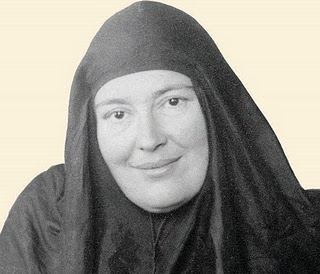
Mother Maria“And if the world is more tired than ever before of religion’s discourse and if the words do not move anyone, then we have a situation worse than that of the tower of Babel. It is not so much a confusion of languages but utter chaos at the very heart of language itself. We no longer understand each other. Communion is completely shattered and we exist only in isolation from each other.[…]The only message which is powerful any longer is not the one which simply repeats the words of Christ, the Word, but the one which makes Him present. Only His presence will make the message, as the Gospel says, light and salt for the world.[…]It is necessary that the Christian message no longer be the repetition of a catechism lesson. It is necessary rather to be one in whom God Himself speaks. If we find Christ again in the Gospel, it will be because each word read there already contains His presence.[…]During the ages of the ecumenical councils, monasticism evoked a powerful appeal, announcing the end and many generations of Christians were moved, yes, transformed by the striking image of the heroism of these holy women and men. Today monasticism is above the world but not within it. Christianity is called now, more than ever, to find itself at the same time both above the world and within the world, and this is essential. The problem is not so much one of new language but the real danger is of reducing the message, lowering its demands. We must again raise it to its proper level. ‘The one who is near Me is near fire.’ It is neither paradox nor dialectic which consumes, but fire. We need to return to the simple and striking language of the parables. ‘Never has anyone spoken with such power.’ (John 7:46)”   (Paul Evdokimov’s pamphlet: A Letter to the Churches, pgs. 7-9)

h/t Fr. Ted’s Blog

Faith is Revolution

This past week, Pope Francis has been attending the World Youth Day is Argentina.  World Youth Day is a creation of Pope John Paul II and it brings the youth of the world together in one place for a variety of spiritual reasons.  I guess you could call this Pope Francis’ first real public appearance.

Since his election he has been breaking down walls in a very entrenched institution.  He has thrown off the palace for more humble rooms, and he does not use the Pope Mobile.  Some have said that he was elected to reform a Church that, like the Orthodox Church, does not react to change well.  I guess the Church, and the world, is going to have to get used to change.

In a recent speech to the youth gathered with him in Argentina, Pope Francis called them to make a mess of their diocese.  He called them to go into the streets and preach their faith and to shake things up.  He used the phrase, “Faith is Revolution” and he asked them if they were ready to join his revolution.

Francis’ message has been very different from the previous two Popes who have focused their attention on morality, especially sexual morality and how we live.  Francis has shifted the message to Social Justice and how we live out the faith.  I don’t really see this a radical departure from the last two, but the message now is we have to put our faith in action and take it outside of the walls of the church into the streets.

But what of this revolution that Francis is calling for?

When Jesus began His ministry He was calling His followers to a radical change in their faith.  Faith was not to be external but internal, personal, transforming our lives into a life of sanctification.  In the Orthodox world we call this process Theosis, the process of transforming our lives, from the inside, and to become, what some call gods.   St. Athanasius of Alexandria wrote that God became man so that man could become god.  That is the revolution.

Faith sets us free, not from our earthly bonds but from the bonds of sin.  I have written about this before, Jesus never challenged the political reality of the day.  He never said that keeping His people in bondage was wrong, in other words, Jesus did not come to free us physically from what binds us, He came to spiritually free us from what binds us.  This He did, because none of this matters, the earthly, for it will all pass away.  Faith is revolution because faith calls us to what the world does not want us to be.

We change lives, we evangelize by living the life that we are called to live and it is not easy.  It is not easy for young people to turn away from sex outside of marriage, to turn away from the use of contraception, to live lives of prayer and service to others.  We live in a very self-centered world where we are taught that we, the individual, is the only thing that matters.  Faith requires action, action not for us, but action for others.

It is my belief that what Francis is calling the youth of the world too is not a physical, pick up your gun, type of revolution, but a spiritual fight against the Evil One type of revolution.  We fight Evil by doing good, we fight Evil, not by legislation but by changing hearts and minds one person at a time.

We, as Christians, should not look to the government to do our job for us.  We, as Christians, need to roll up ourselves and get to work, outside the Walls of the Church.  That’s the revolution that Francis is calling for, the Revolution where we take the transforming power of the Love of Christ to those who need it the most, the poor and marginalized in our society, those who have no voice, we need to be their voice but at the same time we need to be the hands and feet of Christ.

We need to care for the poor but it needs to be more than just giving them bread that is easy.  We need a great conversation about the root cause of poverty.  We need a great conversation about the root cause of hunger in the world.  Fixing the leak in the roof from the inside of the house will work for a short period of time, but then the problem returns.  Yes we need to feed the hungry and clothe the naked, but we also need to discuss the root cause of all of this, that is the revolution, that is the call and the duty of the Church!

Francis’ call to the youth of the world was simple, shake things up!  Jesus shook things up when He ministered here on earth, and He transformed the world but He started with 12.  He transformed those 12 and they, with the help of the Holy Spirit, transformed the world.  It is time for us to move outside of the walls of the Church and get to work.

Festival Time

PC240024

Each year, around the end of June, we start to dust off all of the supplies and things that will be needed for our Annual Romanian Festival.  For about the last 89 years, St. Michael Romanian Orthodox Church in Southbridge, Massachusetts has put on this festival and each year its gets better.

Most of the parishioners at St. Michael, as well as the two other Orthodox Churches here in town, worked for the American Optical Company.  Each summer, starting on the 3rd Sunday of July, the plant would close and all of the employees would take a week’s vacation.  This was the Sunday chosen for the Festival.  Folks would come and enjoy great food, music, dancing, and fellowship, and then would take off on vacation.

The plant closed in the 1980’s and the last of the July vacations took place but we continue the tradition of the Festival and it still brings people together for the same reasons that it used to.

We are a small parish, but there is something about the weeks leading up to the festival that seem to bring us together.  It is a lot of work to pull this and we start planning early in the year, but the weeks prior the work begins at a fever pitch.  Tables and chairs need to be removed from the barn and cleaned, the floors need to be swept, the refrigeration needs to checked and a thousand other details need to be attended to.

Then the day arrives.  We begin, as all Orthodox festivals should begin, with the Divine Liturgy.  Several years ago we decided to share this Liturgy with our friends from St. Nicholas Albanian Orthodox Church and we attend their Liturgy for their Festival.  This serves two purposes, the first is it brings the Orthodox of Southbridge together to celebrate the real Festival, that of the Resurrection and second it fills the Church on a day when most of the “regulars” have to be busy getting ready in the Church yard.  This is an added blessing.

As the noon hour approaches, and the smell of roasting lamb is filling the air, we all hold our breaths as the people start to arrive.  Then come in pairs or in singles and before long, the Church yard is teaming with people, old friends and new friends, and the day had begun.

People from all over Town, and this year they came from as far away as Canada, sit and enjoy the great music and food and conversation.  We only see some of these folks this time of year, since they have moved away, and this is a time to catch up on all of the goings on in their families.  People just spending time with each other, under the shadow of God’s Holy Church.

As the day winds down, and the fire begins to die, people say their good byes and promise to stay in touch.  They all depart to their own homes and the clean-up begins.  As we started to put all of the things away that are needed to make this happen, I reflected on the number of people who came this year and the conversations that we had.  Some folks are really hurting this year health wise and because of the economy, and Festival Day is a time for them to forget all of that and just enjoy the time.  I am grateful that humidity broke the night before and it was a clear and warm day, but very low humidity.

So we say good bye to the festival for another year, and we start to plan the one for next year, our 90th.  Thanks be to God that St. Michaels has been here to bring, not only the Good News of Jesus Christ to the Town, but also to bring a time of fellowship.  I pray that we are here for many years to come.

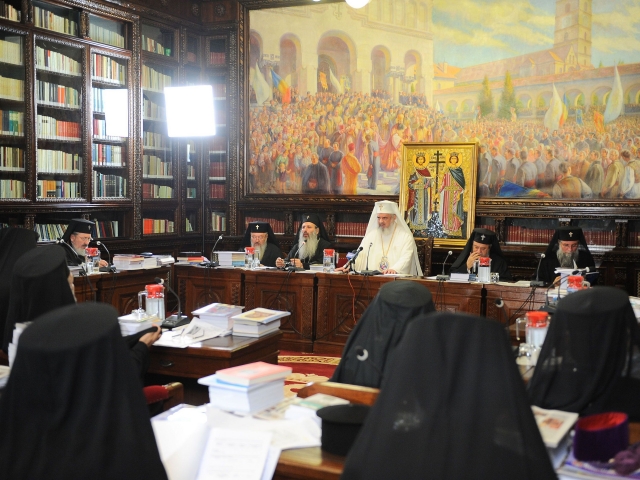
The second Monastic Synaxis of the Romanian Orthodox Archdiocese in the Americas Held

Monks in Middletown

On July 13 and 14, 2013 the second Monastic Synaxis of the monasteries of the Romanian Orthodox Archdiocese in the Americas was held at the monastery dedicated to St. Dimitrie the New.  Participating in the meeting were; His Eminence Archbishop Nicolae, His Grace Bishop Ioan Casian, Archim Nicodim Bibart and monk Efrem (Holy Cross parish, Upland, CA), Archim Nicholas Giroux (Holy Cross Monastery, Toronto, ON), Protosinghelos Vincentiu Temirov, Hieromonk Paisie Buhnilã (St. Dimitrios the New Monastery), Protosinghelos Peter Preble (St. Michael’s Parish, Southbridge, MA), rasoforos Ilie (Protection of the Mother of God Monastery, Wentworth, QC) and mother Tatiana (Protection of the Mother of God monastery, Ellenville, NY).

The agenda included two important parts: topics related to the celebration of Saints Constantine and Helen and editing the statutes of the monasteries in the Archdiocese. On Saturday, July 13, after the celebration of the Divine Liturgy, the meeting opened with a welcome by His Eminence Archbishop Nicolae. The first conference was presented by Protosinghelos Vincentiu Temirov and focused on “religious policy of Constantine the Great after the First Ecumenical Council of Nicaea.” The conference stressed the importance of the first Ecumenical Council and tracked how its decisions were reflected in the following period up to the death of the Emperor Constantine the Great. The presentation also underlined the political and religious complexities of this period and the efforts of St. Athanasius the Great in keeping Nicene Orthodoxy. The baptism of Emperor Constantine on his deathbed confirms his strong belief to promote peace in the empire being inspired by Christian teachings.

The second lecture was given by Protosinghelos Peter Preble with the theme “Orthodox Monasticism in the 21st Century North America, Everything Must Change” After a brief survey of the history of monasticism in the North American territory from its inception through St. Herman of Alaska, Protosinghelos Peter Preble, used a text from St. Basil the Great, “On Social Justice” to show the importance of a presence here in North America of a monasticism opened to the world that would keep in mind the social aspect as concrete and immediate way of knowing God. To show this in a practical way to examples were presented: the monasticism inspired by St. Benedict of Nursia and Mother Maria Skobţova.

Each conference was followed by discussions that addressed the impact of Emperor’s Constantine decisions on society, the crisis of values ​​in our society, and the difficulties faced in the context of contemporary secular monasticism. This was followed by a presentation of the latest news about each monastery.

The meeting continued in the afternoon with discussions about the statutes of the monasteries. It was stressed that the current statutes of the Archdiocese need to be edited and expanded. Much time was spent reviewing the main points to be addressed: the monasteries and their mission, entering into the monastic life, leadership and internal organization of monasteries, etc. It was discussed that the Archdiocese needs to adapt statutes specific to legislation in North America. It was decided that a smaller group of those present will work on drafting the operational status under the direction of His Grace Bishop Ioan Casian.

At the end of the day the gathered monastics served Great Vespers.

On Sunday July 14, the Divine Liturgy was served and the founders of St. Dimitrios the New Monastery were commemorated, Archim. Mitrofor Vasile Vasilachi and Dumitru Minciu. In his sermon, His Eminence Archbishop Nicolae stressed the importance of spiritual purity as an element that ensures a view of the surrounding reality in the light that God has given at creation.

On the same day 11 years ago, His Eminence Archbishop Nicolae was ordained as a hierarch and the members of the Monastic Synaxis offered to His Eminence the mantya, as a sign of appreciation for all his activity so far. The day ended with an Agape meal attended by the faithful present at the Divine Liturgy.

Sermon ~ Just Say the Word

I am often amazed at how fast news travels, good new or bad, news travels very quickly.  It is said that there exists the “Orthodox Grape Vine” and if you want news to get out you use that as your means of fast communication.  The Orthodox world is so small and someone is sure to know someone in another church or in another state that will keep the story going.

I think the same was true in Jesus day as well.  Think about it, Jesus walked the earth in first century Palestine.  There was no internet, no Facebook or Twitter, no newspapers not even the post office existed but word of his fame spread far and wide and no matter where he might be walking someone would approach him and ask him a favor.  I sometimes wonder if Jesus ever wanted to sneak off, incognito, and go shopping or something.

Recently, I had to run down to the store to pick up a few items.  I was not, obviously, dressed as I am standing here before you today; in fact, I believe I was in shorts and T shirt.  I ran in the store, picked up what I needed, and was standing in line when I heard someone call my name.  I turned and it was someone who frequents our Thursday night Community Meals.  So we stood there, I got out of line, and chatted about what was going on in his life, for a few moments and then we both went our way.  As clergy, we are never off duty and we see the same thing in Gospel today.

Jesus was in Capernaum walking with His disciples when a centurion approached Him to ask Him a question.  Now this is remarkable in and of itself because a centurion, a Roman soldier, would approach Jesus, a Jew, and ask anything.  But the most astonishing thing happens when the conversations begins, the centurion calls Jesus Lord and in the humblest of ways.

“Lord, I am not worthy that You should come under my roof.  But only speak a word, and my servant will be healed.”

The centurion humbled himself in front of Jesus, and those gathered around him, to ask for a favor.  He was not asking for the healing of one of his soldiers or even on of his own children, but for his servant who was at his home and sick.  The centurion humbled himself twice, once in calling Jesus Lord and the other in asking for the healing of his servant.

What we are seeing here is a break down in the strict ethnic lines that had been drawn to this point.  The Jews were subjected to the Romans and they were not always treated very well.

The centurion tells Jesus that he is man under authority, centurions in the Roman Army would have commanded units for more than 100 men, and that his men obey his orders no matter what that order might be.  But here he is, asking for help, this could not have been easy for this man to do.

None of us like to admit when we need help.  We like to think we can do it all, we are the rock, and nothing will break us.  Sometimes we need to be that rock for the family when tragedy strikes or because of our place in the birth order.  Because of this, we have a hard time asking God for help when we need it the most.  Sure, it is easy to follow the will and promptings of Jesus when things are going well, but what of when things turn bad?  It is difficult to ask for help but we have the example of the centurion to guide us.

Scripture tells us that when Jesus heard what the centurion said, he marveled.  This only happens twice in Scripture, this is one time and the other is at the lack of faith in His own hometown.  Imagine, Jesus, who knows everything, was so surprised at the faith of this unbeliever, that Scripture remarks that he marveled.  Jesus says that he has not found so great a faith, even in Israel!  This is sort of a slap in the face to those around Him, Jesus has found their faith wanting.  They are the chosen people and their faith is lukewarm, I would hope that could not be said about us.

He continues on to say, what some commentators hold is the expansion of the ministry of Jesus outside of the Jews, to say that many will come from east and west and sit down with Abraham, Isaac, and Jacob.  Jesus is breaking down the ethnic barriers that have existed up to this point and shown that racial superiority in the Kingdom will not happen, in the Kingdom, all will be one there will be no Jew or Greek, male or female.  Then the warning comes, but the sons of the kingdom will be cast out into outer darkness. There will be weeping and gnashing of teeth.

With these words Jesus says that not only the Jews who deny Christ will be cast out but those of the faith, who do not live their faith, will be cast into outer darkness.  You see it is not enough to just say you believe you have to act like you believe to your very core.  I have said this in the past but Orthodoxy is not a religion or a denomination but a lifestyle and it is not easy to live the Orthodox life in 21st century America, but it is what we have to do.  Orthodoxy should influence everything we do and every action we take.  If it does not, then we are not living the faith.

In the end, the centurion’s request was granted.  Jesus tells him to go his way, and as you have believed, it has been done for you.  This man had so much faith, faith in a man he had never met and faith in a man that he was sent to keep in captivity, that he came to him and asked him to heal his servant and because of the humble way he asked, and the fact that he truly believed, his request was granted.

In a few moments we will be invited to approach in the fear of God with faith and with live.  We will come forward and meet Jesus in reality here in the chalice.  When we step out of our seat and walk down the aisle, we need to approach with all humility as we are actually approaching the living Christ.  As the Vespers prayer reminds us, we do not bow to flesh and blood but before you the awesome God.  Let us pray as the centurion did, Lord, I am not worthy that you should come under my roof. But only speak a word and your servant shall be healed.

Sermon: The City on a Hill

“You are the light of the world. A city set on a hill cannot be hid.” Matthew 5:14

The Gospel passage that we heard this morning is part of a much larger parable of Jesus called the Salt of the Earth.  Jesus calls the Apostles the Salt of the Earth and says that if the salt loses its flavor it cannot season.

Salt has a lot of biblical significance.  If you eat salt with someone it means that you are bound together in loyalty.  When the bishop arrives at the door of the church, he is met by a child carrying a tray with bread and salt.  Bread is the bread of life and the salt binds the bishop to the community and the community to the bishop.

Jesus used the image of salt, one that his hearers would have been familiar with, to illustrate the role of not only the Apostles but the Church and how that role would influence society.  Because of the preservation power of salt, it is necessary for life.  The Apostles, and now us, have the responsibility to preserve the life of the Church, as handed down to us from the Apostles, so that it will be available to future generations.  We are not to keep it for ourselves alone, but for all generations. We take the choice cuts, and preserve it in our hearts and minds, and pass it along.  We are the salt that preserves the church and her teaching.

In 1630, John Winthrop was aboard the ship Arbella anchored in the harbor overlooking the new world.  He had come to the new world to found the Massachusetts Bay Colony and was sitting in, what we would now call Boston Harbor, overlooking the land that would become the colony.  He had a hard task ahead of him and he knew it.  He knew of the struggles that the colony of Plymouth had gone through but he was willing to sacrifice it all, including his life, to try and tame the new world.

John Winthrop was a Puritan.  Puritans were exiles if you will, from the clergy after the purges of Elizabeth the 1st of England.  The wanted to reform the established church, the Church of England, from the inside but were blocked from doing so and therefore persecuted not only by the Church but by the government of the day.  They were opposed to all forms of clericalism, the power of the clergy, and wanted to return to a purer form of the faith.  They were the founders of the Massachusetts Bay Colony and the Plymouth Colony.  They came to the New World to escape the persecution they were encountering at home.  They were seeking a place where they could practice their faith outside of the dictate of the government, this had never been accomplished before, but they were going to try it.

As Winthrop sat on board the ship he wrote a sermon that was called, A Model of Christian Charity.  Winthrop believed that the world would watch what they were doing keeping in mind this had never been done before.  The world would be watching each and every step they made and holding it up against the ideals of the New World and how they wished to govern themselves.  This was a tall order.

The city would be built on a hill, and a city that is built on a hill cannot be hidden from view.  Standing on the hill one can see for miles and one can see you for miles.  Building a city on a hill was done for safety and for other reasons.

Winthrop used the passage of Scripture that we heard this very morning in drafting his sermon;

“You are the light of the world. A city set on a hill cannot be hid. Nor do men light a lamp and put it under a bushel, but on a stand, and it gives light to all in the house. Let your light so shine before men, that they may see your good works and give glory to your Father who is in heaven.”

For Winthrop he took these words and used them to describe the City that he was about to build.  I wonder if he knew that some 100 years later the Revolution that would change the world forever would start in the very city that he was about to build.  His city was to be an example to the world on Christian charity and love towards all.  I think history will show that they fell short of that mark.

But what of us, what does this passage mean for us as we sit here today?  Is God calling us to set out and found a new world that we can build a city on top of a hill?  Are we required to leave all that we have and hold dear and found a new utopian society?  I don’t think so.

Remember the Kingdom of God is not an earthly kingdom it abides within each one of us, we are in essence representatives of the Kingdom of God and the light needs to shine from each of us.

We believe that God is the True and Uncreated light.  We see in the Hebrew Scriptures that light is often symbolic of God, His divine law, and Israel itself in contrast with other nations.  In the Gospels and letters of the Apostles, Jesus, the Son of God, is called the light, and we are to become sons and daughters of the light.  We are to turn from the darkness of sin and face the light.  During the Baptism service in the Orthodox Church, the child and parents turn and face the West and renounce Satan and all of his evil was, then they turn towards the East, the direction where the Sun rises from, and make promises to follow that light in season and out of season.

We not only preserve the faith with the salt of our lives but we radiate that faith like the rays of the Sun, we then become the city on the hill the shining example for all the world to see, the city that cannot be hidden and so our works and seen by all but most especially our Father who is in Heaven.

This is not an easy take.  The city on the hill is also the city that is attacked the most.  It is easily defended, if the wall, the wall of Scripture and truth is built around it, and the guardians of the city are watchful, but if there is a weakness in the defenses of the city it can be easily breached.  This requires diligence on our part to ensure that our defenses are strong for the day of trial that will come for all of us in our own way.  We need the strength of Holy Scripture, Tradition, the teaching of the Church, and the Sacramental life of the Church.  The Church exists as the place where we come for that much need shoring up of our defenses to keep the enemy at bay.

We are that city on the hill, we are the new Israel and the new Jerusalem, we are the preserves of the faith and must preserve it will all the vigor that we can muster, if we lose our saltiness then we are not able to flavor the world that sop desperately needs us.

Book Review: Call the Nurse

call the nurseI will have to admit that this is not usually the type of book that I would read but, having said that, I am glad I did.  The story take place on one of the Out Hebrides Islands off the Atlantic coast of Scotland in the 1970’s and follows the trials and tribulations of a district nurse and her patients.  The nurse is not a “native” to the island so she has a bit of getting used to the way things work on the island.

The story is an amazing look back at history, and a place that is frozen in time.  The residents of this island eek out a living the way it had been done for generations before them by farming and fishing.  Most of what they need is available on the island but on occasion, and these are some of the funniest stories in the book, they have to go “off island” to get what they need.

My guess would be that the experiences she had “tending to her patients” would be similar to what rural nurses and doctors would have experienced in the United States a generation ago.  Sometimes we forget that not everyone has the same access to medical care as those of us who are fortunate to live near a large city.  There are many stories of folks needing to go to hospital either by ambulance or by air, and the difficulties that are associated with that.  Life is not simple for any of the folks on the islands.

The story follows the life of a district nurse and her family, who moves to the island from Southern England and take up residence in a Croft.  The author does a fabulous job of telling her story, and there was times, that I could smell the peat fire burning in the distance or feel the cold wind as it was blowing over the island.  She has the ability to make you laugh out loud at times and to also weep at the loss of one of her patients.

Mary J MacLeod paints a picture of island life that is anything but romantic on one had but beautiful on another.  She tells the story of the simple island folk who are always there, any time of the day or night, for each other and willing to do, whatever has to be done, to get things accomplished.  This ranges from helping a bull cow that is stuck in the rocks on the beach to plowing the mountain roads in the dead of winter.  Everyone gladly helps everyone without any expectation for pay back.  I guess this is what was called the simpler times.

If you are at all interested in Scotland, the Islands, nursing, or the simple life, or if you just enjoy a good story, this is the book for you.  Do yourself a favor and read this book, you will not regret it.

error: Content is protected !!