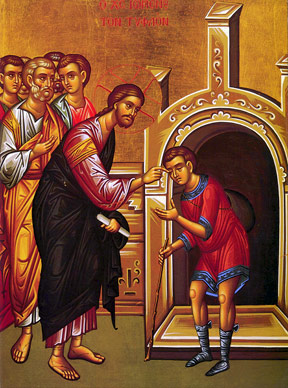
Pleading for the Persecuted

Originally Posted on Liberty Magazine
BY: Paul Marshall

On Friday, August 14, 1998, Samir Oweida Hakim and Kamer Tamer Arsal, two Coptic Christians, were murdered in the village of el-Kosheh near Luxor in Upper Egypt. Most of the local villagers believe that the muderers were Muslims, though no one claims that the reason for the murders was itself religious.

Apparently concerned that an interreligious murder (even one with no religious motive) might cause more tension in the village, the police were determined to find Christian culprits. Consequently on August 15 they began rounding up and interrogating large numbers of Christians.
They picked up men, women, and children in groups of up to 50 at a time. Their victims were tied to doors, beaten, whipped, suspended from the ceiling and, including women and children, subjected to electric shock with clamps attached to all parts of their bodies. Those tortured were also insulted by “cursing the cross, Christianity, the saints, Pope Shenouda, and church leaders, and called atheists and polytheists.” According to the Egyptian Organization for Human Rights, Egypt’s most respected human rights organization, before they had finished several weeks later, the police had abused a total of 1,200 people.
On August 19 and 20 the local bishop of Egypt’s ancient Coptic Orthodox Church, and two local priests, made official complaints to the authorities. When these complaints were rebuffed with insults and threats of further abuse, Bishop Wissa decided to make the matter public.
In response, on October 10, the general prosecutor for the area interrogated Bishop Wissa and Fathers Antonios and Shenouda for several hours and charged them with damaging national unity and insulting the government. In Egypt, under the government then, these charges carried the death penalty.
Half a world away in Washington, D.C., a series of related events took place. On October 9, 1998, the U.S. Senate passed S-1868, the International Religious Freedom Act, by a vote of 98 to 0. The following day, as Bishop Wissa was being arrested, the House of Representatives passed the same bill on a voice vote without dissent.
On October 27, 1998, then President Clinton signed the act into law as Public Law 105-292. The International Religious Freedom Act was the culmination of a long and fervent campaign by millions of Americans of all faiths concerned about precisely the kind of horrors visited on the villagers of el-Khosheh.
The law was a response to a worldwide epidemic of religious persecution. This epidemic has been largely unknown or ignored by most of our major media and by most Americans, churched and unchurched alike.
As 2011 began, a bombing of a Coptic Christian church indicated how little had changed over the years, even as forces for overt political change began to take the streets as early as January 25. But Egypt does not stand alone in its violations of religious liberty. In fact, one of the worst sites of religious persecution in the world is Sudan, which, while it is reaching toward a two-state solution, has not yet solved the underlying religious conflict. Sudan has dealt with its religious divide by pursuing a program of Islamization through genocide.
In China authorities repress Buddhists in Tibet and elsewhere, persecute Muslims in the eastern provinces, and arrest underground house-church leaders, doling out three-year labor camp sentences. Any religious believer refusing to submit to state control on the choice of religious leaders, seminarians, pastors, priests, bishops, sermon topics, religious organizations, and membership lists faces discrimination, harassment, persecution and perhaps imprisonment, torture, and death. Similar patterns occur in Vietnam, North Korea, and Laos.
During my 1997 fact-finding trip to China, 85 house-church Christians were arrested in two dragnet operations on May 14 in Zhoukou. Christians reported brutal beatings resulting in paralysis, coma, and death. Other methods of torture reported include binding detainees in excruciating positions; hanging them from their limbs; tormenting them with electric cattle prods, electric drills, and other implements; and crushing the ankles of victims while they are forced to kneel.
Apart from religious harassment in the remaining Communist countries, there are now intensifying attacks on all religious minorities throughout the Islamic belt, from Morocco on the Atlantic eastward through to the southern Philippines. While Islam has often been more tolerant than Christianity and countries such as Jordan and Kuwait remain so, in many areas this tolerance has collapsed. In Saudi Arabia any non-Islamic or dissident Islamic religious expression is forbidden. Christian meetings are outlawed; and worship services held anywhere other than in the embassies of powerful countries will likely be raided by the mutawa, the religious police, and members imprisoned. Any Saudi who seeks to leave Islam faces the real prospect of death. In countries such as Mauritania, the Comoros Islands, and Sudan, this threat is not only from vigilantes, but part of the legal code itself.
In Iran and Pakistan the threat comes from vigilantes with greater or lesser complicity by the government. In Iran there are strong indications that, besides the ongoing persecution and murder of the Baha’i, government death squads have also abetted the torture and assassination of Protestant leaders in recent years.
Elsewhere the agent of repression is mob violence, often prompted by radical Islamicist leaders. It is widespread in Nigeria, Liberia, Ghana, and the Philippines. In Pakistan in 1997 one Christian town, Shanti Nagar (population 20,000), was razed to the ground. In Indonesia, which has long been a place of toleration between Muslims, Christians and other minorities, there is a rapidly growing epidemic of church burnings, and attacks on Christian and moderate Muslim leaders. There are also direct attacks on religious minorities by radical Islamic terrorists in Algeria, the Philippines, Turkey, and Egypt.
In non-Islamic societies there is violence and discrimination against minority religious groups in Mongolia, Nepal, Sri Lanka, India, Bhutan, and in the central Asian republics that were formerly part of the Soviet Union, especially Uzbekistan. It is a growing phenomenon in Myanmar in the State Law and Order Restoration Council’s war against tribal minorities, especially the Rohingya Muslims in the west and the Karen and other tribes in the eastern part of the country, where Christians constitute a large proportion of the minorities.
There is also widespread religious discrimination through legal control. India has affirmative action laws to ease the plight of the dalit, or “untouchables.” But while groups such as Hindus, Sikhs, and Buddhists are included, Christian untouchables (a majority of India’s 28 million Christians) have been explicitly excluded.
Discrimination is an increasing pattern in Russia, where repressive religion laws, backed by the Russian Orthodox Church, have been instituted at the federal level. Such laws are also widespread, and usually even more repressive, at the local level. There is increasing violence against religious minorities, including Jews, Protestants, Catholics, and dissident Orthodox groups. Similar patterns of discrimination against minority religious groups are pervasive in the Ukraine, Bulgaria, and Romania; present in many parts of Eastern Europe, including the Baltics, and growing in many of the CIS states.
You won’t learn much of this from our media. While there is now some attention to U.S. campaigns about persecution, the horror itself is still virtually absent from our news pages. For all the coverage of debates on China’s most favored nation trading status, there has been almost no attention to what goes on in China itself. The same pattern holds elsewhere.
As Edward Luttwak has noted: “Policymakers, diplomats, journalists, and scholars who are ready to overinterpret economic causality, who are apt to dissect social differentiations ever more finely, and who will minutely categorize political affiliations, are still in the habit of disregarding the role of religion. . . in explaining politics and even in reporting their concrete modalities.”*
Even when religious events are reported, they tend to be redefined according to America’s obsession with things “ethnic.” When in 1997 Malaysian prime minister Mahathir Mohamad railed against speculators, “We are Muslims, and the Jews are not happy to see the Muslims progress,” the Los Angeles Times described him as “race-obsessed.” In Yugoslavia war between Orthodox, Catholics, and Muslims was routinely described as “ethnic.” The Economist headlined a story in January 1997 about attacks on 25 churches and a temple in east Java after a Muslim heresy trial as “race riots.”
Thankfully, this ignorance of religious persecution is now passing. As A. M. Rosenthal, columnist, and a former executive editor of the New York Times, put it in his December 30, 1997, column: “Early this year I realized that in decades of reporting, writing or assigning stories on human rights, I rarely touched on one of the most important. Political human rights, legal, civil, and press rights, emphatically often; but the right to worship where or how God or conscience leads, almost never.”
The International Religious Freedom Act was an attempt to entrench a concern for international religious freedom within American foreign policy and to provide a variety of tools for addressing it. The act:
•created the office of an ambassador-at-large charged with full-time advocacy for religious freedom.
•establishes an independent, bipartisan commission to monitor religious persecution abroad. Of the ten commission members, three are appointed by the president and six are appointed by Congress: the tenth is the ambassador, who is a nonvoting chair. Five members will be of the president’s party and four of the other party.
•requires that the commission produce an annual report on religious persecution and make annual recommendations to the president.
•requires that the president take at least some action—from negotiations to sanctions—against an offending country.
•allows the president to waive any action if there are “important national interests” which might be jeopardized.
•makes provisions for upgrading attention to religious liberty in USAID work, international broadcasting, and Foreign Service training.
The media has often portrayed the act as a creature of the Religious Right. However, it in fact drew support from a bipartisan group of legislators, and widely diverse groups such as the Southern Baptists, the Episcopal Church, the Dalai Lama, the Anti-Defamation League, the National Jewish Coalition, New York Times columnist A. M. Rosenthal, the Catholic Bishops Conference, Gary Bauer, and the Christian Coalition.
Other critics continue to maintain that such legislation “privileges” religious freedom above other human rights concerns. New York Times columnist Anthony Lewis opined back on September 12, 1997, that such legislation tells “other governments that we care less about such things as genocide, political repression, and racial persecution. It would also tell the world that we now favor a hierarchy. . . of fundamental rights.” And he appeared ready to put political activists on top of the list, since for him politics seems to be more important than religion.
Kenneth Roth, then executive director of Human Rights Watch, once called a focus on religious persecution “special pleading” and “an effort to privilege certain classes of victims.” But, as The New Republic’s Jacob Heilbrunn responded: “This seems a remarkable attitude for a human rights activist, since, by definition, all arguments on behalf of all persecuted groups—racial minorities, political minorities, ethnic minorities, etc.—are ‘special pleadings’ intended to ‘help certain classes of victims.'” And such concerns have not stopped the Human Rights Watch from its own priority list of “special initiatives,” including “drugs and human rights” and “lesbian and gay rights.”
Historically, religious freedom was the first international human right—it was enshrined in treaties ending the sixteenth- and seventeenth-century European wars of religion. It is the very first right in the First Amendment to the U.S. Constitution. Yet in recent years it has been neglected in foreign policy and in international human rights concerns.
Paul Marshall wrote this when he was a senior fellow at the Center for Religious Freedom, Freedom House, Washington, D.C. In view of recent events in Egypt and elsewhere, his championing of the persecuted is even more pertinent.

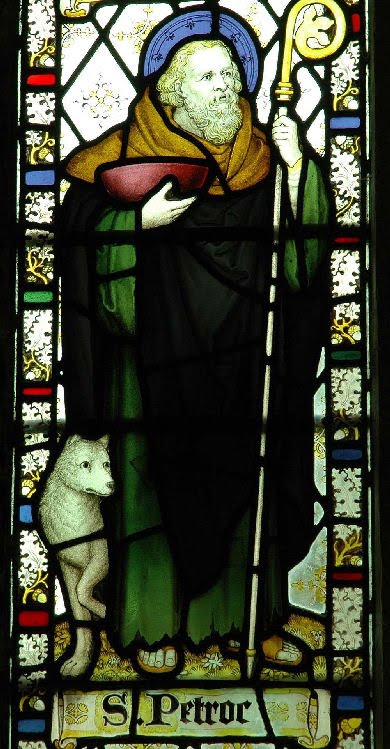
Where is the Church?

On Tuesday, here at the Church, was the second night of the weekly Bible Study.  We are working our way through the Letter of St. James and wonderful letter that has been all but forgotten by some.  In the very opening lines of the Letter, James tells his readers/hearers to welcome trials and learn from them.  This prompted quite a discussion about persecution. 

We, the American Church, has no idea what it is to be persecuted for what we believe.  Some were advocating that because we can no longer pray in schools we are being persecuted.  We talked about saying Merry Christmas and the like (I used to be all over this by the way) and we spoke about how it seems that Christianity is disappearing in America.  Well that got me thinking, are we being persecuted?  I think the answer is no.

I was going to say watch the news but you will not see the Christian persecution in Egypt on the evening news because America has no strategic interest there.  We speak about human rights in Lybia and that is why we are blowing people up, but the real reason is there is oil in Lybia and that gives us a strategic advantage.  Okay rant is over now.  Christians in Egypt are being shot and killed for being Christian, churches are being burned to the ground for being Christian Temples, that is persecution.

For the Orthodox the Church is not an external thing.  It is not a thing that will suffer from rot, mold, and decay the Church exists inside of each of us.  The Church is not a building nor is it a cross in the public park, the Cross belongs in your heart, in your mind, and of course in your soul that is the only place it needs to be.  Our not being able to pray in school does not diminish our faith, remember that Jesus told us to go into our closet and pray.  We need to spend less time trying to pray in public and more time praying in our closet.  The Church is not a building, the Church is not a parcel of land, the Church is the faith, the Church is Jesus Christ!  The Church should exist inside each and everyone of us.

Under the yoke of Communism religion in Albania was gone.  All Churches, Mosques and Synagogues were gone, closed.  Religious education was gone and it was illegal to gather for Church.  The Communist Government of Albania was completely Atheist.  When the Iron Curtain came down, the faith was still there.  The physical Church was gone but the faith was still there, carried in the hearts of the people and passed on to the children who are now rebuilding religious houses all over the country.  If the Church was just a building the faith would have been gone.  That was the mistake the Communist made, they thought the faith was the building, it is not.  Our faith cannot be destroyed, it has been tried since the time of Jesus.

Where is the Church?  The Church is inside you and inside me.  If your faith is in a building or in organized (or unorganized as the case may be) religion or in a human being, then your faith is in the wrong place.  Our faith belongs in Jesus and Jesus alone.  The cross in the park will not save you.  The prayer in School will not save you, only Jesus Christ who died on the Cross, was buried and rose from the dead can save your soul.  If we have that nothing else matters!

4th Wednesday after Pascha – Mid-Pentecost

After the Saviour had miraculously healed the paralytic, the Jews, especially the Pharisees and Scribes, were moved with envy and persecuted Him, and sought to slay Him, using the excuse that He did not keep the Sabbath, since He worked miracles on that day. Jesus then departed to Galilee. About the middle of the Feast of Tabernacles, He went up again to the Temple and taught. The Jews, marvelling at the wisdom of His words, said, “How knoweth this man letters, having never learned?” But Christ first reproached their unbelief and lawlessness, then proved to them by the Law that they sought to slay Him unjustly, supposedly as a despiser of the Law, since He had healed the paralytic on the Sabbath. Therefore, since the things spoken by Christ in the middle of the Feast of Tabernacles are related to the Sunday of the Paralytic that is just passed, and since we have already reached the midpoint of the fifty days between Pascha and Pentecost, the Church has appointed this present feast as a bond between the two great feasts, thereby uniting, as it were, the two into one, and partaking of the grace of them both. Therefore today’s feast is called Mid-Pentecost, and the Gospel Reading, “At Mid-feast”–though it refers to the Feast of Tabernacles–is used.
It should be noted that there were three great Jewish feasts: the Passover, Pentecost, and the Feast of Tabernacles. Passover was celebrated on the 15th of Nisan, the first month of the Jewish calendar, which coincides roughly with our March. This feast commemorated that day on which the Hebrews were commanded to eat the lamb in the evening and anoint the doors of their houses with its blood. Then, having escaped bondage and death at the hands of the Egyptians, they passed through the Red Sea to come to the Promised Land. It is also called “the Feast of Unleavened Bread,” because they ate unleavened bread for seven days. Pentecost was celebrated fifty days after the Passover, first of all, because the Hebrew tribes had reached Mount Sinai after leaving Egypt, and there received the Law from God; secondly, it was celebrated to commemorate their entry into the Promised Land, where also they ate bread, after having been fed with manna forty years in the desert. Therefore, on this day they offered to God a sacrifice of bread prepared with new wheat. Finally, they also celebrated the Feast of Tabernacles from the 15th to the 22nd of “the seventh month,” which corresponds roughly to our September. During this time, they live in booths made of branches in commemoration of the forty years they spent in the desert, living in tabernacles, that is, tents (Ex. 12:10-20; Lev. 23).
Apolytikion in the Plagal of the Fourth Tone
At Mid-feast give Thou my thirsty soul to drink of the waters of piety; for Thou, O Saviour, didst cry out to all: Whosoever is thirsty, let him come to Me and drink. Wherefore, O Well-spring of life, Christ our God, glory be to Thee.
Kontakion in the Fourth Tone
O sovereign Master and Creator of all things, O Christ our God, Thou didst cry unto those present at the Judaic Mid-feast and address them thus: Come and draw the water of immortality freely. Wherefore, we fall down before Thee and faithfully cry out: Grant Thy compassions unto us, O Lord, for Thou are truly the Wellspring of life for all.

Source

One Word at a Time: Road

How many roads have you traveled in your life?  I have been down more roads than I care to remember.  Last summer my family and I attended a family reunion in Tennessee as I am not a fan of flying I drove.  Well the road is long and in places boring, but I made it to the end and had a wonderful time.

What of those spiritual roads?  In our spiritual life we travel many roads, some long and some short.  Some have pavement and some have many rocks and hills.  Do we push through or do we stop and turn around?  The paved road is easy for us to travel on as there are no obstructions but the dirt or gravel road is not that easy.  The spiritual life is not an easy one but if we push through we can make it.

Since the start of the year I have been working a temporary secular job and I like the work but the time it takes away from the spiritual life is not something that I look forward to continue.  Since I started, my spiritual life has been on that paved road, just humming along but not getting better and I am certainly not being challenged in anyway, I have chosen the easy path and it is comfortable but we are not supposed to be comfortable.  Comfort brings stagnation and that is not good for the spiritual life of the Christian.

The narrow path is the path that leads where we Christians need to go.

What road are you on?

16 May ~ Brendan the Voyager

Abbot of Clonfert (6th cent.)

He was born around 484 at Tralee in Kerry, Ireland. He founded several monasteries in Ireland, of which the chief was Cluain Ferta Brenaind (anglicized as Clonfert) in County Galway. His missionary and pastoral travels took him on voyages to the Scottish islands, and possibly to Wales; thus in his own time he was known as ‘Brendan the Voyager.’ He reposed in peace…

Early in the ninth century, a Latin saga, Navigatio Brendani (The Voyage of Brendan) made him the hero of a Christian adventure that included voyages to unknown lands far to the west of Ireland. The account provides strong evidence that Irish voyagers visited America as early as the 8th century, before the Vikings; but whether St Brendan himself made these voyages is disputed.

Church in Decline

This comes from a Protestant Source but I think there is much here that we Orthodox can learn from.  Based on statistics I have seen all Churches, regardless of denomination are in decline, so what can we do?  I have switched my thinking from quantity to quality, if we build up our people to be strong witnesses of the faith then more will come, I am convinced of that, but the people need to be willing to do the hard work that is required of them.

#1 – Laziness – Most people/churches are not “stuck” or in decline because they do not know or understand what the Lord wants them to do…God speaks very clearly in His Word and through His Spirit. It’s just that God’s work always requires people to take a step of faith! Remember, God promised the Israelites the “Promised Land,” but they actually had to go in and fight the battles. A church that refuses to do whatever it takes and embraces laziness will eventually settle in the desert until that generation dies off.
#2 – Fear of Man – God has called His people to set the world on fire; unfortunately, too many church leaders today waste their time trying to put fires out and make people happy! Scripture pretty much sums it up in Proverbs 29:25! If your first question is always, “what does our biggest giver want” and “not what does God want” you church is stepping into the casket!
#3 – Pride – When a church and/or its leaders are not willing to admit a mistake OR that a method that used to work just doesn’t work anymore…it’s over.
#4 – Staff Abuse – This is something I’ve written about a lot lately…but I will say it over and over again, when a leader cares more about what his staff does than who they are becoming then he will begin to push them to put in 70-80 hour weeks on a consistent basis…and when they begin to show signs of being pushed too hard he will accuses them of being “disloyal” or “not bought in enough to make things happen.” When a leader begins to do this (and other “leaders” sit by passively and watch it happen) then the quality of staff members the church is about to attract and keep will decrease significantly.
(One note on this…many times a pastor/leader who leads like this is lazy! They often wait until the last minute to do things and then expect the entire staff to change and rearrange everything they are doing to accommodate his lack of planning. Changes DO happen in ministry, heck, we had to switch up our entire Easter services at the last minute. BUT…this should be the exception and NOT the norm. AND…when it really is the exception the staff will always respond with passion and excitement because there is a consistent track record of loyalty TOWARDS them!)
#5 – Loss of Focus – When a pastor/leader (or group of leaders) become more obsessed with their “ministry platform” and begin to dive into other “ministry opportunities” and do so with such frequency that they cease to love the people that Jesus has called them to minister to…disaster is right around the corner because the church will become nothing more than a resource for the pastor to promote himself rather than a group of people whom God has brought together and given him responsibility over to love and lead.

Source

Orthodox History Symposium

I have been invited to present a paper at the Symposium being co-sponsored by the Society for Orthodox Christan History in the Americas and the the Fr. Georges Florovsky Orthodox Christian Theological Society.  The Symposium will take place on Friday, September 31st and Saturday, October 1st at Stuart Hall, Princeton Theological Seminary.  The title of my paper will be: Macedonian-Romanian Immigration to Southbridge, Massachusetts

From the wesbite of SOCHA:

This symposium will examine some of the people and movements that contributed to the growth of Orthodox Christianity in 20th century America. We will pay special attention to the role of missionaries, immigration and conversion, the emergence of Orthodox theological scholarship in English, and Orthodox engagement in American civic and political life.
For more information and to register see the SOCHA Website.

Orthodoxy and the Rapture

Update: With all of this talk of the world coming to an end on May 21st I thought I would re post this article I wrote some time back.  The other thing I would point out is that even Jesus tells us He does not know when He will be returning so how can this guy, who was wrong before by the way, know.  The key is, as we learned during Holy Week, we need to be ready because we do not know the day or the hour when the Bridegroom will return.

Several years ago I was driving behind a vehicle on the highway and I noticed the bumper sticker on the back. It was kind of funny and I will admit I laughed out loud. The bumper sticker read, “In case of Rapture this vehicle will be left unattended.” Okay I thought it was kind of cute but how accurate is this bumper sticker?

I will state right up front that the Orthodox Church does not support the so called doctrine of the Rapture. In this post I will attempt to explain why. I will also state right up front that I do not consider myself a Scripture Scholar or a professional theologian.
So what is the so called doctrine of the rapture?
Rapture is a popular term used by some Protestant Evangelicals for the rising of the faithful from the dead. We orthodox do believe that all of the faithful will be raised from the dead.
There is a tendency of belief in the rapture or what is called “pre-tribulation.” This belief states that the rising of the faithful from the dead will be prior to of after a period of immense trouble or tribulation. After the 7 years of tribulation the belief is then that there will be 1000 years of peace followed by the day of final judgment.
Where did this belief come from?
Until the 1830’s all Christian Churches taught a believed basically the same things about the second coming of Jesus Christ. A member of the Scottish sect the Irvingites, Margaret MacDonald made the first claim that there would be rapture and the faithful would be gathered to Christ before the period of persecution. From what I can glean from the research, she was discounted by some people as being “of the Devil” and her prophesies have been discounted.
John Nelson Darby (1800-1882) next picked up the theory of the rapture and made it popular. The so called doctrine of the rapture made it’s way into the footnotes of a translation of the Bible by Cyrus Ingerson Scofiled and the Scofield Reference Bible. This version of the Bible was widely used in England and America and therefore it was an accepted doctrine of belief.
This is a very elementary treatment of the history of the theory or doctrine of the rapture, but the intent is not to present the doctrine in totality.
What is the Orthodox view?
Orthodox Christians believe in the second coming of Jesus Christ, the ensuing judgment of our sins and the resulting eternal life in either Heaven or Hell. Everything that Scripture says about a time of tribulation and suffering is accepted, but the faithful will be present for all of it. We will not be spared the sufferings or tribulation. Christ himself tells us that all will suffer and that no one knows when He will return for Judgment Day. “Then they will deliver you up to tribulation and kill you, and you will be hated by all nations for My name’s sake.” Matthew 24:9
Why do Orthodox not believe in the Rapture?
The Church needs to be suspicious of a doctrine or theory that no church taught for the first 1800 years of the existence of the Christian Church. This is not enough of a reason to reject this simply out of hand, but it does mean that we need to approach this very carefully.
Much of the reasoning for this theory comes from the Book of Revelation the only book the Orthodox do not use during the Divine Liturgy. The Orthodox Church does not persuade people not to read Revelation. It does caution people to read it with solid background knowledge of the rest of Scripture, especially the New Testament, and with a basic understanding of the times which produced Revelation. At the same time, the Orthodox Church does not accept the notion that everyone can properly interpret the Bible as he or she wants. Some Protestant bodies believe in this, but Orthodoxy does not. We say that the Church has the ability to properly interpret Scripture, and this means that we should study and adopt the interpretations that have been handed down over the 2000 years of the Church’s living history. Given the fact that that which is contained in Scripture is the inspired word of God, revealed to mankind and not to a single individual, no individual has the right or ability to offer “the” definitive interpretation of Scripture. This is especially the case with Revelation, which as noted above cannot be interpreted as one wishes, lest one come to ridiculous conclusions that Gorbachov’s birthmark is the “mark of the beast.” (http://www.oca.org/)
The theory is also based on shaky Scriptural basis. Of all of the teaching of the Christian Church that have evolved over the 2,000 years history of the Church this theory was not spoken of until a 15 year old Scottish girl. Modern arguments for the Tribulation can be called into question through an even handed examination of the passages commonly used when arguing in favor of it. Even among Protestant denominations who believe in a totally literal reading of Scripture rapture is not universally accepted.
Many of the arguments for the rapture have been taken from the Book of Revelation. This book warns us in Chapter 22 verses 18 and 19 that anyone who adds to or takes away from the words in Revelation will meet with punishment from God. St. Peter also warns us in 2 Peter 1:20 that no prophecy is to be of private interpretation.
The unavoidable fact in all of this is that all of us will face judgment. Christ will examine each of us and as a result some will gain eternal life with Him in Heaven and some will gain eternal life without Him in Hell. (John 5:29). Everything other than preparing for Christ’s second coming and judgment is nothing more than a distraction and the question that needs to be asked is who would benefit most from the faithful being distracted?

7 May ~ Our Father Among the Saints Alexis Toth of Wilkes-Barre

Our holy Father Alexis, the defender of the Orthodox Faith and zealous worker in the Lord’s vineyard, was born in Austro-Hungary on March 18, 1854 into a poor Carpatho-Russian family. Like many others in the Austro-Hungarian empire, the Toths were Eastern Rite Catholics. Alexis’ father and brother were priests and his uncle was a bishop in the Uniate church. He received an excellent education and knew several languages (Carpatho-Russian, Hungarian, Russian, German, Latin, and a reading knowledge of Greek). He married Rosalie Mihalich, a priest’s daughter, and was ordained on April 18, 1878 to serve as second priest in a Uniate parish. His wife died soon afterwards, followed by their only child – losses which the saint endured with the patience of Job.

In May, 1879, Fr Alexis was appointed secretary to the Bishop of Presov and also Administrator of the Diocesan Administration. He was also entrusted with the directorship of an orphanage. At Presov Seminary, Father Toth taught Church History and Canon Law, which served him well in his later life in America. St Alexis did not serve long as a professor or an administrator, for the Lord had a different future planned for him. In October, 1889 he was appointed to serve as pastor of a Uniate parish in Minneapolis, Minnesota. Like another Abraham, he left his country and his relatives to fulfill the will of God (Gen 12:1).

Upon his arrival in America, Father Alexis presented himself to the local Roman Catholic diocesan authority, Archbishop John Ireland, since there was no Uniate bishop in America at that time. Archbishop Ireland belonged to the party of American Catholics who favored the “Americanization” of all Roman Catholics. His vision for the future was founded on a common faith, customs, and the use of the English language for everything except liturgical celebrations. Naturally, ethnic parishes and non-Latin rite clergy did not fit into this vision. Thus, when Father Toth came to present his credentials, Archbishop Ireland greeted him with open hostility. He refused to recognize him as a legitimate Catholic priest or to grant permission for him to serve in his diocese.

As a historian and professor of Canon Law, Father Toth knew his rights under the terms of the Unia and would not accept Archbishop Ireland’s unjust decisions. In October of 1890, there was a meeting of eight of the ten Uniate priests in America at Wilkes-Barre, Pennsylvania under the chairmanship of Father Toth. By this time the American bishops had written to Rome demanding the recall to Europe of all Uniate priests in America, fearing that Uniate priests and parishes would hinder the assimilation of immigrants into American culture. Uniate bishops in Europe refused to listen to the priests’ pleas for help.

Archbishop Ireland sent a letter to his parishes ordering their members not to attend Father Toth’s parish nor to accept any priestly ministrations from him. Expecting imminent deportation, Father Toth explained the situation to his parishioners and suggested it might be best for him to leave and return to Europe.

“No,” they said. “Let’s go to the Russian bishop. Why should we always submit ourselves to foreigners?” It was decided to write to the Russian consul in San Francisco in order to ask for the name and address of the Russian bishop. Ivan Mlinar went to San Francisco to make initial contact with Bishop Vladimir; then in February, 1891 Father Toth and his church warden, Paul Podany, also made the journey. Subsequently, Bishop Vladimir came to Minneapolis and on March 25, 1891 received Father Toth and 361 parishioners into the Orthodox Church of their ancestors. The parishioners regarded this event as a new Triumph of Orthodoxy, crying out with joy: “Glory to God for His great mercy!”

This initiative came from the people themselves, and was not the result of any coercion from outsiders. The Russian Orthodox Church was unaware of the existence of these Slavic Uniate immigrants to America, but responded positively to their petition to be reunited to the Orthodox Church.

The example of St Alexis and his parish in returning to Orthodoxy was an encouragement to hundreds of other Uniates. The ever-memorable one was like a candle upon a candlestick giving light to others (Mt.5:15), and his flock may be likened to the leaven mixed with meal which leavened the whole (Mt.13:33). Through his fearless preaching he uprooted the tares which had sprung up in the wheat of true doctrine, and exposed the false teachings which had led his people astray. Although he did not hesitate to point out errors in the doctrines of other denominations, he was careful to warn his flock against intolerance. His writings and sermons are filled with admonitions to respect other people and to refrain from attacking their faith.

While it is true that he made some strong comments, especially in his private correspondence with the church administration, it must be remembered that this was done while defending the Orthodox Church and the American Mission from unfounded accusations by people who used much harsher language than Father Toth. His opponents may be characterized by intolerance, rude behaviour, unethical methods and threats against him and his parishioners. Yet, when Father Alexis was offended or deceived by other people he forgave them, and he would often ask his bishop to forgive his omissions and mistakes.

In the midst of great hardships, this herald of godly theology and sound doctrine poured forth an inexhaustible stream of Orthodox writings for new converts, and gave practical advice on how to live in an Orthodox manner. For example, his article “How We should Live in America” stresses the importance of education, cleanliness, sobriety, and the presence of children in church on Sundays and Holy Days.

Although the Minneapolis parish was received into the Orthodox Church in March, 1891, it was not until July, 1892 that the Holy Synod of Russia recognized and accepted the parish into the Diocese of Alaska and the Aleutians. This resolution reached America only in October, 1892. During that time there was a climate of religious and ethnic hostility against the new converts. Father Alexis was accused of selling out his own Carpatho-Russian people and his religion to the “Muscovites” for financial gain.

In reality he did not receive any financial support for a long time, for his parish was very poor. Until his priestly salary began to arrive from Russia, the righteous one was obliged to work in a bakery in order to support himself. Even though his funds were meager, he did not neglect to give alms to the poor and needy. He shared his money with other clergy worse off than himself, and contributed to the building of churches and to the education of seminarians in Minneapolis. He was not anxious about his life (Mt.6:25), what he would eat or drink or wear. Trusting in God to take care of him, St Alexis followed the admonition of Our Savior to “seek first the kingdom of God and His righteousness, and all these things shall be added to you” (Mt.6:33). So he bore the tribulation, slander, and physical attacks with patience and spiritual joy, reminding us that “godliness is stronger than all” (Wisdom of Solomon 10:12).

Bishops Vladimir, Nicholas, St Tikhon, and Platon recognized the special gifts of Father Toth, so they often sent him forth to preach and teach wherever there were people of Slavic background. Even though he was aware of his shortcomings and inadequacies, yet he was obedient to the instructions of the bishops. He did not hesitate or make excuses, but went immediately to fulfill his mission. St Alexis visited many Uniate parishes, explaining the differences between Orthodoxy, Protestantism, Roman Catholicism and Uniatism, stressing that the true way to salvation is in Orthodoxy.

Like Josiah, “he behaved himself uprightly in the conversion of his people” (Sir 49:2). He was instrumental in the formation or return of seventeen parishes, planting a vineyard of Christ in America, and increasing its fruitful yield many times over. By 1909, the time of his blessed repose, many thousands of Carpatho-Russian and Galician Uniates had returned to Orthodoxy. This was a major event in the history of the North American Mission, which would continue to shape the future of Orthodoxy in this country for many generations to come. Any future growth or success may truly be regarded as the result of Father Toth’s apostolic labors.

Who can tell of the saint’s spiritual struggles? Who can speak of the prayers which his pious soul poured forth unto God? He did not make a public display of his piety, but prayed to God in secret with all modesty, with contrition and inward tears. God, Who sees everything done in secret, openly rewarded the saint (Mt.6:6). It is inconceivable that St Alexis could have accomplished his apostolic labors unless God had blessed and strengthened him for such work. Today the Church continues to reap the fruits of his teaching and preaching.

Father Toth’s efforts did not go unrecognized in his own lifetime. He received a jeweled miter from the Holy Synod, as well as the Order of St Vladimir and the Order of St Anna from Czar Nicholas II for distinguished service and devotion to God and country. In 1907, he was considered as a candidate for the episcopal office. He declined this honor, however, humbly pointing out that this responsibility should be given to a younger, healthier man.

At the end of 1908, St Alexis’ health began to decline due to a complication of illneses. He went to the seashore in southern New Jersey in an attempt to regain his health, but soon returned to Wilkes-Barre, where he was confined to bed for two months. The righteous one reposed on Friday, May 7, 1909 (April 24 on the Old Calendar), the feast of Sts Sava and Alexius the Hermit of the Kiev Caves. St Alexis’ love and concern for his spiritual children did not cease with his death. Before closing the account of his life, it would be most appropriate to reveal but one example of his heavenly intercession:

In January, 1993 a certain man prayed to St Alexis to help him obtain information about his son from whom he had been separated for twenty-eight years. Placing his confidence in the saint’s boldness before God, he awaited an answer to his prayer. The very next day the man’s son telephoned him. It seems the young man was in church when he was suddenly filled with an overwhelming desire to contact his father. He had been taken to another state by his mother, and she changed his name when he was a child. This is why his father was unable to locate him. Having learned from his mother that his father was an Orthodox Christian, he was able with the help of an Orthodox priest to obtain his father’s phone number in a distant city. As a result of that telephone call, the young man later visited his father, who rejoiced to see what sort of man his son had become. The father gave thanks to God and to St Alexis for reuniting him with his son.

St Alexis was a true man of God who guided many Carpatho-Russian and Galician immigrants through the dark confusion of religious challenges in the New World and back to the unity of the Orthodox Church through his grace-filled words and by his holy example. In his last will and testament St Alexis commended his soul to God’s mercy, asking forgiveness from everyone and forgiving everybody. His holy relics now rest at St Tikhon Monastery in South Canaan, Pennsylvania where the faithful may come to venerate them and to entreat St Alexis’ intercessions on their behalf.

Osama is Dead. Now What Should I Feel?

Sunday night, like most of the world, I was captivated by the announcement that the President of the United States would be making a statement at 10:30 p.m. As I Tweeted this information, I added the line that this could not be good. Presidents do not often come on at 10:30 on a Sunday night to announce good news. So, like the rest of the world, I waited and watched the social media to try and find out what was going on. I will add a side note here that I almost went to bed!
News started to be leaked and then confirmed that the USA had killed Osama bin Laden in Pakistan and that they were working on identification. This was a military operation and no U.S. military personnel were harmed in this operation. I will admit, I, like many others in the U.S. and around the world, rejoiced at this news. Rejoiced at the news that bin Laden was dead and the news that no Americans were hurt or killed in the operation.
I watched as Twitter and Facebook lit up with news and reactions. (The interesting thing is everything went quiet as POTUS began speaking.) People were thanking God and military that justice had been served. But what are we Christians to make of all of this? How are we supposed to react and feel about all of this? Some of the folks I follow on Twitter started sending out Tweets that made it sound like them came from Fortune Cookies. (I have never liked using one passage of Scripture to try and prove a point.) But it did get me thinking, and thinking. I went to bed and listened to the news coverage on the BBC World Service and eventually drifted off to sleep.

Read the Rest

error: Content is protected !!