Thanks to Metropolitan Methodios for taking the lead on this issue for the Orthodox in Massachusetts. This is a serious issue and I am very pleased to see that he called this meeting of religious leaders to discuss this issue.
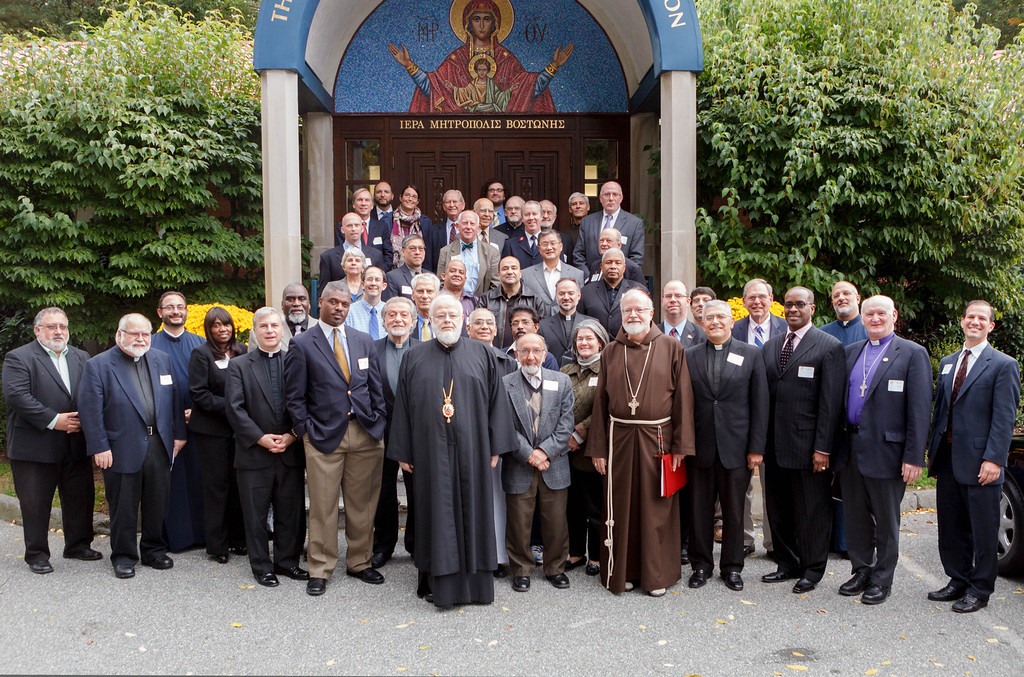
On October 9, 2012 Metropolitan Methodios hosted Boston area religious leaders at the Metropolis to discuss the issue of Physician Assisted Suicide. Below are his opening remarks.
I am deeply grateful to all of you who took the time from your very busy schedules to come today to discuss an issue of great importance.
I note the great diversity of brethren who are here, not only from the Christian community but from the greater Ecumenical community including members of the Islamic community. Our Jewish brethren are not here because they are celebrating a High Holy Day.
I indeed hope that our meeting today will lead to collaboration and cooperation on other issues in the future. A special word of thanks to Fr. David Michael and Vito Nicastro for organizing today’s meeting.
Todays’ discussion will revolve around question two on the Massachusetts ballot next month—specifically legislation concerning physician assisted suicide. Patients diagnosed with a terminal illness and given a prognosis of less than 6 months to live would have the ability to request a lethal injection to end their lives.
For centuries now, all doctors take the Hippocratic Oath promising to practice medicine ethically and honestly, never doing harm to a patient. This proposed law would be impossible to control, and would have serious societal ramifications.
The Orthodox church believes that to elevate euthanasia to a right or an obligation would bring it into direct conflict with the fundamental ethical affirmation that as human beings we are custodians of life which comes from a source other than ourselves. Furthermore, the immense possibilities, not only for error but also for decision making based on self-serving ends which may disregard the fundamental principle of the sanctity of human life, argue against euthanasia.
Generally speaking, the Orthodox Church teaches that it is the duty of both physician and family to make the patient as comfortable as possible and to provide the opportunity for the exercise of patience, courage, repentance and prayer. The church has always rejected inflicted and unnecessary voluntary suffering and pain as immoral; but at the same time, the Church also has perceived in suffering a positive value that often goes unrecognized in the logic of the world in which we live, a world characterized by secularism, materialism, and individualism.
Euthanasia is a Greek word meaning “a good death”. The only “euthanasia” recognized in Orthodox ethics is that death in which the human person accepts the end of his or her life in the spirit of moral and spiritual purity, in hope and trust in God, and as a member of His kingdom.
Presently we will hear a presentation on the moral and ethical issues revolving around physician assisted suicide, then a word from George Kronin on the campaign against question two on the ballot, and then we want to hear and exchange views from everyone present and Cardinal O’Malley will give closing remarks.
The Orthodox church joins our brethren in the Ecumenical community, the American Medical Association, the Mass Medical Society and all people of good will in opposing question two on election day.
I have the pleasure of inviting to the podium Dr. Peter Cataldo who is the bioethicist for the Archdiocese of Boston.
It has been quite some time since I did an update of what has been going on around here. I have been trying to keep the blog updated by posting at least 3 times per week. Some weeks it is better than others, but I keep plugging away. I will be participating the 40 days of blogging that Fr. John Peck does each year during Advent to kick start pastors into blogging. The idea is to blog each of the days during Advent in the hopes that those who being will continue after Advent is over.
Since I mentioned Fr. John, a plug for the excellent work he does with website design and branding. If you are in the market for a new website, or a website redo, give Fr. John a call and let him amaze you with what he can come up with. These pages you are reading now are his creation, and I am extremely pleased with what he was able to do.
Fall is always a busy time in the parish. Bible study has started again, although I should not call it Bible Study since we are taking a look at the 7 Ecumenical Councils of the Holy Church. I think it is essential to look at history from time to time to put things into perspective. Since out Orthodox Doctrine and practice comes from these councils I felt it was necessary to examine these.
The Community Meal is continuing with our three times a month meal that we offer to the people here in Southbridge and the surrounding area. This has become or primary ministry here at St. Michael and we are feeding between 60 and 70 people at each meal. The idea is to bring the community together, around the table, to break bread and have a conversation. It is a time for folks to come together, who perhaps have not seen each other since the last meal, and catch up. New friends have been made, and old friendships renewed. I have an incredible group of volunteers who give of their time each week and I could not do it without them.
The garden has been put away for the season, and we await the first frost of the winter. The garden was spectacular this summer although I did plant my tomatoes a little too close together and they grew into a bush. I did manage to harvest an abundant crop from them and would use the same varieties next year. Summer squash and Zucchini grew like crazy! I had more than I knew what to do with so I spent one afternoon canning all of the leftovers. I now will have enough to last all winter and possibly into the spring. The Chickens continue to produce some of the largest eggs I have even seen, but we did lose 2 just this past month. I have had them for just about a year now, and I have a plan to replace the ones that I lost to keep the egg production going. The water heater and the heat lamp will soon be installed in the coop for the winter months. It is quite sad to look out and see the empty garden, but it also brings hope that after the cold winter planting will begin again.
We are anticipating a visit from our Archbishop in November. The Romanian Archdiocese is blessed to have 2 bishops who make a point of visiting each parish in the Archdiocese yearly. This will be the first time in three years that the Archbishop has been with us, and we are planning an exciting weekend. He is bringing with him relics of a new Romanian Saint who also happens to be the patron of our Ladies Society so we have commissioned a new Icon for our Church in honor of this occasion.
Like any old buildings our buildings here at the Church are in constant need to repair and maintenance. We have a list of projects longer than there are days in the week, but we knock them off one by one. Some are in the process and some and finished. There is satisfaction in crossing a task off the list that has been on it for a long time. We are doing the best we can to keep our Church looking neat and clean and to make sure that all of the maintenance tasks are completed before the winter months set in. There are some tasks that have been on the list for years, and we hope that this is the year that we finish them.
Just before the summer I released a new book. Listening to the Heartbeat of God is a small book that came out of several talks I have given on the topic of prayer and Spiritual Fatherhood in the Orthodox Church. Published by Regina Orthodox Press the book has sold well and is still available. I spent some time this summer traveling and speaking on the topic of prayer, and that was exciting to go out and meet folks and talk about prayer.
This fall and winter I will be working on another book. This will be a collection of sermons and essays that have appeared here on the blog over the last seven years. It is difficult to believe that I have been blogging that long but November 11, 2012 it will be seven years. So as the cold sets in for the winter I will be working on the new book. I hope to have it finished and published in the Spring.
Well, I think that brings things up to date here. Another year is coming to a close, and another is queuing up to start. What are your goals and aspirations for the coming year?
Sunday, October 7th, was a time when preachers from coast to coast took to their pulpits to try and pull the IRS into a court battle.
In 1954, then Senator Lyndon Johnson pushed a bill through the United States Senate forbidding churches to endorse candidates for public office. On this Pulpit Freedom Sunday, some 1,586 pastors defied this law by endorsing candidates for office in this political cycle. I would be interested to see how many of those who participated endorsed President Obama and how many endorsed Governor Romney.
I am not one for faulting anyone who preaches but to use the pulpit for political reasons is irresponsible. Those of us who have been called, by God, to preach his word are called to rise above these worldly pursuits. We are called to preach the Gospel of Jesus Christ and not the Gospel of the Republican Party or the Democrat Party.
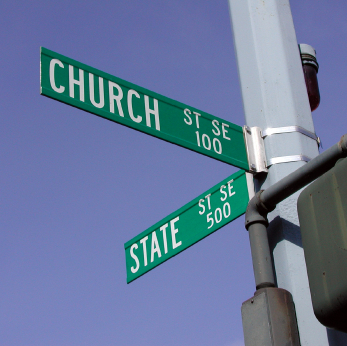
As I understand it, they object to the Johnson Amendment that limits their free speech on political matters, and I suppose if you wish you preach politics then renounce your tax exempt status and then have at it. No one is forcing you to claim tax exempt status, but if you are going to claim it, then it comes with some restrictions, and this is the only one.
Preaching and teaching is a sacred responsibility, and preachers should use that time to teach people how to live their lives as Christ calls us to live. The Gospel is supposed to transcend this world and transform the lives of people. For far too long the Gospel has been used, by people in both political parties, for political reasons and that needs to stop.
I find it interesting that, in the entirety of the Gospel, Jesus never directly spoke to the civil government of his day. He never scolded them, in fact, he told us to support the government, and as Orthodoxy we are called to pray for the government. The message is the Gospel is not about this world but about the next. The message of the Gospel is to prepare us, as individuals, and they keep us on the path towards Theosis. The intent of the Gospel was not to make our earthly life better, but to prepare us for heaven.
The Gospel touches on all aspects of life and for some that may seem partisan. When I teach about Jesus’ requirement for us to care for the poor, or I speak about the Church’s position on life that is not political that is the teaching of the Church. I have said before, you cannot legislate morality you have to teach it and model it. If we spend less time in the halls of Congress and the courtroom and more time teaching the people God has called us to lead, then the people that we lead and teach will become better citizens.
The Gospel of Jesus Christ requires us to be active in the public square and to make our voice heard, and there are many ways for us to do that. We are to transform society by the way we act and the way we live. We preach the Gospel by the way we treat other people and by showing the love of Christ in every situation regardless of the political affiliation.
Pulpit Freedom Sunday is a gimmick, and the Gospel of Jesus Christ does not need gimmicks. What the Gospel of Jesus Christ needs is for it to authentically preached, it needs to be authentically taught in clear, straight terms to the people of God.
Jesus was not a political figure. Jesus came to rescue us from our sins and to show us how to live our lives. He did not use gimmicks, unless you call healing the sick and raising people from the dead gimmicks, to get his point across. Jesus rolled up his sleeves and got to work.
I have roughly 52 chances to teach the people that God has given me to care for about the love of Jesus and the way the He wants us to live our lives, to spend one of those chances on a political stunt seems like a waste of an opportunity to me. Our roles as pastors are more important than making a political statement. Preach the Gospel of Jesus Christ and the rest will take care of itself.
The role of the Church in society is to being hope and to be the moral compass for the people. We need to show people the way and to bring them hope. I do not see how calling for the election of one candidate over the other does this. Neither candidate will save your soul. The government of the United States will not save your soul, only the Lord God can do that. Preach that, give hope, and show people the way towards salvation. Leave the politics to the politicians.
At that time, Jesus went to a city called Nain, and his disciples and a great crowd went with him. As he drew near to the gate of the city, behold, a man who had died was being carried out, the only son of his mother, and she was a widow; and a large crowd from the city was with her. And when the Lord saw her, he had compassion on her and said to her, “Do not weep.” And he came and touched the bier, and the bearers stood still. And he said, “Young man, I say to you, arise.” And the dead man sat up, and began to speak. And he gave him to his mother. Fear seized them all; and they glorified God, saying, “A great prophet has arisen among us!” and “God has visited his people!”
Crying is one of the more normal things that we as humans are able to do. Most other animals in this world do not have the ability to show this emotion, not only of sadness, but of immense joy.
Tears can come in many forms. We cry when we heard sad news. We cry when we hear happy news. Sometimes we laugh so hard that tears come to our eyes. Sometimes we scrunch up our face, and have a good cry when watching some silly movie or reading a book. Crying is one of the most ordinary things. Except of course for men, because real men don’t cry.
Think back, what is the shortest verse in the Bible? “Jesus wept.” He was at the grave of his close friend Lazarus, whom he was about to raise him from the dead, and yet He wept. Jesus was human as well as divine, and at this moment, we see His humanity coming through loud and clear.
Today in this Gospel reading we look upon another who is weeping. A widow has lost her only son, and her grief is extreme. I do not have children, but I do know that parents are not supposed to bury their children; it just does not work that way. But now we have this woman, who is a widow so we believe she has buried her husband already, and now her son, her only son, has died. She does not know what to do. With no family, she will be outcast and have no way to support herself. She will end up on the street and become a beggar just to survive.
It was during the funeral procession that Jesus came into contact with this woman for the first time. Scripture tells us, “When the Lord saw her, He had compassion on her.” He had compassion on her.
Compassion is defined as pity for the suffering or distress of another, with the desire to help or spare. Jesus saw this woman, saw her suffering, and decided at that moment that he was going to help her.
Jesus always had compassion on people. We see it time and time again in Scripture. He healed people, fed them, and was concerned for their well-being. We hear of the Centurion that came to him because his daughter was sick but did not want Jesus to come to home for fear of persecution. Jesus did not tell him to go away or go to his home; Jesus healed his daughter out of compassion for the man.
The role of the Church is similar. We are to show compassion on people and to help ease their suffering as best we can. The Church is to be the voice of those who have no voice in society, we are to be the hands and feet of Christ in the community and in the world, not looking for anything in return, but because we have compassion for people. In the Gospel of St. Matthew we read, “You are the light of the world. A city that is set on a hill cannot be hidden.” The Church is to be the beacon, a light that shines in this darkened world to lead people to safety, to bring them home, and into the loving arms of God. That is our mission.
I have said this before, the entirety of the Gospel message is love, not love for material things or even for ourselves but the love of others.
Yesterday, the Church celebrated the feast of St. Innocent of Alaska. Innocent came to the Alaskan wilderness in 1824 to continue the work that had begun there by others. The parish church that he was assigned to covered a broad stretch of the Alaskan coastline and several islands. He traveled to these islands by the use of a canoe often battling severe storms in the Gulf of Alaska.
His parishioners had been converted before his arrival, but they still held too many of their pagan beliefs and Innocent had enormous compassion on them, often putting his own life in jeopardy to bring them the love of Christ. Innocent is just one of many who sacrificed their lives so that other might know the love of Christ.
The life of a Christian is not static, we cannot just sit and say we are Christians, we are called to action. We are required to do something as Christians. St. James writes that faith without works is a dead faith. He goes on to say, “Pure and undefiled religion before God and the Father is this: to visit orphans and widows in their trouble and to keep oneself unspotted from the world.” In other words, we have to show compassion on those who need our help the most.
At the end of today’s Gospel story, Jesus raises the widow’s son from the dead. He restores him to her so that she will be able to survive. Notice he did not raise the son for the sake of the son, he raised him for the benefit of his mother. She would not live out her days alone, and she would have someone to provide for her. Jesus restored the son to life, so that the mother would have life.
This is the Gospel in a nutshell, Jesus was raised from the dead, not so he would have life but so we would have life. The earthly ministry of Jesus is meant to be a model for us on how we are to live our lives. Jesus never did anything for himself, he sacrificed himself for others, he provided for others before he even provided for himself, and this is what we are called to do not only as individuals but as the church.
We are Church when our attention turns outside of these walls to the community that exists, not in here, but out there. Yes we need to care for each other, but that comes after we care for everyone else. This is the essence of the Gospel. This is the life of a Christian, and this is the purpose of the Church.
Just as Jesus brought hope to the woman who had lost her son, we need to bring hope into the world that has lost hope. Just as Jesus told the woman not to weep, we need to help the world, one person at a time, and bring them hope so they will not weep. Do not weep, because the God that created you loves you and cares for you and wants you to know His love.
We are a city built on a hill, it is no mistake that our Church sits atop this hill, we are a beacon for those who are lost, we are that guiding light that will show the way to safety and security to those who are lost, and we are the light of the world.
On October 6th I had the honor of joining together two people in the Holy Sacrament of Marriage. I do not usually post sermons from sacraments but I thought that this sermon was fitting to be posted here in the blog. I have removed their names from the sermon to maintain their privacy.
Today, these two children of God present themselves here in front of God and the community to pledge their love for one another and to have that love blessed by God’s Holy Church. In the Sacrament of Holy Matrimony, they solemnly vow before Christ, the priest, and the congregation, to be true to each other for life. This union is blessed by Christ through His Holy Church and God’s grace is imparted on them to live together in His love, mutually fulfilling and perfecting each other.
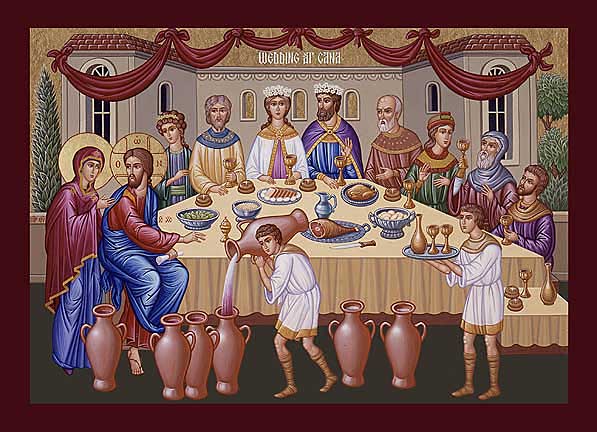
The Orthodox Church teaches that marriage was instituted in Paradise when God blessed the first couple, Adam and Eve, to live as a family and so too the Church blesses the union of man and woman. The love of Christ for the Church becomes the archetype of marriage for Adam was created in the image of God and Eve in the image of the Church. By His presence at the Wedding in Cana of Galilee Christ revalues and elevates marriage to its ontological function.
St. John Chrysostom declares: “There are two reasons for which marriage was instituted… to bring man to be content with one woman and to have children, but it is the first reason that is the most important.”
Marriage implies that both the bride and the groom belong to each other and are united in spiritual love and physical unity. Christian marriage elevates the bodily union to become a spiritual union, through the Holy Spirit, just as the Holy Spirit works in the Baptismal water to make humans a new creation. The Holy Spirit also works on the couple during the marriage ceremony, through prayers and faith to unite them in the Lord. Through the commitments made by the bride and the groom in fulfilling the commandments of marriage and the work of the Holy Spirit, the two partners become one.
Marriage then ceases to be just the satisfaction of natural, human instinct, or the fulfillment of man’s search for earthly happiness. It is an event which concerns not only the newly married couple, but also Christ Himself, for two of His members are being joined in one within the whole Church which is the Body of Christ.
At the start of the service, the right hands of the bride and groom were joined. This is a visible sign of what happens on the spiritual and emotional level in the sacrament of Marriage. The hands are kept joined throughout the ceremony to symbolize the oneness of the couple. At the conclusion of the service, the Holy Gospel book is passed through their joined hands to break the bond to remind them that it is only Christ that should come between them and their love for one another.
The crowns that they wear upon their heads is a reminder that the bride and groom are kings and queens of their own little kingdom, the home, which they will rule with wisdom, justice, and integrity. These also symbolize the crowns of martyrdom since every true marriage requires sustained self-sacrifice on both sides.
Drinking from the common cup is to remind both of you that from this moment on you will share in everything in life, its joys as well as sorrows and that you are to “bear one another’s burdens.” Your joys will be doubled, and your sorrows will be halved because they will be shared.
The walk around the Holy Table is to remind you that the sacrificial love that you must have for each other is eternal, there are no vows in the Orthodox Church that say till death do us part, marriage is eternal. It is also a reminder that your life should revolve around the Church as your source of life. You are called by Holy Church to be eternally witnesses of the union of Christ with His Church. This new dimension is what constitutes the whole difference between a Christian marriage and the one which is concluded outside of the Church.
Now this is the part where I, the single guy, give you, the married couple advice:
Let God help you make yours a happy marriage. Commit your lives to Him and invite Him into your marriage every day. Pray together. Worship together. Live close to Him who is the source of Love. The closer you are to God the closer you will be to each other.
If there are serious marriage problems, see the priest before you see an attorney. Many marriages could be saved if you remember that it is God that has brought you together, and this is not just a legal contract that you are entering into.
Marriage is a life-long commitment to the one you love. Your aim will be not so much to be pleased as much as to please the one you have chosen.
Love means to give. It must be expressed daily. Never take your love one from granted. Remember to say “I love you” at least one daily and continue your courtship through the years.
Your spouse comes first in all of your relationships. You complement each other. God puts dissimilar people together so that they can help each other in their limitations.
A healthy marriage requires growth, forgetting self and seeking to please the other. A healthy marriage is not only marrying the right partner, it is being the right partner. Don’t be afraid of conflict, they can be challenges to help you know one another better. Find time to communicate, really communicate, to listen to each other, to our out your hearts to each other. Don’t be afraid to communicate angry feelings honestly and in love.
Accept your spouse. Don’t expect perfection. Don’t try to change them, the only person you can change in yourself, and this is where all real change begins. We are responsible for one another’s behavior in marriage. When your partner misbehaves, take a good look at yourself to determine whether you could be responsible.
A healthy marriage takes time. Learn to say “WE.” Holy your money in common, it belongs to both of you. Do not let outsiders make decisions for you. Never go to sleep angry, forgive each other daily, and forget.
And, to the groom, this one is for you. There are three words that you need to say each and every day as soon as you wake up in the morning. If you say these three words you will have a long and happy marriage, those three words are, “I was wrong.”
And now as the Gospel of our Lord and Savior Jesus Christ reminds us, “What therefore God has joined together, let not man put asunder.” (Matt 19:4-6)
The service of Vespers is, I think, dramatically under-appreciated today. The temptation for us busy people is to reduce our church-going to Sunday mornings only, and let everything else slide. Since we under-appreciate Vespers, it often tends to slide with other things we deem relatively unimportant. But Vespers warrants a second look, and a renewed appreciation.
The word “vespers” comes from the Greek ἑσπέρα (hespera) and the Latin vesper, both meaning “evening”, because it is the evening service of the Church. Christians are to pray to God not just on Sunday mornings, but constantly, sanctifying time by offering prayer throughout the day. In the eighth chapter of the Didache (or “teaching”), a church manual dating from about 100 A.D., believers are urged to stop and pray three times throughout the day, at least saying the Lord’s Prayer. Soon enough a certain pattern would become standard, with believers praying at the third hour, the sixth hour, and the ninth hour (that is, at 9.00 a.m., noon, and 3 p.m. respectively). Christians were encouraged to pray in the evening also, and the pious were even encouraged to rise at midnight and pray at home for a bit (easier to do then than now, since people then went to bed earlier).
In those days, the believers would say a prayer of thanksgiving when the evening lamp was brought in. Back then there was no electric light of course, and unless one lit a lamp for illumination, one sat in the dark. Accordingly, everybody kept the daily practice of lighting lamps when it began to get dark (that is, when each evening came), and bringing in the lamp to the place where everyone was. Because the Lord described Himself as “the light of the world” (see Jn. 9: 5), believers inevitably thought of Him when they saw the comforting lights of evening. Thus, one prayer that became standard when the Christians gave thanks to God for the light of the lamp referred to Jesus. We know it today as the hymn “Gladsome (or joyful) light”: “O gladsome light of the holy glory of the immortal Father: heavenly, holy, blessed Jesus Christ! Now that we have come to the setting of the sun, and behold the light of evening, we praise God: Father, Son, and Holy Spirit. At all times You are worthy of praise, O Son of God and Giver of life. Therefore the world glorifies You!” Believers would recite this prayer every evening when the lamp was brought in to provide light for the evening until everyone went to bed.
This practice became the daily experience of Christians. St. Gregory of Nyssa relates that when his sister Macrina was dying, the evening lamp was brought into her room at dusk as usual. Seeing it, she tried to utter the customary prayer, but her voice failed before she could finish the prayer. She lifted her hand to sign herself with the Cross, drew a final breath, and died, praying silently the thanksgiving prayer for the lamp. (No bad way to die.)
This domestic rite was preserved when the Christians met together corporately in church at evening time. When dusk came, the lamps were brought into the church just as they were at home, and the customary prayer sung. Thus the hymn “Gladsome Light” became an invariable part of the evening Vespers service. As Gregory and Macrina’s contemporary St. Basil wrote, “Our fathers thought that they should welcome the gift of evening light with something better than silence, so they gave thanks as soon as it appeared. We cannot say who composed these words of thanksgiving at the lighting of the lamps, but the people use these ancient words [of the hymn ‘Gladsome Light’]…” In St. Basil’s day, this prayer/hymn was already ancient.
In the church in Jerusalem, the light was brought in, not from the outside (the usual custom), but from the lamp that burned perpetually before the Lord’s Tomb. In Constantinople the more usual practice prevailed, and the lamps were brought in from outside and all the candles in the darkening church lit from them. Today when the hymn is sung, often no lamps are lit, but the hymn remains as a reminder and vestige of the practical lighting of the lamps in church for the purpose of illumination. Even today at the evening Presanctified Liturgy (which is essentially simply Lenten Vespers with a rite of Communion appended to it), the celebrant still brings forward a light with the words, “The light of Christ illumines all!” In Constantinople, these words were the signal for all the lamps in the church to be lit.
Vespers preserves other ancient features as well, including the offering of incense. The original sung Vespers service included three units each consisting of three psalms. One of these was Ps. 141, obviously chosen for the line “Let my prayer arise in Your sight as incense, and the lifting up of my hands as an evening sacrifice.” The reference to “evening” dictated the choice of psalm; the reference to incense made the offering of incense more liturgically relevant. As such, when this psalm is chanted as part of the remnants of the original three-psalm units (consisting now of Psalms 141, 142, 130 and 117), the deacon censes the church as these psalms are chanted. The current practice is not simply to chant the psalms, but also to insert brief hymns or stichs into the final verses of the psalms. This incense reminds us of the acceptability of our worship to God—through Christ, we now have access to the Father, and He accepts our praises since we offer them to Him as disciples of His Son. The fragrant incense we smell as these psalms and hymns are sung remind us of our exalted status in Christ.
There are other elements in the service as well, such as the chanting of psalms. The monks originally lived far from parish churches and did not have the ability to sing complicated musical services, such as those who lived in urban parishes did. They therefore concentrated more on psalmody than on church-composed hymns, more on the Psalter than on troparia and stichs and hymns. Their practice was to chant the entire Psalter from beginning to end, as often as possible. One system of chanting the Psalter involved incorporating all the Psalms into the daily services of Matins (in the morning) and Vespers (in the evening) in such a way as to go through the entire Psalter in one week. That is, they would incorporate two sizable “chunks” of the Psalter, in series, into each Matins service, and one “chunk” into Vespers. The Psalter was divided for this purpose into twenty “chunks”, each chunk called a “kathisma” or sitting—so-called because sitting was allowed the monks while the Psalter was read. On Saturday, the first “kathisma”, consisting of Psalms 1-8, was read at Vespers. Nowadays, this “chunk” is greatly abbreviated to a few verses, or even simply omitted. This is perhaps unfortunate, because it means we lack the exposure to the Psalter that the monks deemed essential to spiritual growth. But in many parishes the chanting of the Psalter is retained, even if only for a few short verses. The psalms of the first kathisma begin with the words “Blessed is the man”. Many think this is another hymn, like “Gladsome Light”. In fact it is the beginning of the first eight psalms, originally intended to be chanted in their entirety.
Thus, three main components of the Vespers service are the lamp-lighting prayer “Gladsome Light”, and the offering of incense, the chanting of Psalmody. The structure of the service has of course changed over the years. The original service with its three series of three psalm units has given place to our present collection of psalms strung together and chanted as the temple in censed. Also, Vespers previously began in the center of the temple with the exclamation “Blessed is the Kingdom…”, the clergy entering the altar area at the beginning of the second three-psalm unit. Also, the catechumens were prayed for at the end of Vespers, just as they are presently during the Divine Liturgy. Finally, Vespers concluded with processions to the sacristy (orskeuophylakion, the place where the vessels were stored) and to the baptistery, where special prayers were said.
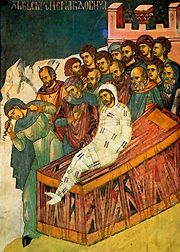
Why these processions? They were modelled after processions and prayers of the church in Jerusalem located at the Holy Sepulchre. In that church, when evening came, the people realized that they were at the very place and at the very time where Christ was taken down from the cross and prepared for burial. It was natural for them to stop at that place and at that time to offer special prayers. Jerusalem soon became the pattern for churches everywhere, even though these other churches did not enjoy the same geographical and liturgical advantage of being located at the holy places where Christ suffered, was buried, and rose from the dead. So, these other churches adapted their worship to Jerusalem’s situation as best they could. The Jerusalem procession to the places where Christ was buried became processions to the places in their own churches which symbolically portrayed Christ’s death and burial—places such as the skeuophylakion (or “little altar”) and the baptistery, in which the candidates for baptism sacramentally participated in Christ’s death and resurrection (see Rom. 6).
So, though the structure of Vespers may have changed, its heart remains the same, and it still provides a good way to end the day. Vespers now opens with the chanting of Psalm 104. In this psalm we give thanks to God for creation, confessing that the whole world lies in His loving hands, and therefore we may commit ourselves into His hands as well. God made all that exists, and sustains it every day through His ceaseless care. As the Psalmist says, “He made the moon for the seasons; the sun knows its time for setting; You appoint darkness and it is night. How manifold are Your works, O Lord! In wisdom have You made them all.” We may lie down in peace and rest in confidence, knowing that God in His wisdom is in control.
After Psalm 104 is sung and prayers are said, other psalms are chanted and incense offered, as we sing “Let our prayer arise in Your sight as incense, and let the lifting up of my hands be an evening sacrifice.” Through the sacrifice of prayer and praise, we seek for and receive the forgiveness we need daily from God. The world can be a hard place, and we often stumble and fall, sinning against our good Lord. In these prayers we lift up our hands and hearts to God, asking for pardon for whatever we may have done amiss during the day.
Then the prayer of the lamplighting is sung (“Gladsome Light”), as well as the hymn “Grant us, O Lord, to keep us this evening without sin…” Through these hymns, prayers and litanies, we offer ourselves with our multitude of needs into God’s hands. God who provides food for the young lions which call to Him, and gives to all their food in due season (Ps. 104:21, 27), can be trusted to provide for us also. It is as St. Paul said: “Be anxious for nothing, but in everything by prayer and supplication with thanksgiving let your requests be made known to God, and the peace of God, which surpasses all comprehension, shall guard your hearts and minds in Christ Jesus” (Phil. 4:6-7). Having made our evening requests, we may lie down in the peace of God.
The service of Vespers therefore provides a fit conclusion to the day. But it also prepares us to greet the coming day, since the day begins not with morning, but with evening. (We think of the Jewish reckoning of the Sabbath as beginning Friday evening, and of the order of creation: “There was evening and there was morning, one day” (Gen. 1:5). Note: evening comes first. The restful repose we receive from God is His gift to us to prepare us for the challenges of the coming day. It is also why the Church serves Saturday evening Vespers as a liturgical preparation for Sunday morning Liturgy. First comes the preparation, then the fulfillment. First the repose, then the rising. First the darkness, then the light. First the incense of Vesperal penitence, then the festal Eucharistic rejoicing. This sequence is why the Old Testament lessons are most appropriately read on Saturday evening, following the prokeimenon (which always functions to introduce a lesson)—for the Old Testament serves to prepare us for the New, and the Law gives way to the Gospel.
For many of us who do not live close to a church or monastery where Vespers is served every day, ending each day with Vespers is not possible. But certain of its prayers can still be offered at home privately. Rather than ending the day by watching the 11.00 news and then falling into bed fretting about all the evil we have seen reported, how much better to end the day by singing to God, by chanting one of the Vesperal psalms or hymns. Regardless of what the newscaster might suggest, God is still in control of His world: the sun knows its time for setting; He appoints darkness and it is night. How manifold are Your works, O Lord! In wisdom have You made them all.
Thou Who at all times and at every hour, in heaven and on earth, art worshipped and glorified, O Christ God, Who art long suffering, plenteous in mercy, most compassionate, Who lovest the righteous and hast mercy on sinners, Who callest all to salvation through the promise of good things to come: Receive, O Lord, our prayers at this hour, and guide our life toward Thy commandments. Sanctify our souls, make chaste our bodies, correct our thoughts, purify our intentions, and deliver us from every sorrow, evil, and pain. Compass us about with Thy holy angels that, guarded and guided by their array, we may attain to the unity of the faith and the knowledge of Thine unapproachable glory; for blessed art Thou unto the ages of ages. Amen.
In the first essay in this series I wrote about the differences in Monastic and Lay spirituality in the Orthodox Church. I began with a basic outline of where I thought this series was going to go. In the second essay, I wrote about fasting and our need to fast as part of our Spiritual life in the Orthodox Church.
In this third essay I was going to write about confession, but I have written on confession in the past so rather than write about it again I am just going to link to the essays I have written in the past.
In my last essay, I began a study of the differences between the Orthodox Monastic Spirituality and the Orthodox Lay person’s Spirituality. There is indeed a difference between the two, and as I mentioned in the last essay I think we do not talk about the differences enough.
In this essay, I will compare and contrast the differences in prayer and fasting. As I mentioned, we are all called to pray and fast. The Church has set aside times of the Church year for us to focus on fasting and the work that needs to be accomplished during the fast periods. Fasting is not supposed to be penitential but is to enable us to reject the passions. The Church Fathers write about the need to deny ourselves in order to get the passions in check. The fast periods of the church, or more appropriately the abstinence periods of the Church, are penitential but fasting in and of itself is not.
The Church calls us to fast and abstain all Wednesdays and Fridays of the year, with some exceptions. Wednesday is to remember the day that Judas betrayed Christ and handed him over, and Friday is to bring to mind the Crucifixion. On these two days, we follow the strict abstinence from all meat and dairy products to include eggs. We also abstain from alcohol and oil. But we should also limit the amount of food that we consume on those days. Hunger is to remind us of the need to pray and work to gain control over the passions that can control us. The amount of food we eat is the one thing that we can control and the fathers say that if we can control that then the work on the passions can begin. Traditionally Orthodox monastics do not eat meat at any time during the Church year. They also abstain from eating fish except on high feast days.
This fast is separate from and not connected to the Eucharistic fast. In traditional practice, the Eucharistic fast is nothing by mouth after midnight on the day before communion. That would mean that after midnight on Saturday, we can have nothing by mouth. That means no Sunday morning coffee before Church! However, if you take medication and you need to drink water or eat some food then by all means you need to follow the direction of your physician.
As a spiritual father, to many people I always suggest starting slow and work up to what the church advises. My opinion is that we all should be doing something and the fast as I have presented it here is a goal for us all to attempt to achieve and we can reach it if we work at it. But we need to start slow and build on what we have perfected. As with all things, consultation with your spiritual father is essential.
Prayer is another aspect where the lay state and monastic state are separate. St. Paul writes that we are to pray continuously, and I agree with what St. Paul has written. We should, regardless of our state of life, be praying at all times and all places. But what of liturgical prayer? Our prayer life needs to include more than just Sunday morning Liturgy or Saturday evening Vespers. We need to pray each day as the Church asks us too.
One excellent resource for this prayer is contained in the Orthodox Study Bible. Located in the back of the Orthodox Study Bible is a short and easy morning and evening prayer. If prayed each day this should take no more than 15 minutes each. As I said about fasting, start small with just the morning or evening prayer and build on it as you go. Quality of time is better than quantity of time. Spending 15 minutes of your day in prayer and conversation with God will have a substantial impact on your day. I recommend the prayers of the Church rather than extemporaneous prayer because these prayers are the ancient and traditional prayers of the Church and are prayed by people in all corners of the world at all times of day and by praying these prayers we are participating in the prayer life of the Church. As you progress include the Psalm for the day and the Lectionary Readings.
Monks are called to several hours of prayer, both communal and private, each day. St. Benedict in his rule for monasteries writes that the day should be half spent in work and half spent in prayer. Ora et labora is what he calls for, work and prayer. Our prayer should be work and our work should be prayer. Lay people can practice this if their particular situation in life allows it, but not everyone can or should try this kind of life.
All of these practices should be done in consultation with your spiritual father. If you do not have one then get one, but start with your parish priest.
When I talk with people about the Orthodox Church I often relate the discussion to the Orthodox sense of Spirituality. One of the things that first attracted me to Orthodox was the Spirituality. I had a chance to read the little book The Way of the Pilgrim. This is a splendid little book about the deep spiritual roots of the Orthodox Church. In one sense, we are all pilgrims but can any of us just chuck it all and go on pilgrimage?
There are two forms of spirituality in Orthodoxy, monastic and lay, and I sometimes think that we try and put the two together, but they are remarkably different from each other. I hope over the next series of essays to point out the similarities and the differences in an effort to deepen our own spirituality.
I will start with the similarities since that will be the easiest place to start. As Orthodox Christians, we are called to a similar course on our spiritual journey regardless of our vocation, married, single, or monastic. We are called to fast and pray all during the year as well as the designated fast periods of the Church year. However, there is a difference between monastic fasting and prayer and that of the lay person.
We are also called to celebrate the Divine Liturgy at a minimum on Sunday, but we should also attend during the feast days of the Church. In my own parish, we celebrate the Vespers service on the eve of the feast so more of the parishioners could attend. The Divine Liturgy is essential to our life as Christians. That weekly time together is of the utmost importance, and we should strive to attend Liturgy each and every time it is offered. Our lives have become tremendously busy with all sorts of activities, and it seems that Liturgy is the one thing that gets tossed to the side. The two hours we spend in Liturgy each week is a small portion of our time.
Another often overlooked part of our spiritual life is confession. Confession is one of the lost Sacraments in the Church. Each year fewer and fewer people avail themselves of this magnificent healing Sacrament of our Holy Church. I am pleased to say that the number of people and the frequency of their confessions has increased in my small parish over the last year. I believe this to be in part of my renewed emphasis on the Sacrament in my preaching as well as the renewal of the Sacrament in my own spiritual life. I will leave the frequency of confession for another essay, but if it has been some time since your last confession, why not go soon.
Spiritual fatherhood, or Spiritual Parenting is another essential part of our life in the Church and another almost entirely lost art here in the Church in America. We have mentors for all sorts of things in our lives, work, sports and many more. Why do we treat our spiritual life with less importance? One would not consider starting a journey across the country without first consulting a map or now a GPS for guidance but so many of us stumble along the spiritual path with no guide at all.
My aim is to spend time in future essays on each of these areas to chart a course as we continue the journey along the path of transformation of our lives. Becoming serious about our lives in the Church and the life that we are called to lead is an essential part of that transformation that we all need to be part of.