Good Leaders Must First Be Good Followers

One of the classes I wish they taught us in the seminary was a course on leadership.  Unlike some of my classmates in the seminary, I have had an advantage of studying leadership.  You see I spent twelve and half years in the United States Army and the Massachusetts Army National Guard with more than half of that as a noncommissioned officer.  One of the first leadership lessons you learn is that to be a good leader you must first be a good follower.

I was blessed to have worked for some fantastic leaders during my time in the military but there is the flip side as well, the bad leaders.  I would say that some people are born to be leaders but most need to learn to be leaders.

Anyone involved in leadership will tell you that good leaders are also good readers, and I do read many things by many different authors about leadership both secular leadership and religious leadership.  There are some differences but there are more similarities.  It is not easy to lead the fortune 500 company nor is it easy to lead a church in this very complex world that we live in.

During my daily reading I recently came across this web site called Changing Minds.  On that site was a list of the Five Reasons to Follow a Leader.  I have adapted them for this essay and they are presented  in no particular order.

1.  We follow because we are afraid of retribution.  We follow the person who is in charge because if we do not there could be consequences for our career and our paycheck.  From my own perspective I can see the point of this one, but a good leader would have people following them without needing to threaten people. 
2.  We follow because we have blind hope.  Again not a very good reason to follow but we follow because we are so desperate for a solution to a problem that we are willing to follow anyone who can come up with a solution no matter how crazy it may seem.

3.  We follow because we have faith in the leader.  Like I said at the start I worked for some great leaders in the Army.  I would follow these guys literally into battle, I trusted them with my life.  However that faith can also blind us to the fact that they might be leading us down the wrong road.

4.  We follow because we agree with them on an intellectual level.  We see the solution to the problem that leader is putting forth and we understand it and we are willing to go along with it on an intellectual level not just because the leader came up with it.  We do not follow blindly but we follow because we respect them on that intellectual level.

5.  We follow because we buy into the vision.  One of the very first books I read after my ordination was the Purpose Driven Church by Rick Warren.  This book really opened my eyes on how to motivate people to move them from point a to point b after all this is what we do when we lead.  In this book he stressed that the people need a vision and with no vision they are likely to follow anyone who comes along with a good idea, the blind hope!  As leaders we must craft and sell the vision to those who will follow, I have learned that this is much easier if those we are leading have some say in the vision and the direction.

I liked the TV show West Wing when it was on a few years back.  In one of the episodes the Vice President is speaking with the Chief of Staff, I cannot remember the context of the conversation, but as the VP was walking out of the office he turned and said, “You know what you call a leader with no followers, just a guy out taking a walk.”  Now I am sure that quote comes from someplace but I heard it in West Wing.  It is very true that if we as leaders, do not have followers, then we are in fact out for a walk.  I would also say the same is true.  If we followers do not have a leader then we will wander around in a circle.

If we ever hope to be great leaders, like the ones I followed, then we must be able to follow.

Daily Scripture Reading

Last week I put up a post about Parish Revitalization, one of the more popular of my recent posts by the way, in this post I mentioned that we need to commit to the reading of Holy Scripture on a daily basis and start to get serious about our faith.  I realized that I did not give you any ideas along that line and so that is what this post is dedicated too.

I will start with the practice that I use and go from there.  This is not designed for you to use any of these suggestions and before starting any Spiritual Discipline you should consult your Spiritual Father.

Each day I begin with the readings appointed for the day from the lectionary.  There are several sites on the Internet that you can use for this.  The Greek Orthodox Archdiocese is one and the Orthodox Church in America is another.  Remember that your parish calendar may not be the same as some take what is called the “Lukan Leap” just before Advent starts.

After that I read my cell rule.  As a monastic I have a prayer rule called a cell rule.  This is the rule that I try, not always successfully mind you, everyday.  It is an obedience that was given to me by the Bishop when I was tonsured.  I read one chapter from the Gospel, two chapters from the Epistles, and one Kathisma from the Psalms, more on the Kathisma in a minute.  With this cycle of readings one will complete the Gospels at the same time as one completes the Epistles, and one can read through the Psalms very quickly.  This rule is based upon that of the Cell Rule of the monks at the Optina Monastery.

Along with the sites on the Internet there is an application for the iPhone and iPad that brings the daily readings right to your phone, all you need to do is click on the app and away you go.  In our modern busy lifestyle we need all the help we can get and thanks to the folks at the Internet Ministries Department of the GOA we have this great use of modern technology.  It also works on the Android and the best part is, it is FREE!  Also on each day is the lives of the saints for that day, another great thing to read and meditate on each day.

To close out this post I will list below the Kathisma or the division of the Psalms.  It is pretty simple and a great way to follow the Psalms.  I read one of these each day.  I will also list the division of the Psalms for each day as well.  There are far more to read and you will get through the entire book of Psalms in one week this way.

Kathisma 1: Psalms 1-3, 4-6, 7-8 Kathisma 11: 77, 78-80, 81-84
Kathisma 2: 9-10, 11-13, 14-16 Kathisma 12: 85-87, 88, 89-90
Kathisma 3: 17, 18-20, 21-23 Kathisma 13: 91-93, 94-96, 97-100
Kathisma 4: 24-26, 27-29, 30-31 Kathisma 14: 101-102, 103, 104
Kathisma 5: 32-33, 34-35, 36 Kathisma 15: 106, 107-108
Kathisma 6: 37-39, 40-42, 43-45 Kathisma 16: 109-111, 112-114, 115-117
Kathisma 7: 40-48, 49-50, 51-54 Kathisma 17: 118:1-72, 73-131, 132-176
Kathisma 8: 55-57, 58-60, 61-63 Kathisma 18: 119-123, 124-128, 129-133
Kathisma 9: 64-66, 67, 68-69 Kathisma 19: 134-136, 137-139, 140-142
Kathisma 10: 70-71, 72-73, 74-76

Daily Kathisma

Monday: Kathismata 4, 5, 6
Tuesday: Kathismata 7, 8, 9
Wednesday: Kathismata 10, 11, 12
Thursday: Kathismata 13, 14, 15
Friday: Kathismata 19, 20, 18
Saturday: Kathismata 16, 17, 1

Faith and Philosophy

I recently stumbled across the podcast Faith and Philosophy with Dr. Clark Carlton on Ancient Faith Radio.  What a wonderful show and I recommend it highly to you.

I really would like to point out the four part series that he has done on how the Orthodox should engage the public square.  There has been much discussion on this blog as well as others about our role in the public square.  Dr. Carlton asks the question, what public square?  He suggests that we forget Washington and focus or time on Main Street right in our own back yard.  Very interesting.  I will not go any deeper than that.  The longest program is less than 17 minutes and well worth the time.  You really do need to listen and react! 

Here are the links to the shows thus far in the series:

The Naked Public Square, Part One: Don’t Ask, Don’t Tell ~ Clark begins a series on the place of the American Orthodox Church in the public square by examining the issue of gays in the military.

The Naked Public Square, Part Two: Orthodoxy and the Academy ~ Should the faithful be creating Orthodox colleges and universities? Clark shares his thoughts on the place of Orthodox Christianity in the academy.

The Naked Public Square, Part Three: The Pro-Life Movement ~ Clark explains that the contemporary pro-life movement misses the boat entirely as to the real nature of our moral and social decay.

The Naked Public Square, Part Four: Orthodoxy and Progressive Politics ~ Clark explains that progressivism of any type is a precursor to antichrist.

Clark Carlton was reared as a Southern Baptist in middle Tennessee. He was enrolled as a Raymond Brian Brown Memorial Scholar at the Southeastern Baptist Theological Seminary in Wake Forest, NC when he converted to the Orthodox Church.

Clark earned his B.A. in philosophy from Carson-Newman College in Jefferson City, TN and and M.Div. from St Vladimir’s Orthodox Theological Seminary in NY, where he studied under the renowned church historian, Fr John Meyendorff. He also holds an M.A. and Ph.D. in Early Christian Studies from the Catholic University of America in Washington, DC.

At present, Clark is assistant professor of philosophy at Tennessee Tech University, where he teaches the history of philosophy as well as philosophy of religion and logic. He writes on a number of subjects and has had articles published in the Journal of Christian Bioethics, St Vladimir’s Theological Quarterly, and the Journal of Early Christian Studies.

Clark is also the author of “The Faith” series from Regina Orthodox Press: The Faith: Understanding Orthodox Christianity; The Way: What Every Protestant Should Know about the Orthodox Church; The Truth: What every Roman Catholic Should Know about the Orthodox Church; and The Life: The Orthodox Doctrine of Salvation.

Society for Orthodox Church History

The Society for Orthodox Christian History in the Americas (SOCHA) is pleased to announce a new, affiliated academic publication, the Journal of American Orthodox Church History (JAOCH). JAOCH is peer reviewed by established scholars within the field and published electronically.

The Journal will be publish in cooperation with the newly launched Prairie Parish Press.  The Journal will be $10 and is chock full of articles about the early days of the Orthodox Church in the United States.

The Society for Orthodox Christian History in the Americas maintains a wonderful website and one of the Directors, Matthew Namee produces a Podcast on Ancient Faith Radio.

The Society will also be holding it’s first Symposium of Orthodox Church History this Fall at Princeton University, yours truly is one of the presenters, for more information check out the Website of the Symposium.

h/t AOI Blog

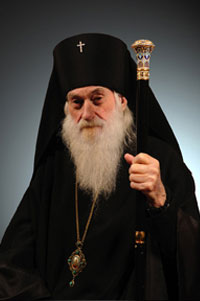
Archbishop Nicolae’s Meditation for the Feast of the Dormition of the Theotokos

Archbishop Nicolae
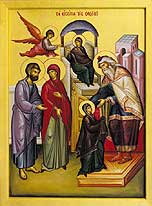
At the Feast of the Dormition of the Theotokos it is beneficial for us to discover what the Holy Fathers of the Church teach us about honoring the Birthgiver of God, because all those who have dared to write about the Lord’s Mother have employed words of praise about her who gave the world God Incarnate.
St. Gregory Palamas questions even the ability of words to grasp the mystery of the Birthgiver of God: “What word could describe, Mother of God, Virgin, your godly, brilliant beauty? For it is not possible to grasp all your attributes in thought or word, since they are beyond the mind and words. But it is possible for us to praise you, who receive us out of your love for mankind. You are the dwelling place of all graces and the fullness of all beauty and all good, the living icon of virtue and of all goodness, the only one worthy to encompass all the gifts of the Spirit….” It is not possible for us to understand with our mind and to express the mystery of the Virgin Mary, but it is possible to praise her. Another father says that after the word is born in our mind, the soul breaks into song, which means that man’s attempt to contemplate the Mother of God cannot succeed unless that endeavor is transformed into a song of praise to the Birthgiver. We cannot talk about the Virgin, we can only hymn her. We cannot explain through words, we can only witness her mystery in praises.
Song brings us to thanksgiving, and the joy of thanksgiving becomes a new song, says a hymnologist of Mount Athos. And in this élan of song and thanksgiving we discover Christ, her Son, for where the Mother is, there is also the Son: “heavenly delight and joy beyond this world is the moment in which man grasps the mystery of the economy of the Incarnation through the mediation of the Most Holy Virgin. Mary with Jesus, Jesus with Mary, these two names most pure and most sweet—this is Paradise”, says Athanasius the Iberian.
In these words of the Fathers we discover the purpose of song and its benefit. The mysteries of God are unfathomable for the mind and hard to express in words. But in song the veil of mystery is lifted and we become partakers in the revelation of God. That which cannot be grasped with the mind and expressed in words is received directly by the spirit through song. Man’s spirit receives “heavenly delight and the joy which is above this world.”
The service held during the Fast of the Dormition of the Theotokos is the Paraklesis, while on the eve of the Feast the Lamentations for the Mother of God are sung. Both of these services fulfill what the Fathers say, for we marvel at the mystery of the Birthgiver of God and we praise her in songs: “Let us sing to the one who is higher than the heavens and purer than the radiance of the sun. She has delivered us from the ancient curse and is the mistress of the world” (Troparia of the Theotokos from the Paraklesis Service).
Let us too avail ourselves of these songs of praise to the Mother of God, and let us desire the revelation of these mysteries, to the joy and thanksgiving of those who are already entering into the eternal Kingdom of the Son of God and His Mother!
† NICOLAE

15 August ~ Dormition of the Theotokos

I love the feasts of Mary! I have loves these feasts since I was a kid but I really did not know why. She has always been there but that was it, she was Jesus mother and we all loved her but I was unsure why. There are many reasons to love the Theotokos but for me that main one is she said yes.The Angel came to her and asked her to be the mother of the Savior of the World and at a very young age, tradition says around 14, she said yes without hesitation. Her God asked something of her and she responded in the way that He knew she would.

Think about it. Here is this young woman of 14 and she is now pregnant by, wait for it, the Holy Spirit. I always wanted to be a fly on the wall in her home when she came in and told Joachim and Anna that she was with child and God was the father. Can you imagine what must have taken place? Scripture does not record it but I can only imagine that they were not happy. We know St. Joseph was not happy and he was going to put her away to avoid the embarrassment of what she had done.

So then she sets out to see her cousin Elizabeth. Walking all the way and when Elizabeth see her the baby jumps and she cries out Blessed are you among Women and Blessed is the fruit of your womb! Elizabeth did not even know Mary was with child.

So she returns to her home and her life, gives birth in a cave, looses her husband at a young age, and raises the child to be the man we know him to be. We do not see her again until the wedding at Cana where she has him make the wine out of water. We hear of her a few other times but it is not until the Crucifixion that we see her again at the foot of the cross. She watches her only son die on the cross for her as well as us. She is sad but happy at the same time as she knows that this was his mission.

The yes of this poor, single mother set the world aflame and things were never the same again. Just imagine what we could do if we just say yes to God when he asks us to do something. Mary was being asked to give birth to God’s only Son and she said yes. God is not asking that of us He simply asks us to love him, love ourselves, and love our neighbor. In comparison that is very little.

Meditate today on the yes in your life, and see what God will do for you.

Scripture Readings ~ 9th Sunday After Pentecost

9th SUNDAY AFTER PENTECOST — Tone 8. Forefeast of the Dormition. Prophet Micah (8th c. B.C.). Translation of the Relics of Ven. Theodosius of the Kiev Caves (1091). Ven. Arcadius of Novotorzhk (11th c.). Hieromartyr Marcellus, Bishop of Apamea (ca. 389).

John 20:19-31 (9th Matins Gospel)

Then, the same day at evening, being the first day of the week, when the doors were shut where the disciples were assembled, for fear of the Jews, Jesus came and stood in the midst, and said to them, “Peace be with you.” When He had said this, He showed them His hands and His side. Then the disciples were glad when they saw the Lord. So Jesus said to them again, “Peace to you! As the Father has sent Me, I also send you.” And when He had said this, He breathed on them, and said to them, “Receive the Holy Spirit. If you forgive the sins of any, they are forgiven them; if you retain the sins of any, they are retained. Now Thomas, called the Twin, one of the twelve, was not with them when Jesus came. The other disciples therefore said to him, “We have seen the Lord.” So he said to them, “Unless I see in His hands the print of the nails, and put my finger into the print of the nails, and put my hand into His side, I will not believe.” And after eight days His disciples were again inside, and Thomas with them. Jesus came, the doors being shut, and stood in the midst, and said, “Peace to you!” Then He said to Thomas, “Reach your finger here, and look at My hands; and reach your hand here, and put it into My side. Do not be unbelieving, but believing.” And Thomas answered and said to Him, “My Lord and my God!” Jesus said to him, “Thomas, because you have seen Me, you have believed. Blessed are those who have not seen and yet have believed.” And truly Jesus did many other signs in the presence of His disciples, which are not written in this book; but these are written that you may believe that Jesus is the Christ, the Son of God, and that believing you may have life in His name.
1 Corinthians 3:9-17 (Epistle)
For we are God’s fellow workers; you are God’s field, you are God’s building. According to the grace of God which was given to me, as a wise master builder I have laid the foundation, and another builds on it. But let each one take heed how he builds on it. For no other foundation can anyone lay than that which is laid, which is Jesus Christ. Now if anyone builds on this foundation with gold, silver, precious stones, wood, hay, straw, each one’s work will become clear; for the Day will declare it, because it will be revealed by fire; and the fire will test each one’s work, of what sort it is. If anyone’s work which he has built on it endures, he will receive a reward. If anyone’s work is burned, he will suffer loss; but he himself will be saved, yet so as through fire. Do you not know that you are the temple of God and that the Spirit of God dwells in you? If anyone defiles the temple of God, God will destroy him. For the temple of God is holy, which temple you are.
Matthew 14:22-34 (Gospel)
Immediately Jesus made His disciples get into the boat and go before Him to the other side, while He sent the multitudes away. And when He had sent the multitudes away, He went up on the mountain by Himself to pray. Now when evening came, He was alone there. But the boat was now in the middle of the sea, tossed by the waves, for the wind was contrary. Now in the fourth watch of the night Jesus went to them, walking on the sea. And when the disciples saw Him walking on the sea, they were troubled, saying, “It is a ghost!” And they cried out for fear. But immediately Jesus spoke to them, saying, “Be of good cheer! It is I; do not be afraid.” And Peter answered Him and said, “Lord, if it is You, command me to come to You on the water.” So He said, “Come.” And when Peter had come down out of the boat, he walked on the water to go to Jesus. But when he saw that the wind was boisterous, he was afraid; and beginning to sink he cried out, saying, “Lord, save me!” And immediately Jesus stretched out His hand and caught him, and said to him, “O you of little faith, why did you doubt?” And when they got into the boat, the wind ceased. Then those who were in the boat came and worshiped Him, saying, “Truly You are the Son of God.” When they had crossed over, they came to the land of Gennesaret

Sausage Gravy

In yesterday’s post I mentioned that my family was on vacation on Cape Cod.  First one does not say at Cape Cod you say on Cape Cod.  So with that cleared up we can now move on to the topic of today Sausage Gravy.

I have been, for the last few months anyway, trying to eat a little healthier then I usually do.  I am trying to only eat foods that I know where they come from and foods that do not have any GMO’s in them.  It is not as easy as it sounds although with the warm weather here famer’s markets are now in abundance.

On “The Big Family Vacation” I have not really paid too much attention to the healthiness of the food and yesterday morning was no exception.  If you have never had sausage gravy you are missing out on one of the culinary world’s best inventions.

It is really simple to make, and even easier if you just open a can as we did, but you start with a breakfast sausage or any loose sausage and cook it with a little bit of lard.  Come on you know you love lard!  Remove the sausage from the pan and make a roux with flour.  Cook this until the raw flour taste is gone and then add mike or better yet cream.  The roux with thicken the sauce and then add the cooked sausage back in.

Traditionally it is served over buttermilk biscuits, although we used toast because it was all we had.  You also serve fried eggs and tomatoes or fresh fruit.  I guess the fruit makes it okay to eat!  It really is worth the effort to make, but it is just as good out of the can.

Last fall I was at the new Hampshire Highland Festival and, as has become my tradition, I partake of a Scotch Egg one morning whilst there.  (Just a quick aside.  A Scotch egg is a hardboiled egg wrapped in sausage meat, rolled in bread crumbs, and then deep fried.  Once again another one of the culinary world’s greatest inventions.)  So the vendor took the Scotch egg and added the Sausage gravy to it, making a culinary classic that much better.

I would suggest, as with anything, moderation is called for here.

Martha’s Vineyard Campmeeting

My family and I have been on a little vacation on Cape Cod.  This is the first time, that I can remember anyway, that the entire family has gone away together.  It has been , well, exciting.

The other day we took the Steamship Authority Ferry across to Martha’s Vineyard.  I have not been on the Island for many years and it has not changed much.  We took a little walk around the Town of Oak Bluffs and right in the center is Wesleyan Grove.  The grove is a 34 acre camp that began with the start of the Holiness Movement right after the American Civil War ended.
The Grove, also know as the Martha’s Vineyard Campmeeting Association is a gathering of Gingerbread Houses around a central Church or Tabernacle.  Services are held each night during the summer.  The houses have been in the same family for generations and very rarely come up for sale.  You can however, rent them.
I am not sure how many of the present occupants still attend the meetings but it is a nice little bit of Old New England History to look back on.

11 August ~ St. Blane, Bishop of Bute

Saint Blane, a disciple of Saint Comgall (f.d. May 11) and Saint Canice (f.d. October 11), was nobly born on Bute Island, Scotland.

He returned home to finish his education under his uncle Bishop Saint Cathan (f.d. May 17), was ordained to the priesthood, founded a monastery at Kingarth ( Bute), and evangelized among the Picts. He made a pilgrimage to Rome. Later in Scotland, Blane became bishop, probably at Dunblane, where he is buried and his bell is preserved. This became the site of Dunblane cathedral. Several hymns, a catechism, and other extant works are attributed to him, and several places bear his name on Bute and other parts of Scotland.

From Here

error: Content is protected !!